
Last updated August 26, 2026
Free on-site gate assessment - hinges, posts, and your LiftMaster or Nice gate operator checked before anything is quoted
The assessment is free and the quote is the invoice.
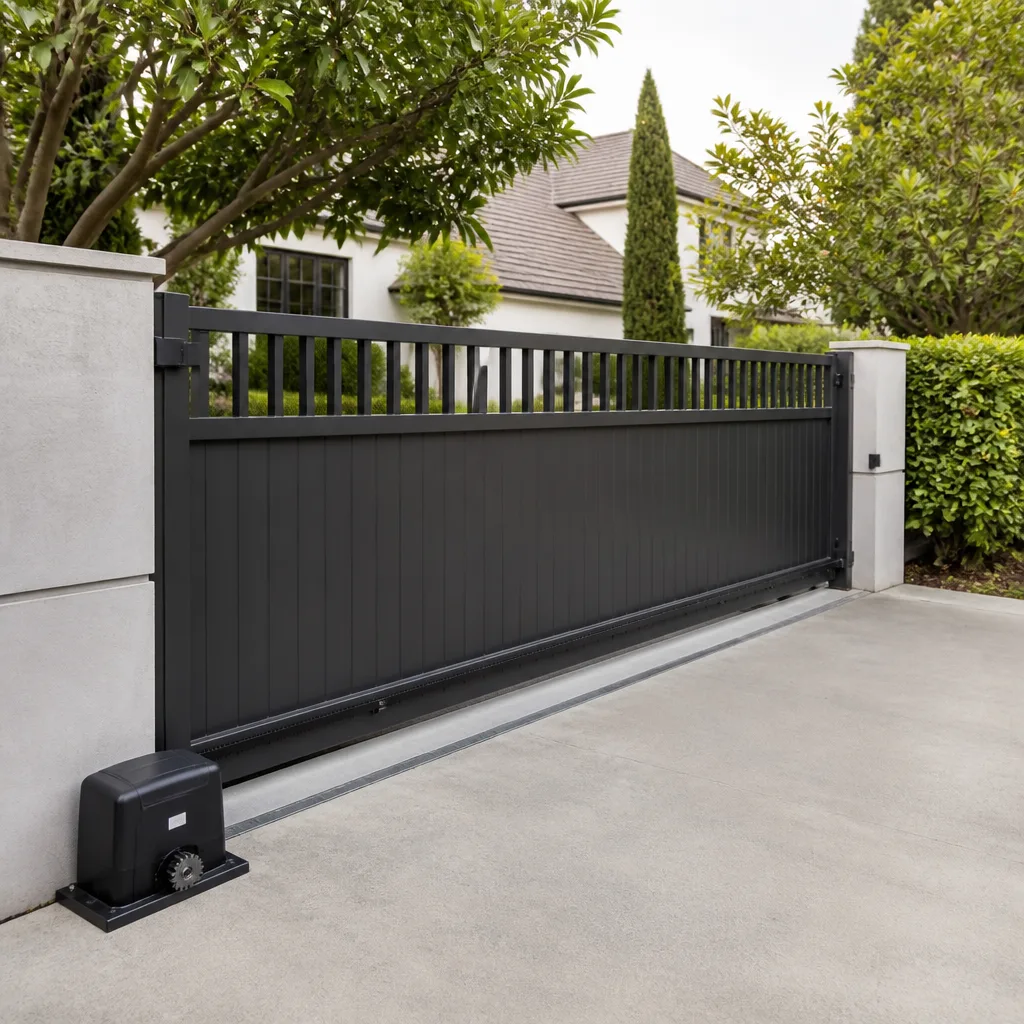
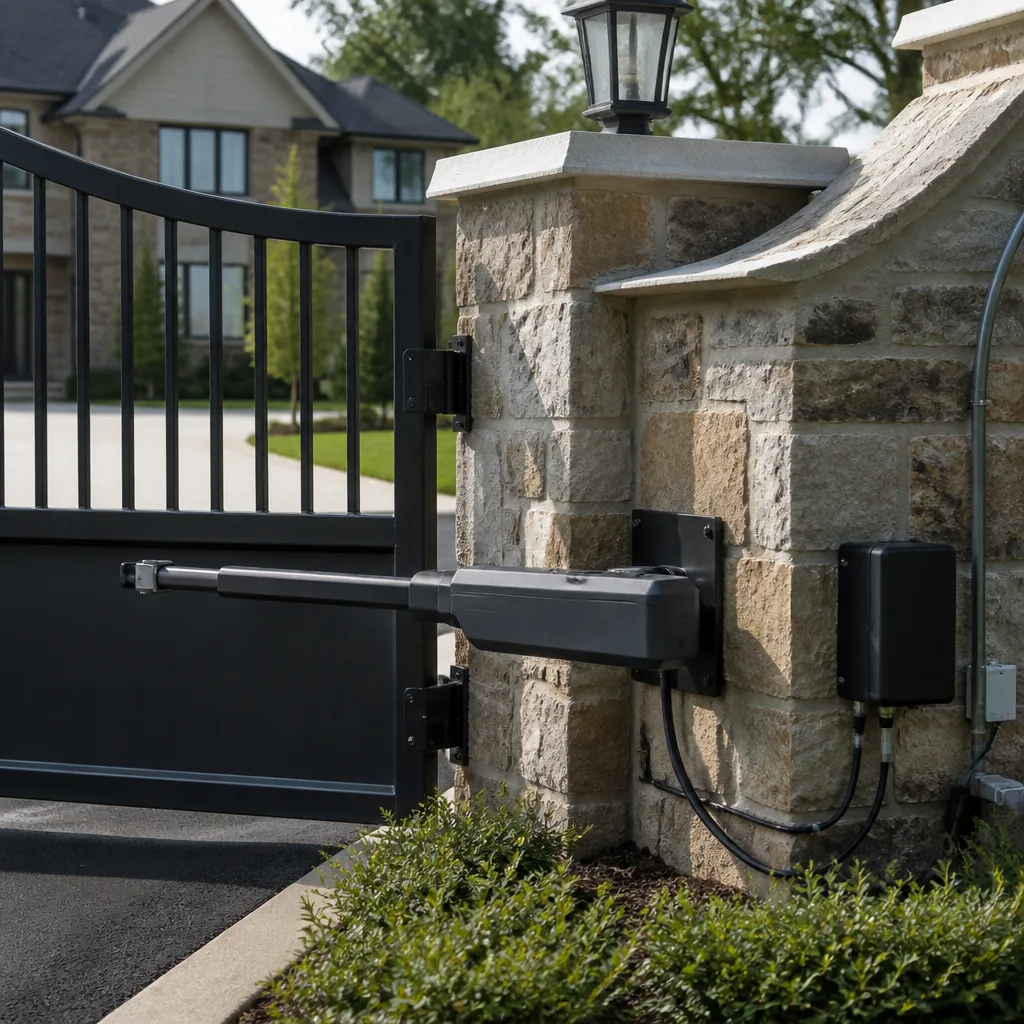
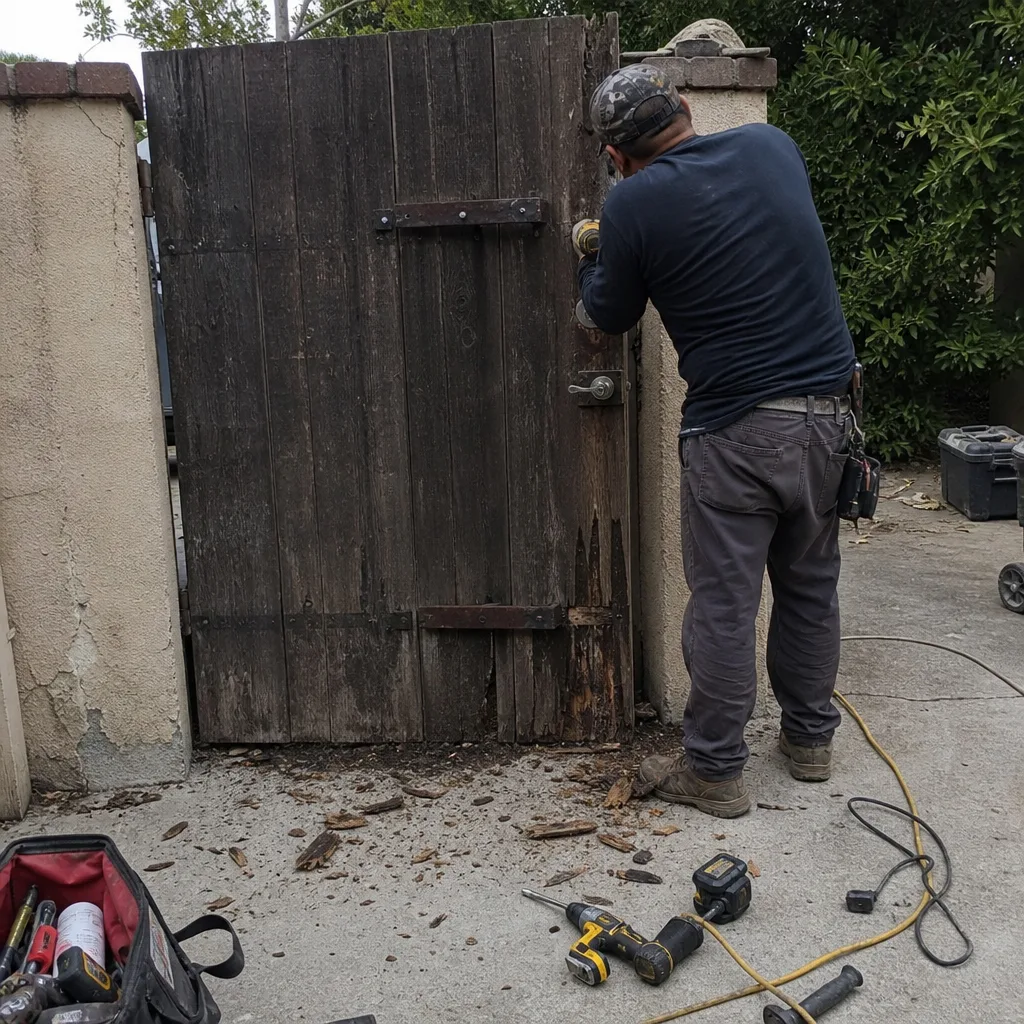 Before
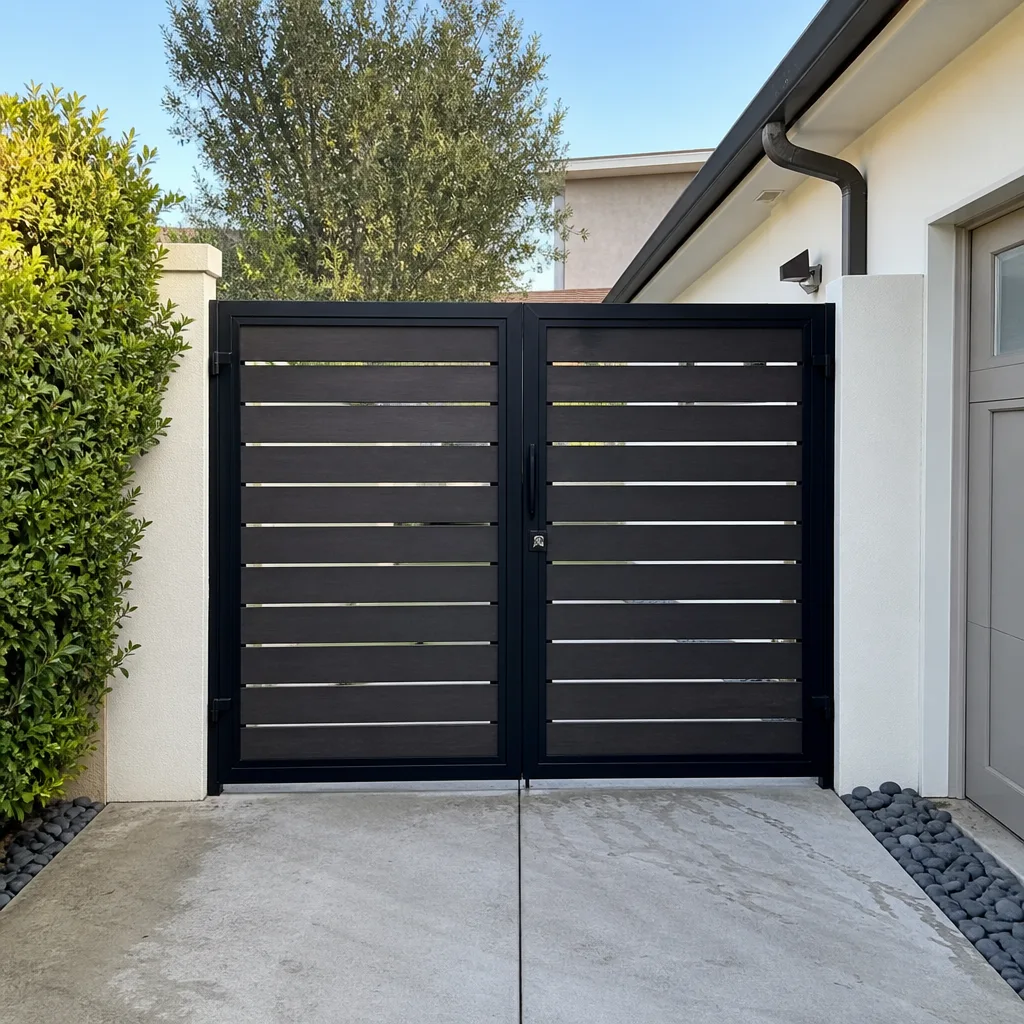 After
After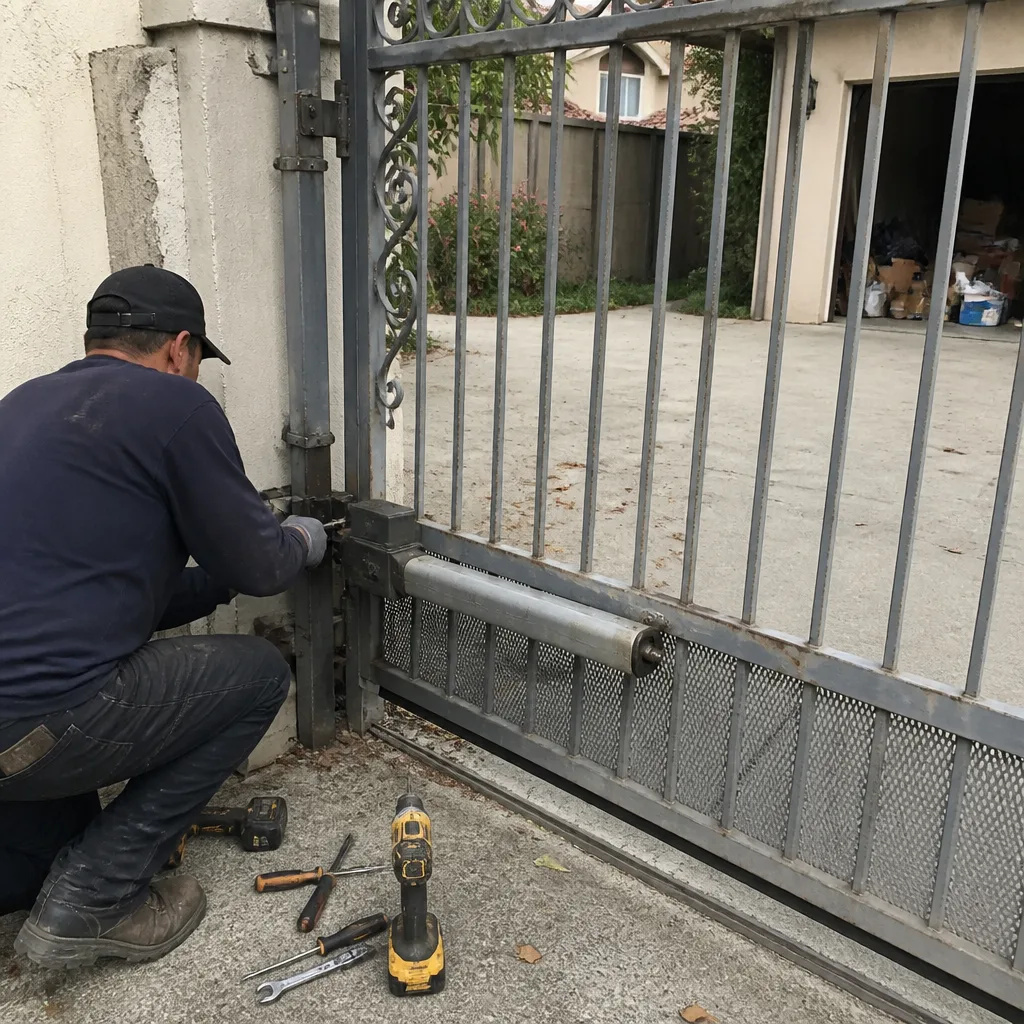 Before
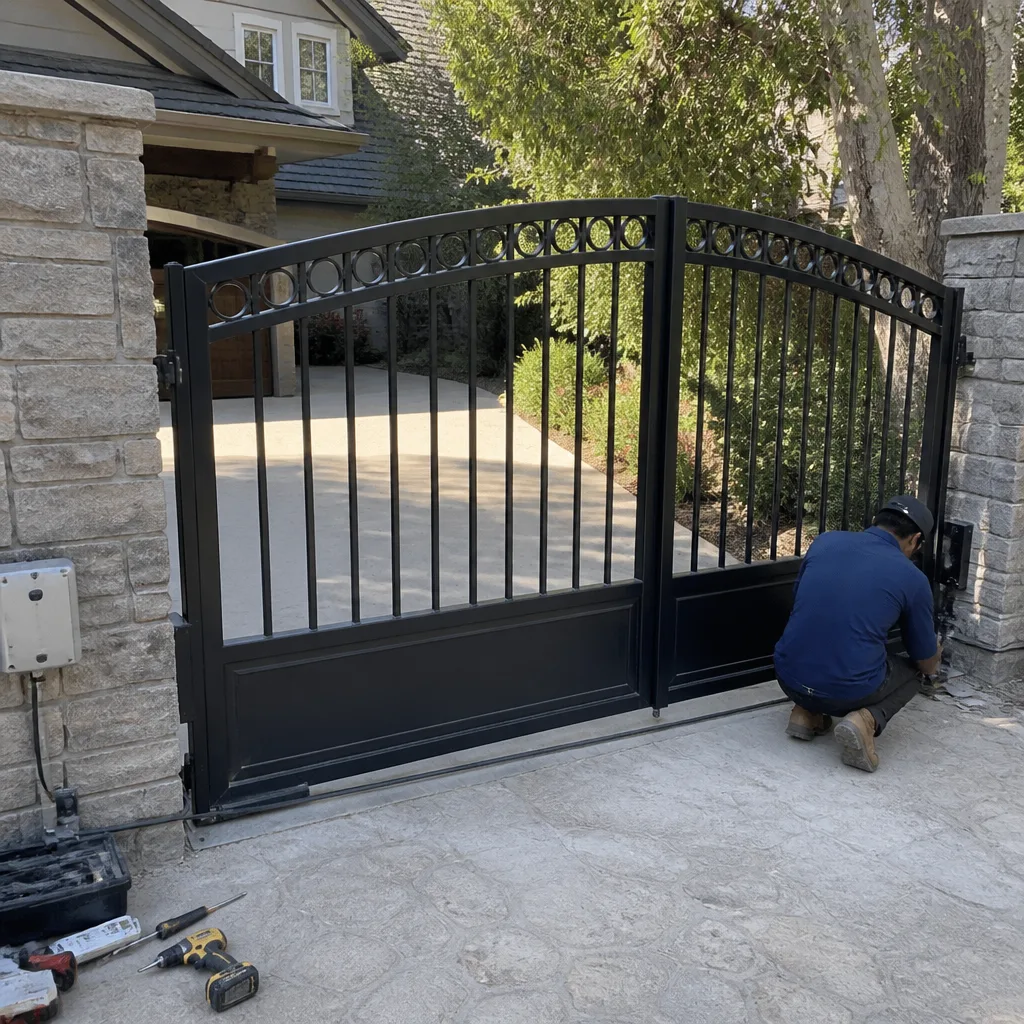 After
After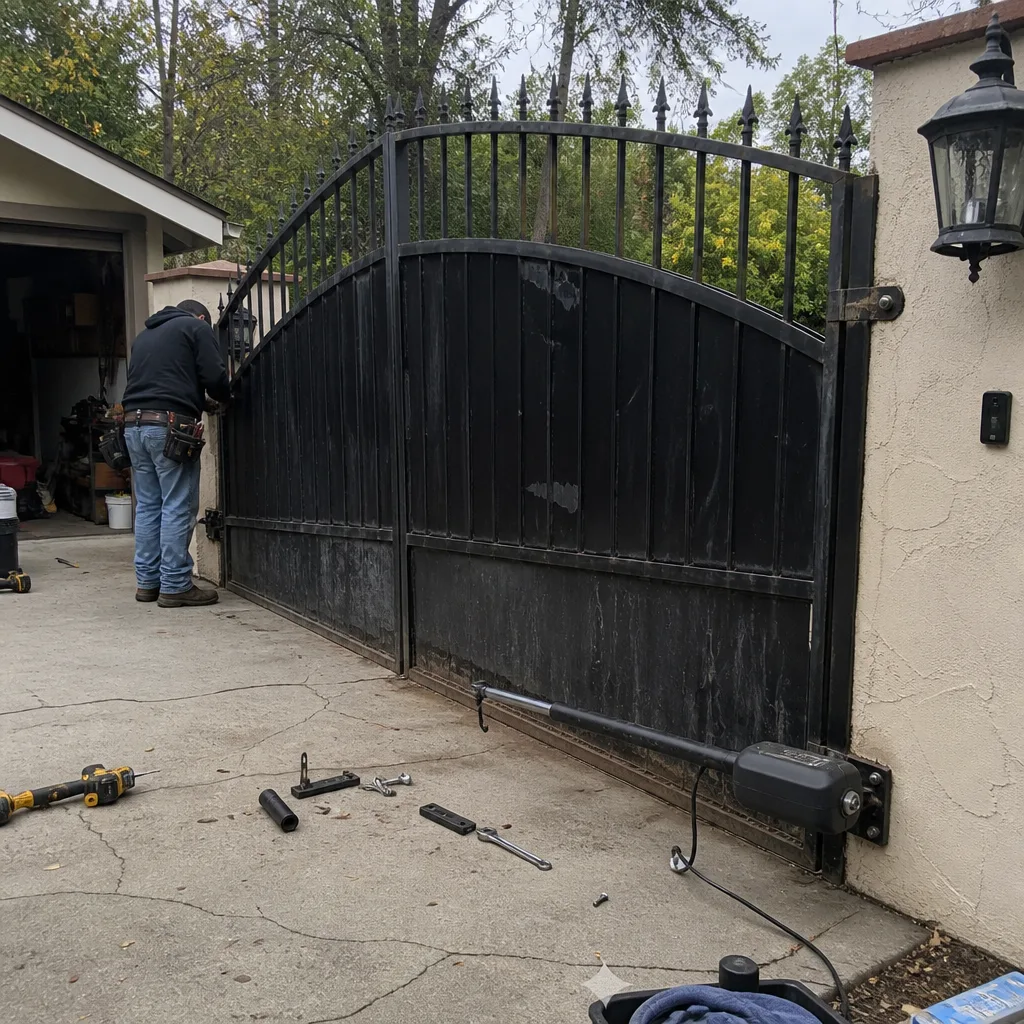 Before
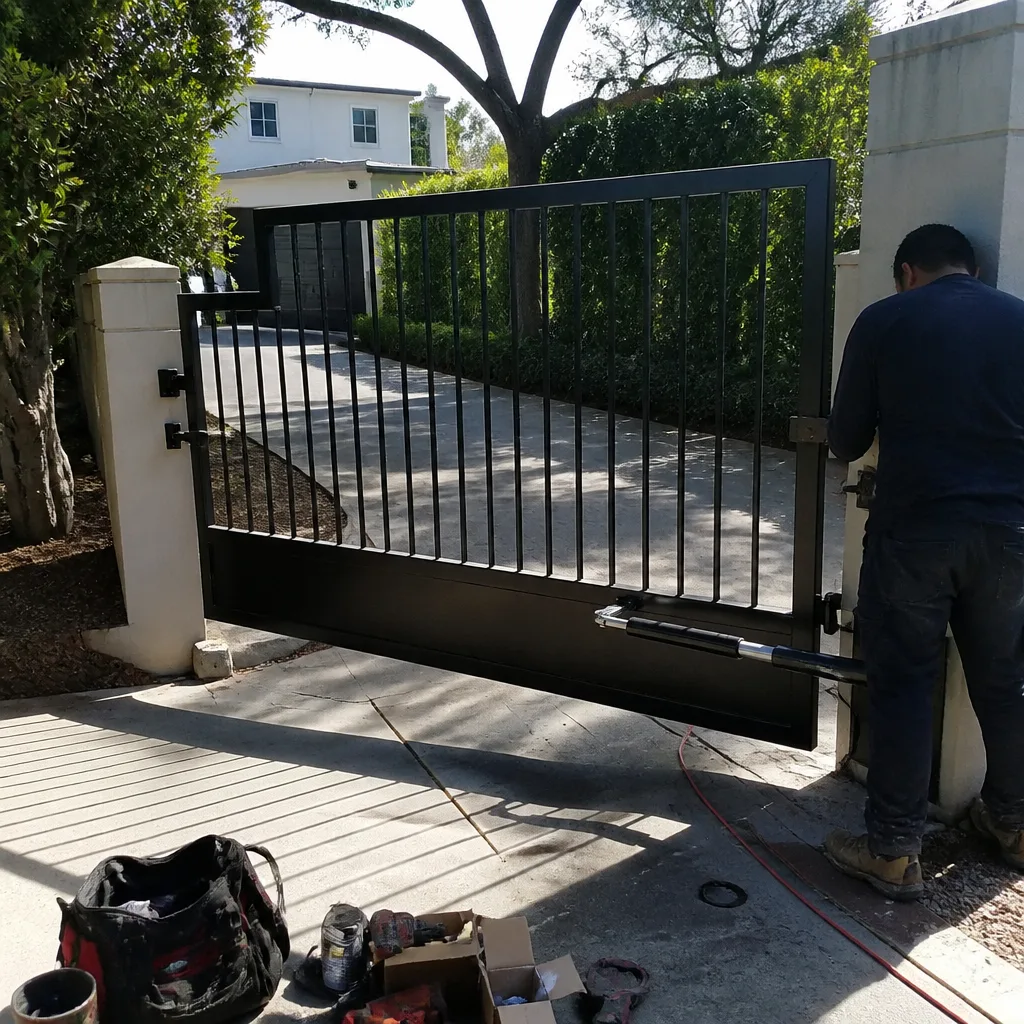 After
AfterThe Complete Guide to Gate Repair in Encino
The gate company that quoted you $4,200 for a new gate last spring? Odds are better than even that a $180 weld and a new hinge pin would have fixed the same problem. We see it every month in Encino: a gate sags an inch, a motor labors a little louder, and suddenly a salesman is talking about “irreparable frame damage.” It’s rarely true. This guide walks through every major gate system, failure mode, and Gate Repair services path so you know exactly what’s wrong before anyone shows up at your driveway in Encino. By the time you finish reading, you’ll be able to spot the difference between a structural problem, a mechanical failure, and an electrical fault, and you’ll know which repairs actually hold.
Quick Answer
Most gate problems in Encino trace back to three root causes: a failing hinge or post (structural), a worn-out wheel or track (mechanical), or an opener fault (electrical). A qualified gate technician can typically identify which one it is in under ten minutes of looking, and the majority of these repairs cost between $150 and $600 rather than the $3,000 to $7,000 quoted for full replacement-read our Gate Repair Cost Breakdown: The Encino Homeowner’s Reference for 2026 to see how these numbers hold up. The repair that actually holds is the one that addresses the root cause, not the symptom.
Table of Contents
- The Three Root Causes of Gate Failure
- Why Encino Conditions Accelerate Gate Wear
- Understanding Your Gate Type and Its Failure Points
- Repair vs. Replacement: When Each Makes Sense
- What Gate Repair Costs in Encino
- What a 90-Day Guarantee Should Actually Cover
- On-Site Welding vs. Part-Swap Repairs
- What to Ask Before You Hire Anyone
The Three Root Causes of Gate Failure
Every gate problem we’ve fixed in over two decades falls into one of three categories. Learn to distinguish them and you’ll be able to describe the problem accurately on the phone, which means the person who shows up arrives prepared instead of starting from zero. It also makes you harder to upsell, because you’ll already know whether you’re dealing with a bent hinge, a dead capacitor, or something in between.
1. Structural: The Gate Itself Is Spreading, Sagging, or Pulling Away
This is the most common category we see in Encino, and it’s the one most often misdiagnosed as “you need a new gate.” Structural problems live in the posts, hinges, and frame. A gate sags in the hinge post, not in the middle, and that is where we start. When the post leans even a few degrees, the latch side drops, the gate drags, and the opener starts working twice as hard. Common structural failures include: hinge welds cracking, hinge pins wearing into ovals, post bases rusting at ground level, and the gate frame itself twisting from years of heat cycling. None of these require a new gate. They require a welder and someone willing to look at the post, not the panel.
2. Mechanical: Wheels, Tracks, Rollers, and Hardware Wearing Out
Sliding gates and cantilever gates rely on wheels, rollers, and tracks. Those parts are consumable. In Encino, where the air is dry but the nights cool quickly, metal expands and contracts daily, and that movement loosens bolts and flattens bearings over time. A gate that used to roll smoothly and now shudders, groans, or stops mid-travel is almost always a mechanical issue. The fix is usually straightforward: replace a seized wheel, repack or swap a bearing, adjust the track alignment, or replace worn rollers. Mechanical repairs are where you get the best value for your dollar, because the parts are inexpensive and the labor is quick, but only if the tech takes the time to see why the part failed rather than just swapping in a new one that will fail the same way.
3. Electrical: Opener Boards, Sensors, Photocells, and Wiring
If the gate doesn’t respond to the remote, the keypad, or the intercom, you’re in electrical territory. This covers the operator control board, the motor capacitor, limit switches, safety photocells, and the low-voltage wiring that connects everything. In Encino, rodents chewing through wire insulation is a genuine problem, especially in the hillside neighborhoods where landscaping is dense. Heat is another factor: control boards exposed to direct sun inside metal operator boxes can exceed 140 degrees on an August afternoon, and capacitors fail early in those conditions. Electrical diagnostics require a multimeter and patience, not guesswork. A tech who starts replacing boards without testing voltages is guessing with your money.
Here’s the thing about these three categories: they overlap. A post that leans (structural) will eventually destroy a wheel (mechanical) and overload the opener (electrical). Fix the panel without the post and you’ll fix it twice. That’s why the first ten minutes of any honest diagnosis should be spent looking at the whole gate, not just the part that’s making noise.
Why Encino Conditions Accelerate Gate Wear
Encino sits in the San Fernando Valley, where summer temperatures routinely cross 100 degrees and the winter nights can still drop into the 40s. That daily swing, repeated 365 times a year, is harder on a gate than any single weather event. Metal expands during the day and contracts at night. Paint develops micro-cracks. Water seeps in, rust starts, and within a few seasons you have posts losing integrity at exactly the point where they meet the concrete footing.
Then there’s the soil. Encino, especially the flat parts south of Ventura Boulevard, sits on alluvial soil from the Los Angeles River system. That soil is sandy and loose near the surface. Big, heavy driveway gates mounted on posts set in that soil will lean over time even when the original installation was done correctly. We see it in Encino consistently enough to call it a pattern: the hinge post tilts toward the load, the latch side drops, and the gate starts dragging in a spot where it never dragged before.
Add in the dry Santa Ana winds that kick up dust and grit, and you have fine particles working their way into hinges, bearings, and roller assemblies. That dust acts like sandpaper. It accelerates wear on any moving part. Homeowners in Encino who live on the tree-lined streets south of the boulevard deal with a different problem: leaf litter and pine needles accumulating in track channels, which is easy to overlook until the gate starts binding.
The practical takeaway: if your gate is four years old or older and has never had its hinges lubricated, its track cleaned, or its post lean checked, it’s overdue for maintenance, and the climate here has been working against it the whole time.
Understanding Your Gate Type and Its Failure Points
Different gates fail in different ways. Knowing what kind of gate you have tells you what to expect when it starts misbehaving.
Swing Gates (Single and Double Leaf)
Swing gates are the most common type in Encino’s residential neighborhoods, especially on properties built before 2000. They pivot on hinges mounted to a post. The failure points, in order of frequency, are: hinge pin wear, post lean, weld cracks at the hinge, and opener arm fatigue. A double swing gate adds another wrinkle: the two leaves have to meet perfectly in the center, and when one leaf sags, the latch or the lock misses by a hair and the opener’s limit switch never triggers, which can burn out the motor.
A swinging gate that drags on the ground but the hinges look fine almost always means the post has moved. Measure the gap between the post and the gate at the top and bottom hinges. If the gap is uneven, the post is leaning and welding reinforcement plates onto the hinge is not going to fix the real problem.
Sliding Gates
Sliding gates ride on wheels along a steel track or, in a cantilever design, hang from rollers inside a frame. They’re popular for wider driveways where a swing gate would eat too much space. Their weak points are the wheels, the track, and the bearings. A sliding gate that stops halfway with a grinding noise is telling you a bearing has failed. A sliding gate that moves but jerks or shudders is likely running on a flattened wheel or a track that has shifted out of alignment.
We work on sliding gates all over the county, and the single most neglected component is the track itself. If the track fills with dirt, sand, or debris from Encino’s wind, the gate is effectively driving over sandpaper every time it cycles. Clean it quarterly if you want to avoid premature wheel replacement.
Cantilever Gates
Cantilever gates don’t touch the ground. They hang from rollers inside a steel frame that extends beyond the post. They’re designed to float over debris and snow, which matters less in Encino than it does in mountain communities, but they’re still popular for driveways with a slope or uneven surface. Their failure points are the rollers and the counterbalance bearings. When a cantilever gate starts sagging at the free end, it usually means the rollers inside the support frame have worn flat spots or the bearing surfaces have worn down.
One tip specific to cantilever gates: listen for a rhythmic thump as the gate travels. That’s a flat spot on a roller. The longer it runs, the deeper the flat spot, and the more the entire assembly shakes, which shortens the life of every other component.
Vertical Pivot and Bi-Fold Gates
Less common in residential Encino but present on some commercial properties and a few larger estates. These lift rather than swing or slide. Their failures are generally hydraulic or spring-related. When the lift mechanism fails, the gate can drop violently, which is a genuine safety hazard. If you have a vertical pivot gate and it’s making popping sounds or hesitating when lifting, stop using it and call someone before it fails in the open or closed position.
Repair vs. Replacement: When Each Makes Sense
We approach every job with a repair-first philosophy, but we’re honest about the limits. Sometimes a gate is genuinely done. Here’s the real breakdown of when each path makes sense in real-world Encino conditions.
Repair makes sense when:
- The posts are still true and the concrete footings are intact.
- The gate frame is not rusted through anywhere; surface rust is nearly always treatable.
- The operator motor and control board are in serviceable condition, even if one component needs replacement.
- The cost to repair the gate is less than 50-60% of the cost to replace it with something equivalent.
- The gate has sentimental or architectural value that matches the home’s style, which matters a lot more in Encino’s older neighborhoods than it gets credit for.
Replacement becomes the honest recommendation when:
- The gate frame has rusted through a structural member, not just the decorative pickets.
- Both posts have shifted enough that their footings are cracked and would need to be re-poured anyway.
- The gate is severely undersized for the driveway opening and has been flexing for years.
- The repair costs would exceed the value of the gate itself, which happens with cheap aluminum gates from big-box stores.
Here’s what we never do: suggest replacement because repair requires bending over, firing up the welder, or doing diagnostic work. That’s not how we work. We fix the gate in your driveway rather than hauling it off or swapping parts that don’t need swapping. If you want a second opinion before committing to a replacement quote, we offer a free second opinion on any written estimate. Sometimes that written estimate is from us, and we’ll stand by it.
For more background on what a full installation involves, see our guide to Gate Installation in Encino, which covers the entire process from fence-to-gate transitions to matching current posts.
What Gate Repair Costs in Encino
We’re going to give you straight numbers here. These are what we typically see across Encino for mid-sized residential gates. They are not quotes, and there are always outliers, but they’re honest ranges from a shop that has been pricing this work since 2001.
| Repair Type | Typical Range in Encino |
|---|---|
| Hinge pin replacement (single gate) | $80 – $180 |
| Weld crack repair (per location) | $60 – $150 |
| Adjust and reinforce a leaning post (minor) | $200 – $450 |
| Wheel or roller replacement (sliding gate) | $120 – $300 per wheel |
| Track realignment and cleaning | $100 – $250 |
| Opener capacitor replacement | $80 – $200 |
| Control board replacement | $250 – $700 depending on brand |
| Photocell or safety sensor replacement | $90 – $250 |
| Full diagnostic and tune-up (no parts) | $90 – $180 |
If the gate uses an opener from LiftMaster or FAAC, control board prices sit at the higher end of those ranges because the boards themselves are more expensive. Mighty Mule and Elite boards are typically more budget-friendly, but the labor is equivalent. The brand matters less than the skill of the person diagnosing it.
One note on pricing transparency: the price you are quoted before we start is the price you pay. We don’t “discover” problems at the door and re-quote. If we find something during the job that genuinely needs attention, we stop, we show you, and we agree on any additional cost before picking the tools back up. That’s not a policy; it’s how we’ve always run the shop.
We also keep a standing offer that requires no haggling: $40 off any repair over $200. And a permanent 10% discount for seniors and veterans. Call it what it is: a discount for the people who built this neighborhood.
What a 90-Day Guarantee Should Actually Cover
Every gate repair should carry a guarantee. But not all guarantees are the same, and there are two loopholes that make many of them worthless. Here’s what we mean.
Our guarantee is called the 90-Day Done Right Promise, and it’s stamped in writing on every job. It means this: if the repair we made fails within 90 days because of a defect in the work or the part we installed, we come back and fix it at no charge. That’s it, plain and simple. No fine print. No pro-rated credit. One call brings us back, and you won’t have to argue your case past a gatekeeper.
Here are the two loopholes some companies slip into their guarantees to make them meaningless:
- Excluding labor. Some companies warrant the part but not the installation. So the $60 hinge pin is covered, but the $250 labor to install it is on you. If the part fails because it was installed wrong, you’re paying again anyway. That’s not a guarantee; that’s a restocking policy.
- Requiring a paid diagnosis first. This one’s sneakier. The guarantee says the repair is covered, but before they’ll send someone out, you have to pay a trip charge or a diagnostic fee “which will be refunded if the repair is covered.” In practice, the diagnosis always finds something that was “not part of the original repair.” A real guarantee doesn’t make you pay to find out if it’s honored.
When you’re comparing quotes in Encino, ask one direct question: “If the same repair fails within 90 days, what do I pay to have it fixed again?” If the answer is anything other than “nothing,” you haven’t found your gate company yet.
On-Site Welding vs. Part-Swap Repairs
There is a fundamental difference between a company that welds on site and a company that swaps parts. Both have a place in gate repair. The problem is that most companies today only do the second one.
Part-swap repairs are exactly what they sound like: the technician removes a failed component and bolts on a new one. For many mechanical and electrical issues, this is the right call. You don’t repair a fried control board; you replace it. You don’t rebuild a sealed bearing; you swap in a new one. If the part is designed to be replaced, replacing it is correct.
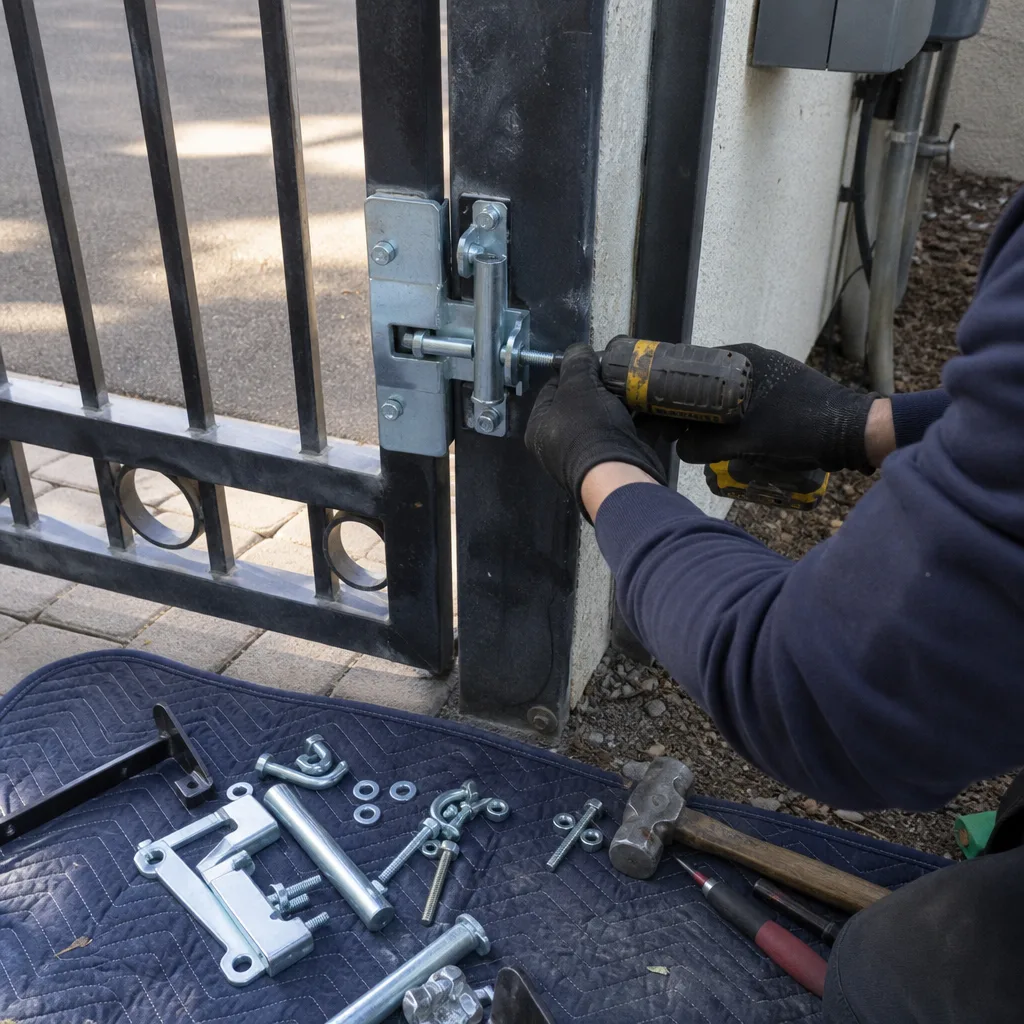
On-site welding is for structural work. When a hinge weld cracks, the fix is not a new gate. It’s a welder who can clean the area, re-weld the joint, and often add a reinforcing plate so the crack doesn’t return. When a post has pulled away from its base plate, the fix is welding it back and gusseting the corner. When the gate frame itself has split at a seam, welding is the only repair that restores its strength.
We weld on site in your driveway because we don’t want to take your gate down and leave you without security for three days while it sits in a shop. The gate stays where it belongs, and the repair is done right there in front of you. The alternative, which some companies prefer, is removing the gate, doing the work off site, and bringing it back. That’s fine if the shop has good welders, but it turns a one-day job into a multi-day project and it means your driveway is open until they return.
The practical difference in cost: a weld repair on a cracked hinge runs $60 to $150 per location as shown in our table above. A part-swap for a failed wheel runs $120 to $300. The two approaches solve different problems, and a reputable shop uses both. The red flag is a shop that only swaps parts and never mentions welding, because it means they’re not equipped for structural work and they’ll try to sell you a new gate to cover that gap.
If you’re interested in the opener side of things, our full guide to Gate Motor & Opener in Encino breaks down how different opener types age and what to expect from each brand.
What to Ask Before You Hire Anyone
Before anyone comes to look at your gate, arm yourself with these questions. You don’t need to ask all of them, but each one is designed to expose the difference between a repair shop and a replacement mill.
- “Will the person doing the repair be welding on-site, or will the gate be removed?” If they can’t weld on-site, they’re not equipped for structural work, and they’ll likely lean toward replacement.
- “Can you show me the specific part that failed before you replace it?” Any honest tech can point to the worn hinge, the seized bearing, or the burnt board and explain why it failed.
- “Is the quote firm, or will there be additional charges at the door?” The answer should be “firm, unless we find something and agree on it before doing any additional work.” Anything else is a door-drop business in disguise.
- “Does the 90-day guarantee include labor and parts, and do I pay anything for a callback?” This is the question from the guarantee section above. It separates real warranties from marketing language.
- “Who shows up if the repair fails?” If the company can’t tell you who will come back, you’re dealing with a rotating cast of subcontractors. We’re a local shop. Hal Gatewood’s name is on every invoice, and the same person who did the repair is the person who comes back if it fails.
- “Can you provide local references from Encino?” A shop that works in your area should have no trouble naming recent jobs within a few miles of you. If they balk, they may not do much local work at all.
We also maintain a running overview of how we approach every job at the Gatewood Fence & Gate home page, if you want to see how the shop operates before you ever pick up the phone.
Common Mistakes to Avoid
- Waiting until the gate can’t open at all before calling. A gate that’s binding, groaning, or moving slower than before is giving you a warning. Catch it early and the repair is often under $200. Wait until it’s frozen and you’ll likely add a motor replacement to the bill.
- Quoting replacement without a second opinion. We hear it every week: “the other company said I need a new gate.” Sometimes that’s true. Often it isn’t. A second opinion takes an hour and can save thousands.
- Ignoring the post because “the gate looks fine.” A gate sags in the hinge post, not in the middle. If the post is moving, the gate will fail again no matter how many hinges you replace.
- Lubricating without cleaning first. Spraying fresh lubricant over caked-on dust and grit in Encino’s dry climate just makes sandpaper paste. Clean the surface, then lubricate.
- Replacing the operator before checking the gate itself. A laboring motor is often a gate that’s dragging. Fix the drag and the motor works like new. Skip the drag and you’ll burn through another motor.
- Hiring by price alone. The cheapest bid in Encino is often a crew with no local presence, no published address, and no one to call when the repair fails in six weeks. You’re not buying a price. You’re buying a result.
When to Call a Professional
If your gate has any of these problems, it’s time to stop troubleshooting and start dialing: the gate has dropped on one side and is dragging or scraping; the gate post is visibly leaning out of vertical; you hear grinding, popping, or metal-on-metal sounds; the opener works sometimes but not others; the gate reverses without anything in the way; or the gate moves at different speeds on different days. All of these are signs of a component failing, not a problem that will work itself out. If it’s a safety or liability concern, the sooner the better.
Gatewood Fence & Gate offers free estimates in Encino, and we’ve been locally owned and owner-operated since 2001. Call (350) 247-4763 and Hal will answer. If he’s under a gate, you’ll get a callback within the hour, and it will be from him, not a call center. For a deeper look at what a full repair service includes, see our main Gate Repair in Encino page.
Frequently Asked Questions
Most residential gate repairs in Encino run between $150 and $600, depending on whether you’re dealing with a structural issue like a cracked weld or leaning post, a mechanical problem like a failed wheel or roller, or an electrical fault in the opener. Simple repairs like hinge pin replacement can run as low as $80, while control board replacements for premium brands like LiftMaster can reach $700 or more. Call (350) 247-4763 for a free estimate, and we’ll give you a firm number before any work begins, or browse more guides & resources to keep learning.
In most cases, yes. A gate that sags is almost always the result of a hinge failure, a leaning post, or a cracked weld, all of which are repairable. We weld on site and reinforce the post rather than swapping the whole gate. The repair only fails when someone fixes the visible sag without addressing the root cause underneath it.
Most repairs are completed the same day we arrive, especially hinge, wheel, and opener component replacements. Structural repairs that require welding reinforcement can take a few hours. If a part like a specific control board needs to be ordered, we’ll tell you upfront and give you a firm timeline, and your gate will be operational again if it’s safe to leave it that way while the part ships.
Yes. We’re certified to service LiftMaster, FAAC, BFT, Linear, Viking, Ghost Controls, DoorKing, Elite, and Mighty Mule openers. That covers the vast majority of systems installed across Encino. If your brand isn’t on that list, call us anyway; we’ll tell you straight whether we can get parts or whether you should call the manufacturer.
A qualified gate technician can usually answer this in the first ten minutes of looking at the gate. If the posts are solid, the frame isn’t rusted through, and the opener is serviceable, repair is the right call. If the structure is compromised at multiple points, replacement may be more cost-effective. We’d rather tell you a $250 repair fixes it than sell you a $5,000 gate you didn’t need.
Intermittent operation usually points to an electrical fault: a deteriorating capacitor, a failing limit switch, a wiring connection that’s corroding, or a photocell that’s losing alignment. The fix starts with a diagnostic that measures actual voltages rather than guessing. Track the pattern: does it fail more in the heat of the afternoon or the cool of the morning? That information helps us find the fault faster, and it’s free to mention when you call.
The Bottom Line
Gate repair in Encino should not be a mystery, and it should not be a sales pitch. Most problems come down to a leaning post, a failing mechanical part, or an electrical fault in the opener. The repair that holds is the one that fixes the root cause, not the symptom. Before you hire anyone, know what kind of gate you have, ask the questions that expose part-swap-only shops, and get a guarantee in writing that covers labor and parts both. We’ve been doing it that way since 2001, with on-site welding, live phone calls, and a name on the shop that you can actually visit. The gate in your driveway deserves better than a five-minute quote and a four-figure invoice.
Written by Hal Gatewood, Owner at Gatewood Fence & Gate, serving Encino since 2001.