
Last updated August 26, 2026
Free on-site gate assessment - hinges, posts, and your LiftMaster or Nice gate operator checked before anything is quoted
The assessment is free and the quote is the invoice.
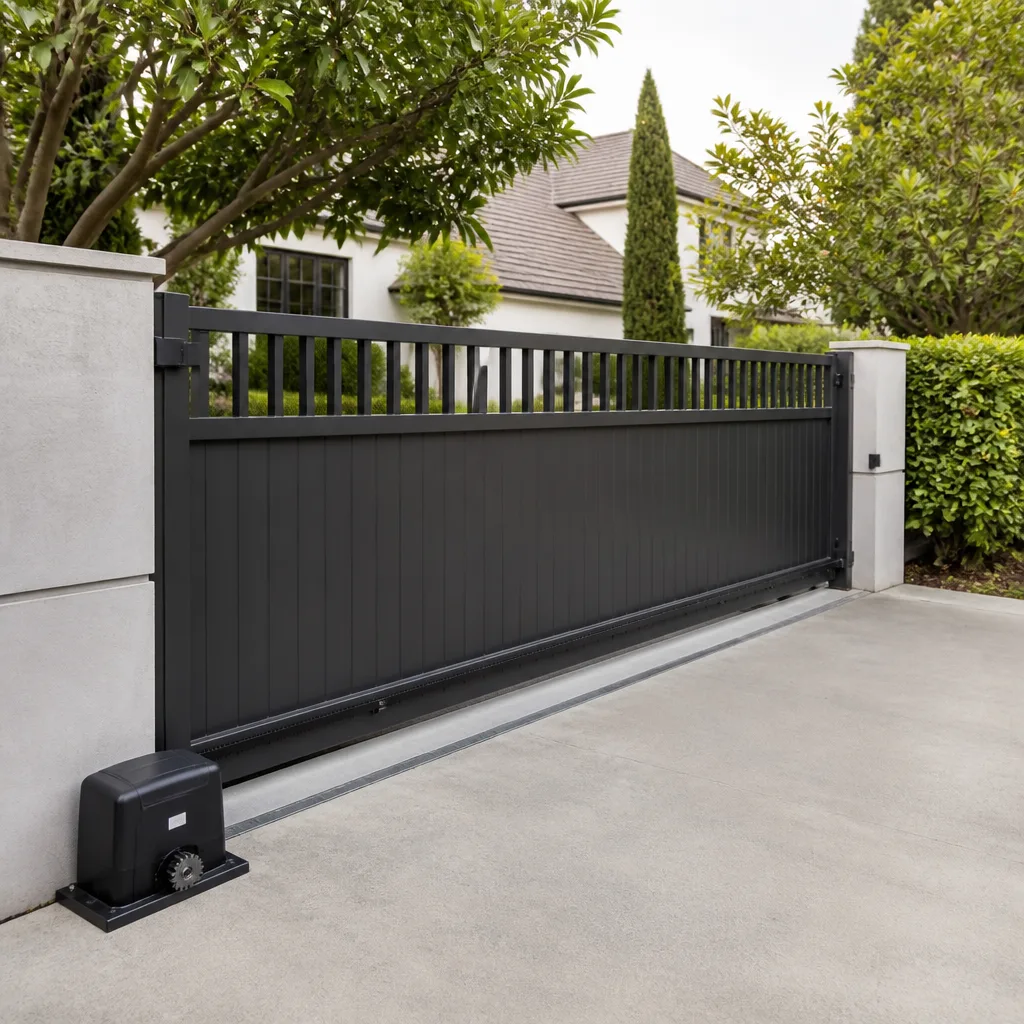
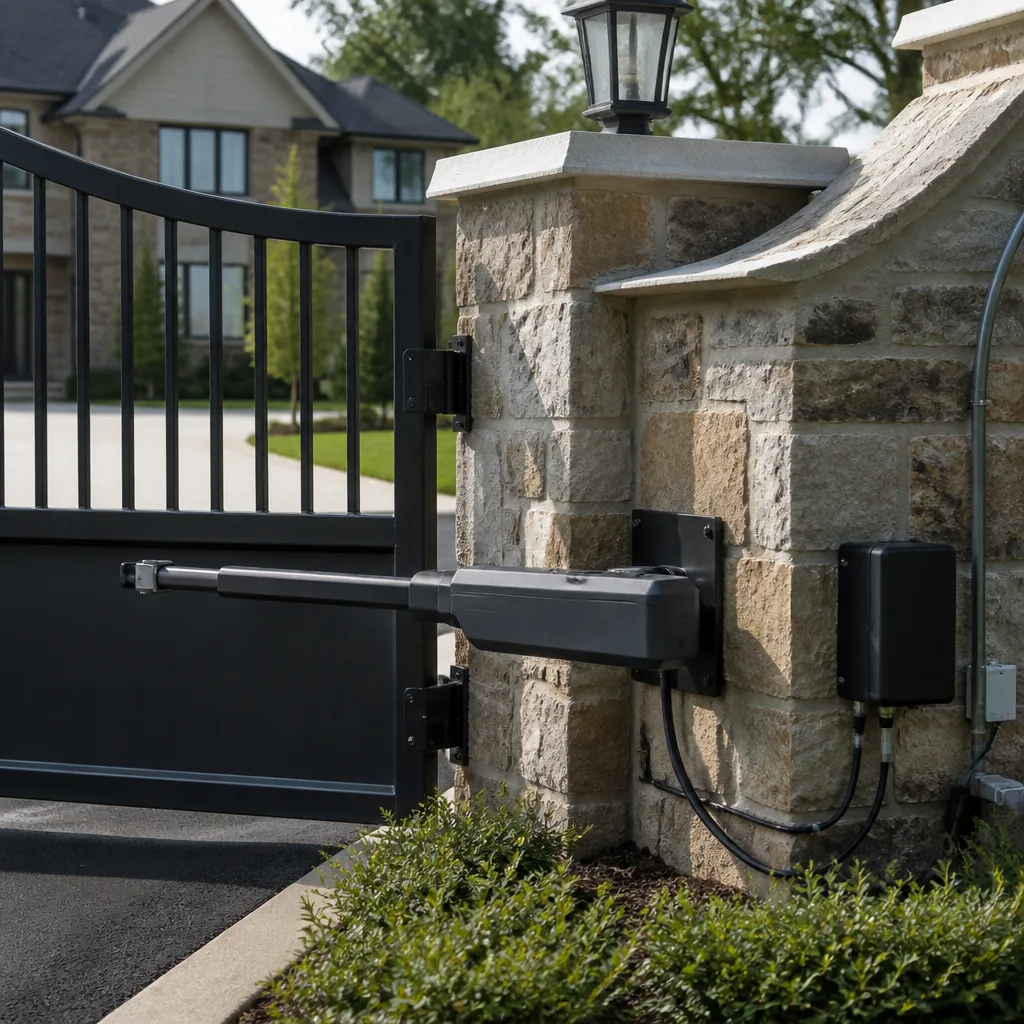
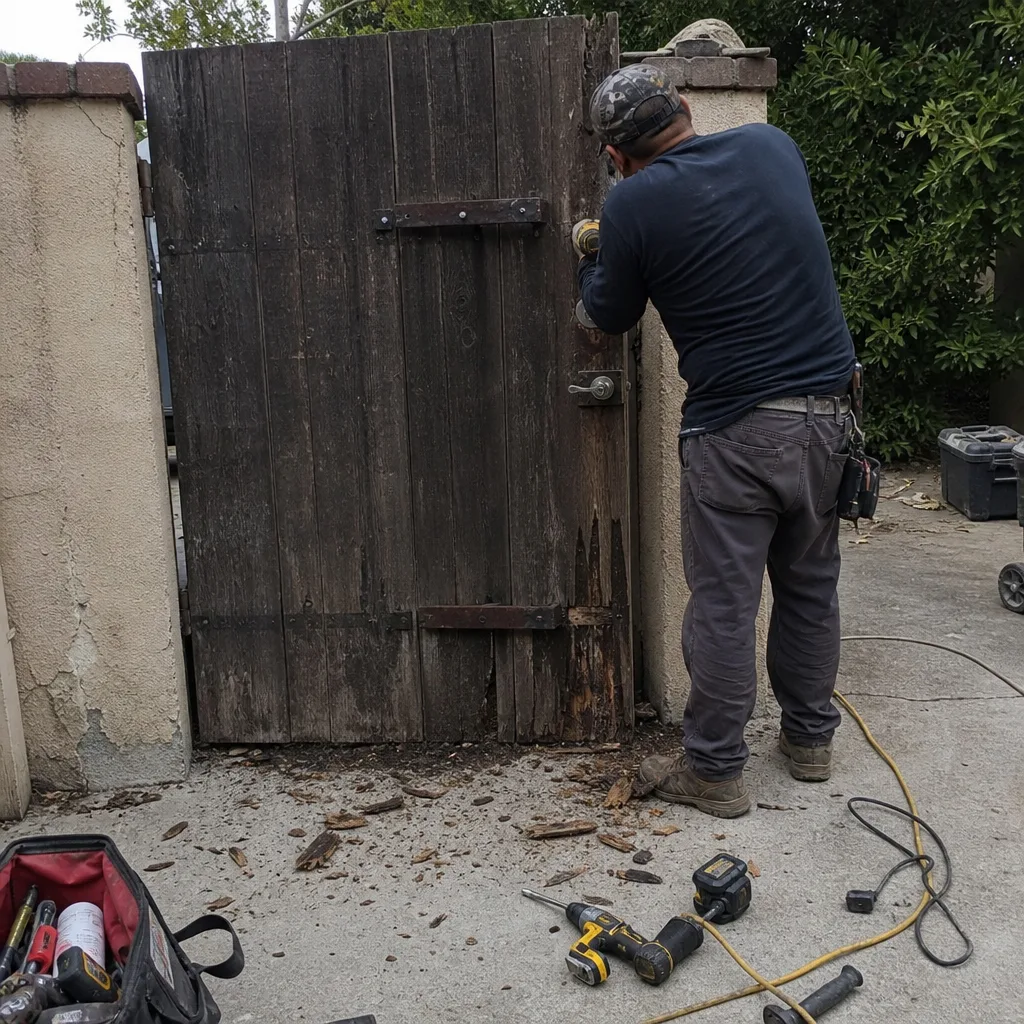 Before
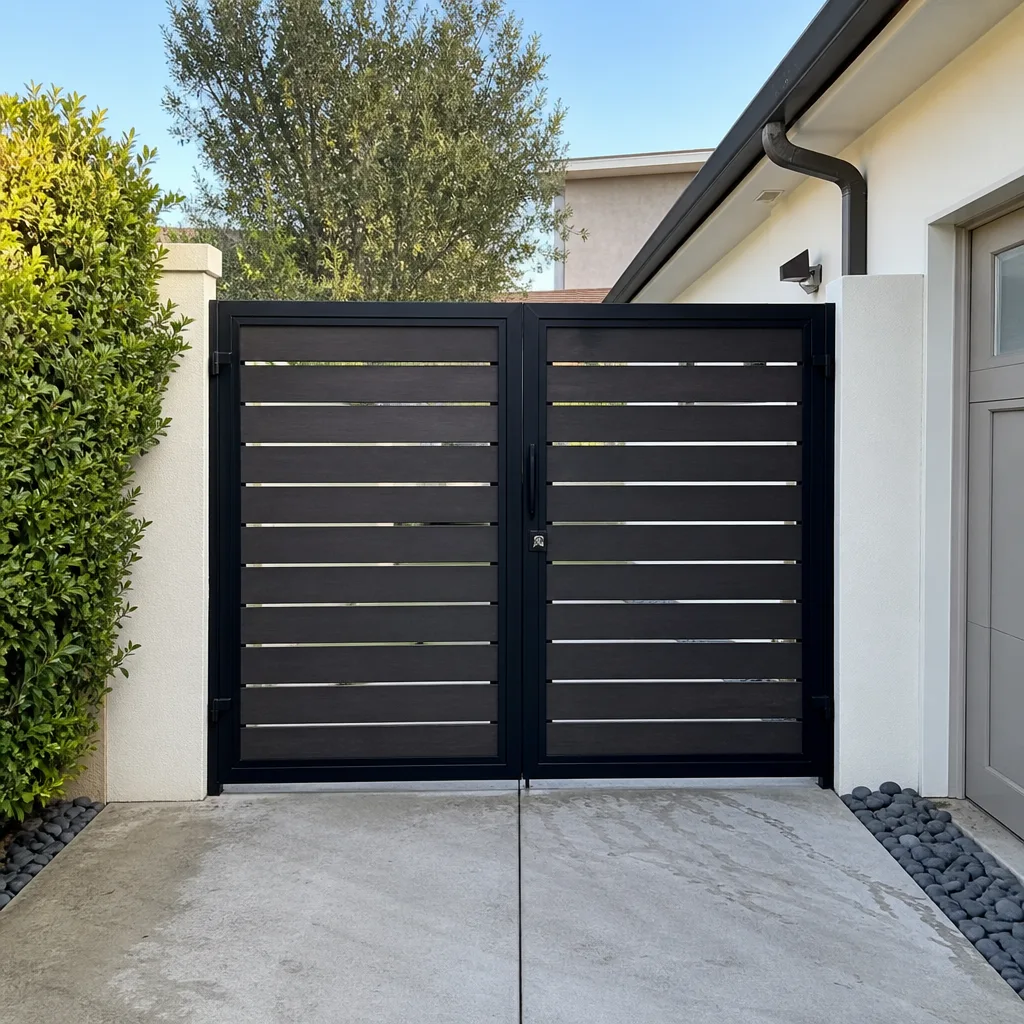 After
After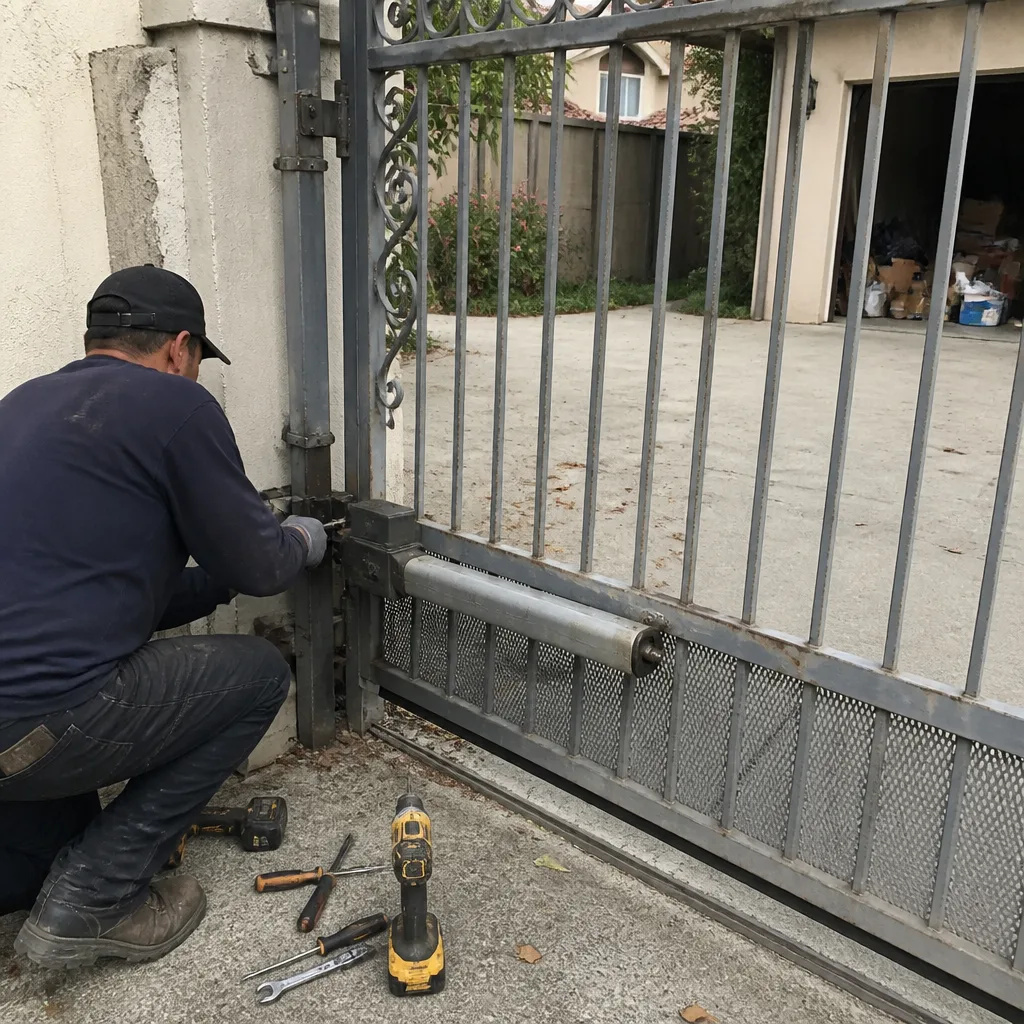 Before
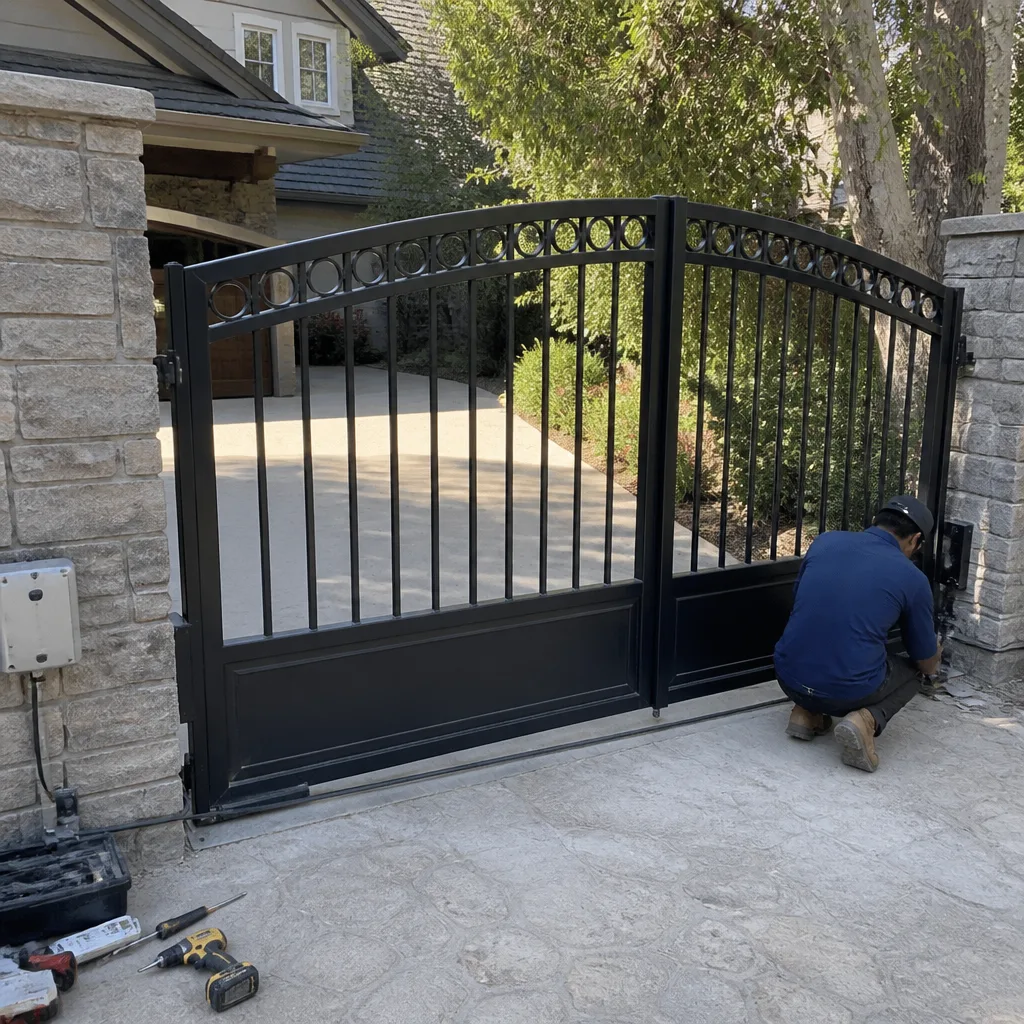 After
After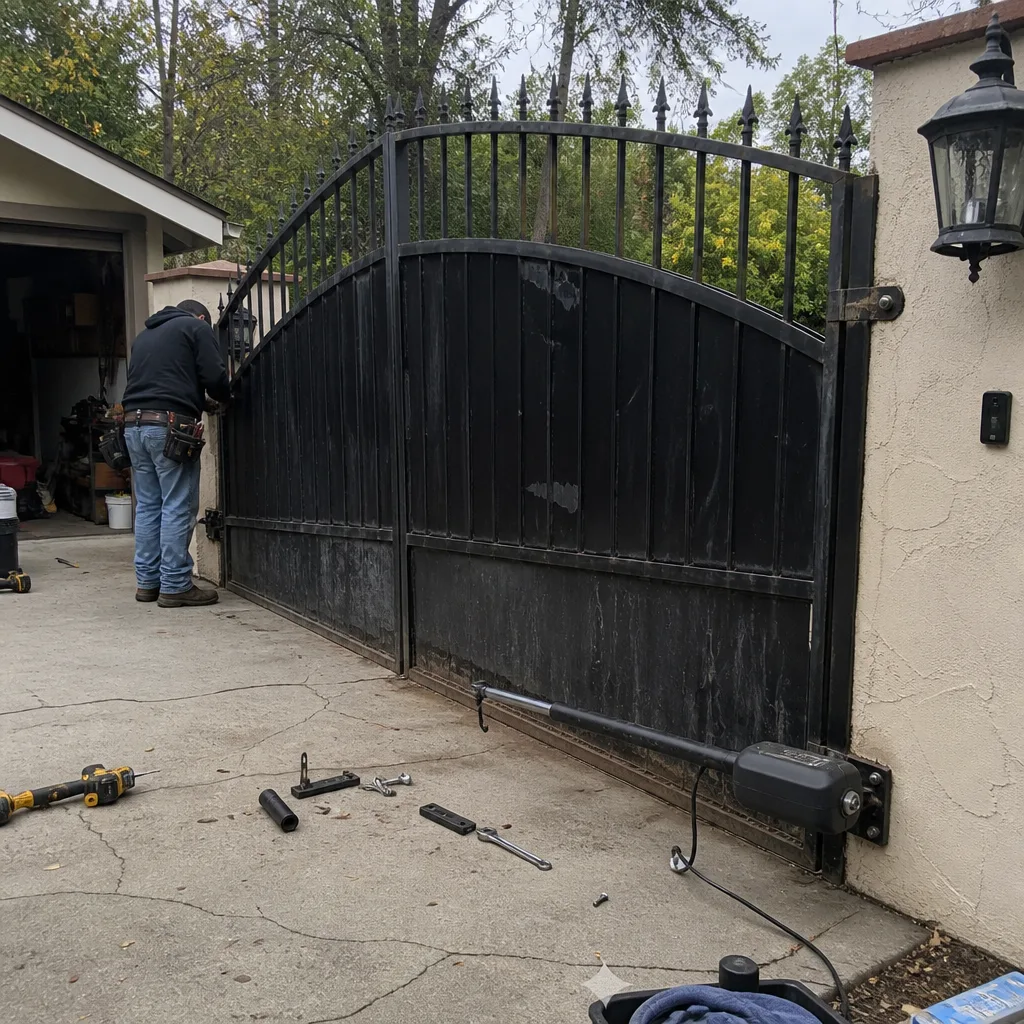 Before
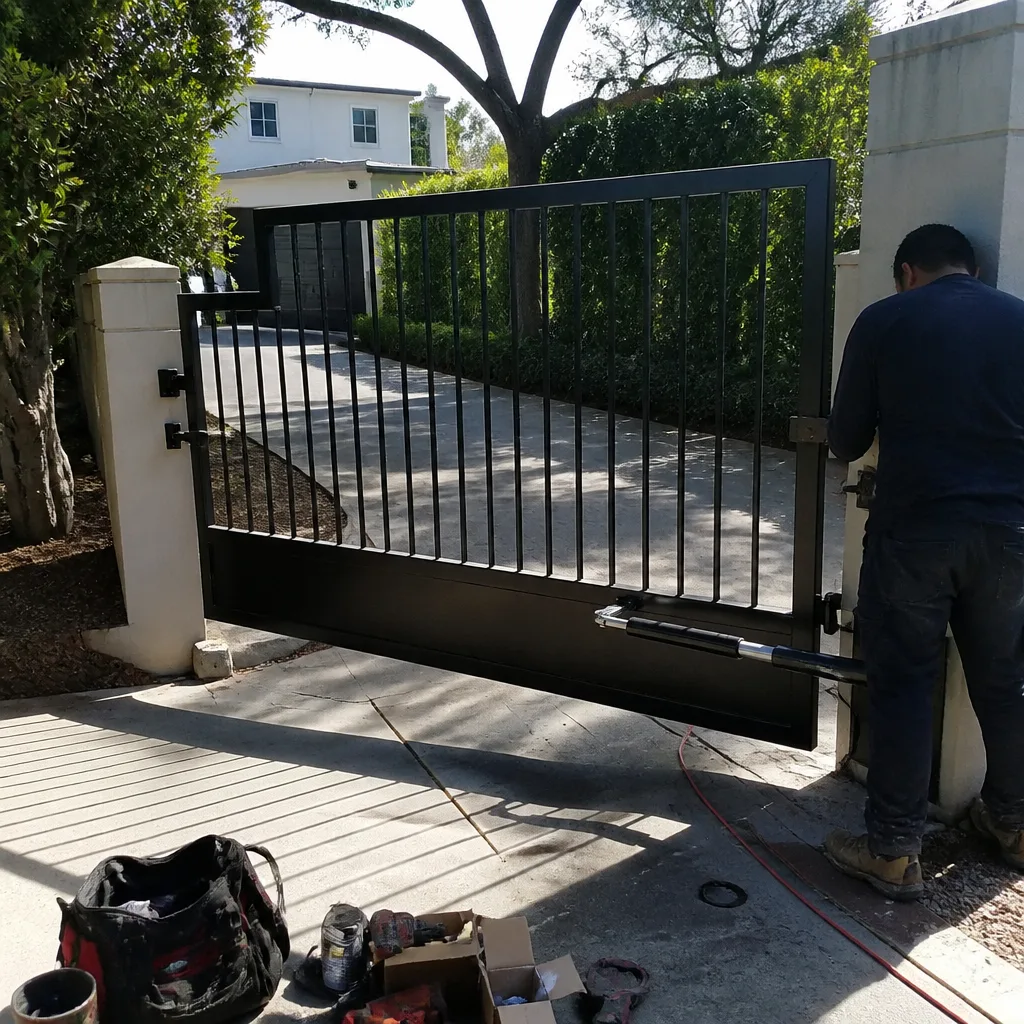 After
AfterGate Repair Maintenance Checklist for Encino Homeowners
In 23 years of gate work, the number-one thing we see on neglected gates isn’t rust or broken motors. It’s dry hinges that were never lubricated even once after installation. A gate that costs $12,000 to install will start eating itself alive in the Encino heat because nobody ever put a drop of grease on the hinge pins. This guide is the exact routine Hal uses on his own shop gate, written out so any Encino homeowner can follow it without anything beyond a socket set and a grease gun. For Gate Repair beyond basic maintenance, call a professional. You’ll learn the four-times-a-year rhythm, the specific lubricants that hold up in summer heat, the 30-second balance test that catches motor strain early, and what to check at the post base after every rain event.
Quick Answer
A gate in Encino needs fifteen minutes of maintenance four times a year, with extra attention after heavy rain and again in late spring before the summer heat arrives. The non-negotiable items are greasing hinge pins, checking bolt torque, testing the auto-reverse safety circuit, inspecting the post bases for soil movement, and running the battery backup test on your opener. Skip these and you’re not saving time; you’re just writing a future invoice for a motor replacement that didn’t have to happen. See our Gate Repair Warning Signs: A Encino Homeowner’s Reference Guide to catch problems early.
Table of Contents
- Why Seasonal Timing Matters in Encino
- The Right Lubricants for Encino’s Heat
- The 30-Second Balance Check That Saves Motors
- Post Base Inspection After Rain
- The 90-Second Battery Backup Test
- Building a Phone Photo Log
- Safety Checks: Photo Eyes, Edges, and Auto-Reverse
- Common Mistakes to Avoid
Why Seasonal Timing Matters in Encino
Encino has a specific rhythm that shapes when your gate needs attention. We’re in a Mediterranean climate, which sounds pleasant until you realize it means six months of zero rain followed by a few weeks of atmospheric rivers that dump more water than the soil knows what to do with. A gate installed in August behaves completely differently in February.
The single most important maintenance window in Encino is late spring, right before the heat really turns on. Metal expands in heat, and a hinge that was perfectly aligned in March can bind in July. Motors that worked fine all winter start drawing more current as the gate fights that expansion. We’ve replaced more opener boards in late July and August than any other time of year, and the root cause is almost always a gate that got tight because nobody backed off a hinge plate or touched up the grease before the season changed.
Here’s the timing rhythm we recommend for Encino homeowners:
- Early spring (March): Full inspection, fresh grease, torque check on all bolts, and a thorough cleaning of the rollers and track if your gate is a slide style.
- Late spring (May): Recheck hinge bind as temperatures climb. This is when you catch the first signs of thermal expansion before it becomes an emergency.
- After the first heavy rain (typically November or December): Post base inspection, drainage check, and a close look at any exposed steel for rust bloom.
- Mid-winter (January): Battery backup test, photo eye alignment check, and a quick verification that the auto-reverse still trips correctly.
You don’t need to do everything every time. The rhythm matters more than the thoroughness of any single pass. A gate that gets fifteen minutes of honest attention four times a year almost never becomes a $900 emergency. The gate that gets ignored completely for two years is the one we get called for.
The Right Lubricants for Encino’s Heat
Most gate maintenance advice tells you to spray lubricant on the hinges. It rarely tells you which lubricant, and that’s a real problem in Encino. Our summers push 100 degrees for stretches, and two of the most common spray lubricants people grab from the garage actually make things worse when the heat hits.
WD-40 is a solvent first and a lubricant second. It’s wonderful for freeing up a rusted bolt, but it evaporates. Spray it on a gate hinge in June and by mid-July that hinge is drier than it was before. That’s not a failure of the product; it’s using the wrong tool for the job.
White lithium grease in an aerosol is another trap. It goes on easy and looks like it’s doing something, but in heat it collects dust and grit. Encino has wind that moves fine dust through every neighborhood, from the flats up into the hills south of Ventura. That dust sticks to lithium spray and turns the hinge pin into sandpaper. We have pulled hinge pins out of gates in Encino that looked like they’d been machined down a full thirty-second of an inch. That’s not wear from use. That’s wear from dirty grease.
What actually works:
- A lithium-based grease in a tub or tube, applied by hand or with a grease gun. This covers the pin fully, stays put in heat, and creates a seal against dust. It’s what we use on our own shop gate.
- Marine-grade grease for gates near pool equipment or irrigation overspray. Water and regular grease don’t mix, and Encino pools mean evaporation, and evaporation means airborne moisture settling on metal overnight.
- Silicone spray for plastic or nylon rollers on slide gates. It won’t attack plastic the way petroleum products can, and it doesn’t collect dust. Apply it lightly, wipe off the excess, and let the film do the work.
- Dry graphite for gate lock cylinders and keypads. A liquid lubricant in a keyway just attracts grit and eventually gums up the tumblers. Dry graphite doesn’t.
What to skip entirely: cooking spray (yes, people do it), penetrating oil as a routine lubricant, and anything that says “multi-purpose” on the can without telling you what base it uses. For the hinges and pins on a swing gate in Encino, a grease tub and a pair of nitrile gloves will outperform every spray on the shelf.
The 30-Second Balance Check That Saves Motors
Most homeowners have never heard of checking a gate’s balance by hand, and that’s exactly why we see dead motors that were perfectly good units. An opener motor is not designed to drag a gate that has fallen out of balance. It will do it for a while, drawing more current every week, until the board overheats or the capacitor blows.
The check itself takes thirty seconds and requires no tools. Here’s how it works on a swing gate:
- Put the opener in manual mode. On most units, including LiftMaster and FAAC swing openers, there’s a release handle or key that disengages the drive.
- Stand at the gate edge and push it through its full arc by hand. Start to finish, one slow steady push.
- Pay attention to resistance. A well-balanced gate should move with even effort the whole way. If it gets noticeably harder to push in the middle of the arc, or if it wants to swing shut on its own at a certain point, the gate is fighting gravity and geometry.
- Listen for grinding or popping. That’s hinge wear or a post that has shifted.
For a slide gate, push it along the track with the motor disengaged. It should roll smoothly with one hand. If you have to put your shoulder into it, or if it shudders when the rollers pass a certain spot, the track has a problem or a roller is failing.
This check matters because the motor will not tell you something is wrong until it’s too late. The first symptom of an out-of-balance gate is usually a higher electric bill, because the opener is drawing more power every cycle. The second symptom is a burnt board. By the time the gate stops working, you’re replacing a $400 component instead of adjusting a hinge plate. Show me the gate closing on its own and I’ll show you where it’s failing, every single time.
If you’re looking at gate motor and opener service in Encino, a balance check is the first thing we document. It’s the cheapest fix and the most skipped inspection.
Post Base Inspection After Rain
Encino sits on clay-heavy soil that expands when it absorbs water and contracts when it dries. That’s a polite way of saying the ground under your gate moves more than you think, and it moves in ways that are not symmetrical. One post can heave a quarter inch while the post six feet away stays put.
After any meaningful rain event, walk out and spend sixty seconds looking at the base of each gate post. Here’s what we tell homeowners to look for:
- Cracked concrete or mortar at the post base. This is the earliest visual sign that the post has started to move. A hairline crack isn’t an emergency, but document it and watch whether it widens.
- A gap between the soil and the post or its concrete footing. The clay swelled, pushed the post up, and then shrank back when it dried. The gap is the evidence.
- Standing water that doesn’t drain within a few hours. Gates at the bottom of a slope collect runoff. In Encino’s hillside neighborhoods, that water saturates the soil around the footing and creates exactly the conditions for movement.
- Rust staining or paint bubbling at the base. Water sitting against steel finds the micro-scratches in the paint and starts working. In our climate, rust doesn’t move fast, but it never stops once it starts.
- Find the battery backup unit. It’s typically a small box mounted near the opener control board, or the battery is inside the opener housing itself.
- Turn off the opener’s circuit breaker at the main panel. Don’t unplug it; use the breaker so you’re testing the same condition as an outage.
- Operate the gate normally with your remote or keypad. Two or three full cycles is enough.
- Listen. A healthy battery cycles the gate at normal speed. A weak battery slows the gate down noticeably. A dead battery does nothing.
- Turn the breaker back on.
- Full gate shot from the curb. This documents sag over time.
- Each hinge or roller, close-up. This documents wear and grease condition.
- Post bases, both sides. This documents concrete cracks and soil movement.
- Opener control board and battery. This documents corrosion, heat discoloration, and aging.
- Photo eyes and safety edge, if equipped. This documents alignment drift.
- Using WD-40 or white lithium spray on hinges. Both fail in Encino’s heat, one by evaporating and one by collecting dust. Use tub-applied lithium-based grease instead.
- Lubricating the gate but ignoring the hinge pins. A hinge is not one moving part; it’s a pin rotating inside a barrel. Grease the outside and you’ve done nothing. The grease needs to reach the pin surface, which means working it in or, on some hinge designs, removing the pin and coating it directly.
- Waiting for the gate to sag before checking the post bases. By the time the gate visibly sags at the latch, the post has already moved. Catch the concrete crack at the base and the repair is manageable. Wait for the sag and the post is being re-set.
- Never running the battery backup test. Everyone skips it because it means turning off the breaker. A dead backup is invisible until the outage. Test it twice a year.
- Ignoring slow operation because the gate still works. A gate that opens slower than it did six months ago is working harder. The cause is usually friction, and friction destroys motors. Slow is a symptom, not a quirk.
- Spraying paint on rust without addressing the metal underneath. Rust keeps spreading under paint. The fix requires surface prep and proper treatment, especially in Encino where the dry season hides rust until the winter moisture feeds it.
A gate sags in the hinge post, not in the middle. That’s the first place to look when a gate starts dragging or the latch stops lining up. A post that has moved a quarter inch at the base translates to an inch or more of sag at the gate edge. Fix the panel without the post and you’ll fix it twice.
If the base looks suspicious, the structural repair is almost always core-drilling and re-setting the post, or adding a steel plate and longer anchors. That’s welding and fabrication work, not a handyman project. It’s one of the specific things we handle through gate repair in Encino, including the on-site welding so your gate never leaves the property.
The 90-Second Battery Backup Test
Here’s the single most skipped item on every other gate maintenance checklist, including some published by manufacturers. Your gate opener may have a battery backup system, and that battery may have been dead for two years, and you’d never know it until the power goes out and you discover your gate is now a very heavy, very stuck door.
Gate openers from Viking, Ghost Controls, and Elite all offer battery backup options, some integrated and some as a separate box. In Encino, we lose power during fire season shutoffs and during the occasional storm that brings down a line. When the power’s out, a working battery backup means you can still open and close the gate. A dead battery backup means you’re climbing over the fence or disengaging the release and muscling the gate by hand.
Here’s the test:
If the gate ran normally, you’re good. If it ran slow, plan on a replacement battery before fire season. If it didn’t run at all, you’ve been driving around with a dead backup and didn’t know it. Most batteries in Encino’s heat last between two and four years, same as a car battery in this climate, and for the same reason: the heat cooks them slowly.
This is not a test you should skip because it’s inconvenient. It’s a test you should do precisely because it’s inconvenient. The power goes out at the worst possible moment. That’s the whole point of a backup.
Building a Phone Photo Log
The best maintenance habit we can give an Encino homeowner costs nothing and takes thirty seconds. Before you do any of the checks in this guide, pull out your phone and take four pictures: the full gate from the street, a close-up of each hinge, the post base on both sides, and the opener unit. Do it every season, and always after a storm.
Why this matters: when something starts to fail, you will have a dated record of exactly what it looked like before. That tells a technician when the problem started, how fast it progressed, and which component changed first. It also protects you. We have looked at gates where the rust started under powder coat that was supposed to last ten years, and a photo log proved the defect was visible at year two.
Store these in a dedicated album on your phone named after the gate. That’s it. No app, no subscription, no sensor. Just dated photos.
What to capture each time:
When you call us for gate installation or a major repair, that photo log is the single fastest way to get an accurate diagnosis. Hal can look at six months of hinge photos and tell you exactly which one started going first, and whether this is a repair or a replacement conversation.
Safety Checks: Photo Eyes, Edges, and Auto-Reverse
Gates are heavy and motorized, and the safety systems that keep them from hurting someone are the parts homeowners most often forget to test. If your gate has a photo eye, a safety edge, or an auto-reverse circuit, they need active verification, not assumption.
Photo eyes: These are the small sensors near the bottom of the gate opening, usually one on each side. Their job is to detect anything in the gate’s path and stop or reverse the movement. In Encino’s dry season, dust coats these lenses within weeks. A quick wipe with a dry cloth keeps them functioning. Test by starting the gate closing and passing your foot through the beam. The gate should stop or reverse immediately. If it doesn’t, the eye is dirty, misaligned, or failed.
Safety edges: Some gates have a pressure-sensitive strip along the leading edge. When it contacts something, it triggers a stop or reverse. Test by pressing firmly on the strip while the gate closes. If you don’t feel the foam or rubber strip compress, it’s worn. If the gate keeps moving after compression, the circuit is dead.
Auto-reverse function: Most modern openers from brands like DoorKing and Elite have an adjustable force-sensing circuit. When the motor meets more resistance than the threshold, it reverses. Test by putting light pressure against the gate as it closes. It should reverse with only modest effort. If it keeps pushing, the force setting is too high, and that’s a safety problem, not just a convenience issue.
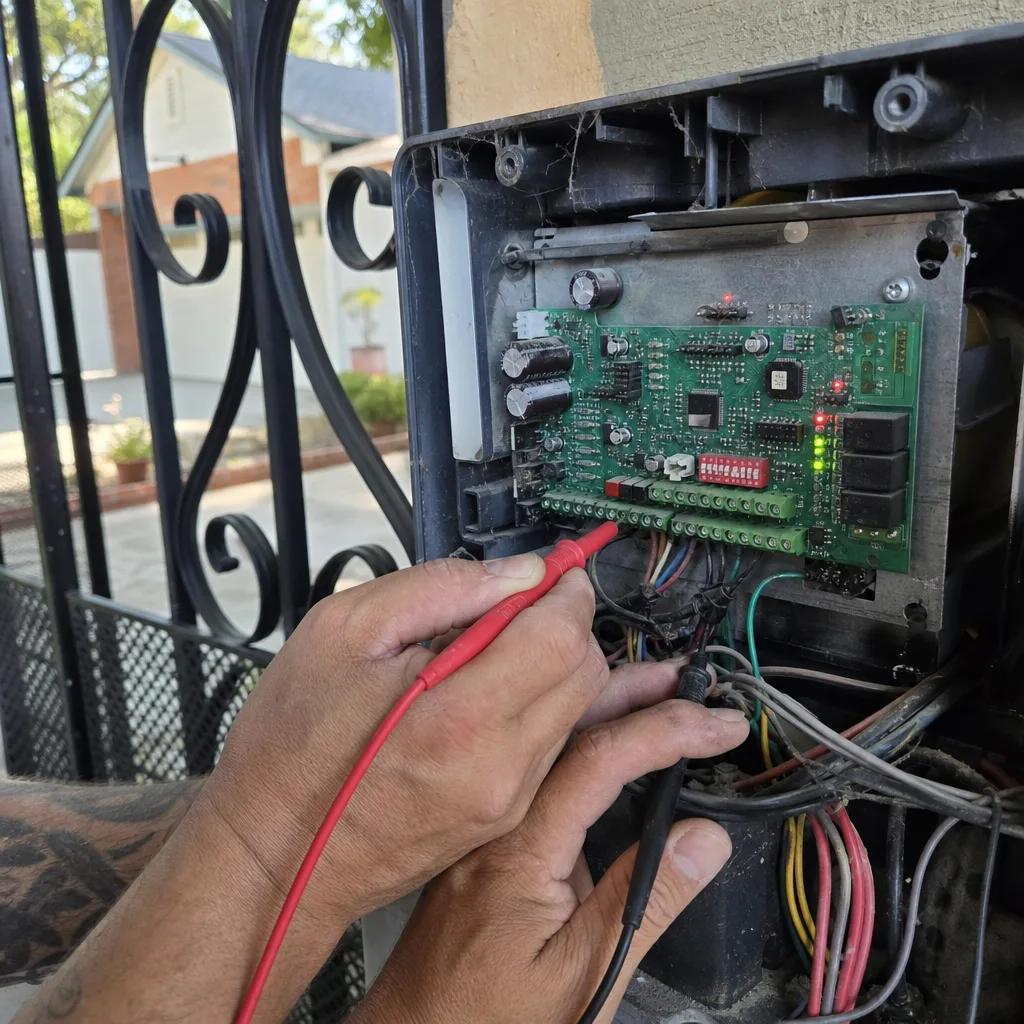
One warning worth putting in writing: a gate opener is a high-current electrical device, and the panel and wiring are not a DIY project. If a safety circuit has failed, do not open the control board and start poking around. The wiring carries enough current to hurt you, and a miswired safety circuit can make the gate operate unpredictably. This is a job for a trained professional who carries the right test equipment. Treat the safety systems like you would a circuit breaker panel: verify, don’t repair.
Common Mistakes to Avoid
When to Call a Professional
Most of this checklist is designed for any homeowner with a socket set and fifteen minutes. But some conditions need a trained eye and a welder, and the line is clear. Call a gate professional if the post base is cracked or the post is moving. Call if the gate has visibly sagged and the latch no longer lines up. Call if the motor runs but the gate doesn’t move, or if you smell burning from the opener housing. Call if the safety systems don’t respond to testing, or if you see exposed wiring anywhere on the gate or opener. And call if you don’t want to do any of this yourself and would rather hand it to someone who does it every day. Gatewood Fence & Gate offers free estimates in Encino, and you’ll reach a live person at (350) 247-4763, day or night. Hal has been fixing gates in Encino since 2001, and the name is on the shop.
Frequently Asked Questions
Lubricate hinge pins and rollers every three to four months in Encino, which works out to roughly four times a year. Late spring is the most important pass because the summer heat is when dry hinges bind and motors start working too hard. If your gate faces west into the afternoon sun, move to every three months during summer.
A basic maintenance and tune-up visit in Encino typically runs between $150 and $300, depending on the gate’s size, the opener’s age, and whether anything needs adjusting beyond routine lubrication and inspection. Full opener or hinge replacements are quoted separately and always priced before work starts. Call (350) 247-4763 for a free estimate and exact pricing.
You can handle lubrication, balance checks, battery tests, and visual inspections yourself with basic tools. Anything involving hinge repair, post resetting, motor replacement, or wiring is professional work because these are heavy, high-tension, and high-current components. When in doubt, call (350) 247-4763 and describe what you’re seeing; we’ll tell you straight whether it’s a DIY check or a service call.
The most common gate problem we see in Encino is dry, binding hinges that were never lubricated after installation, followed closely by post base movement from the clay-heavy soil after winter rain. Both are preventable with the four-times-a-year routine in this guide, and both are far cheaper to catch early than to repair once they’ve progressed. For deeper reading, see Gate Repair Permits, Codes & Inspections in CA: What You Need to Know.
A quality gate opener from a brand like Viking, Ghost Controls, or DoorKing should last between eight and twelve years in Encino’s heat, provided the gate stays balanced and the hinges stay greased. Heat shortens electronics lifespan, and a gate that fights its opener cuts that life by years. The battery backup typically needs replacement every two to four years.
Yes. Gatewood Fence & Gate works throughout Encino, including the hillside areas south of Ventura Boulevard where slope drainage, soil movement, and fire-season power shutoffs make gate maintenance especially important. If you’re checking our Gatewood Fence & Gate home page, you’ll see we’re local, owner-operated, and have our address published for anyone who wants to verify.
The Bottom Line
A gate is a mechanical system, not a decoration. It has hinges that need grease, posts that sit in moving soil, a motor that works harder than it should when nobody pays attention, and a backup battery that dies silently in the heat. Fifteen minutes, four times a year, catches all of it before it becomes an emergency. Use the right lubricant, check the balance by hand, inspect the post bases after rain, test the battery backup twice a year, and take photos every season. That’s the whole system. If anything looks wrong, or if you’d rather hand the whole routine to someone who has done it since 2001, call (350) 247-4763 and we’ll send someone who will actually show up. The price is quoted before the work starts, and the job carries the 90-Day Done Right Promise, in writing.
Written by Hal Gatewood, Owner at Gatewood Fence & Gate, serving Encino since 2001. Browse our more guides & resources.