
Last updated August 26, 2026
Free on-site gate assessment - hinges, posts, and your LiftMaster or Nice gate operator checked before anything is quoted
The assessment is free and the quote is the invoice.
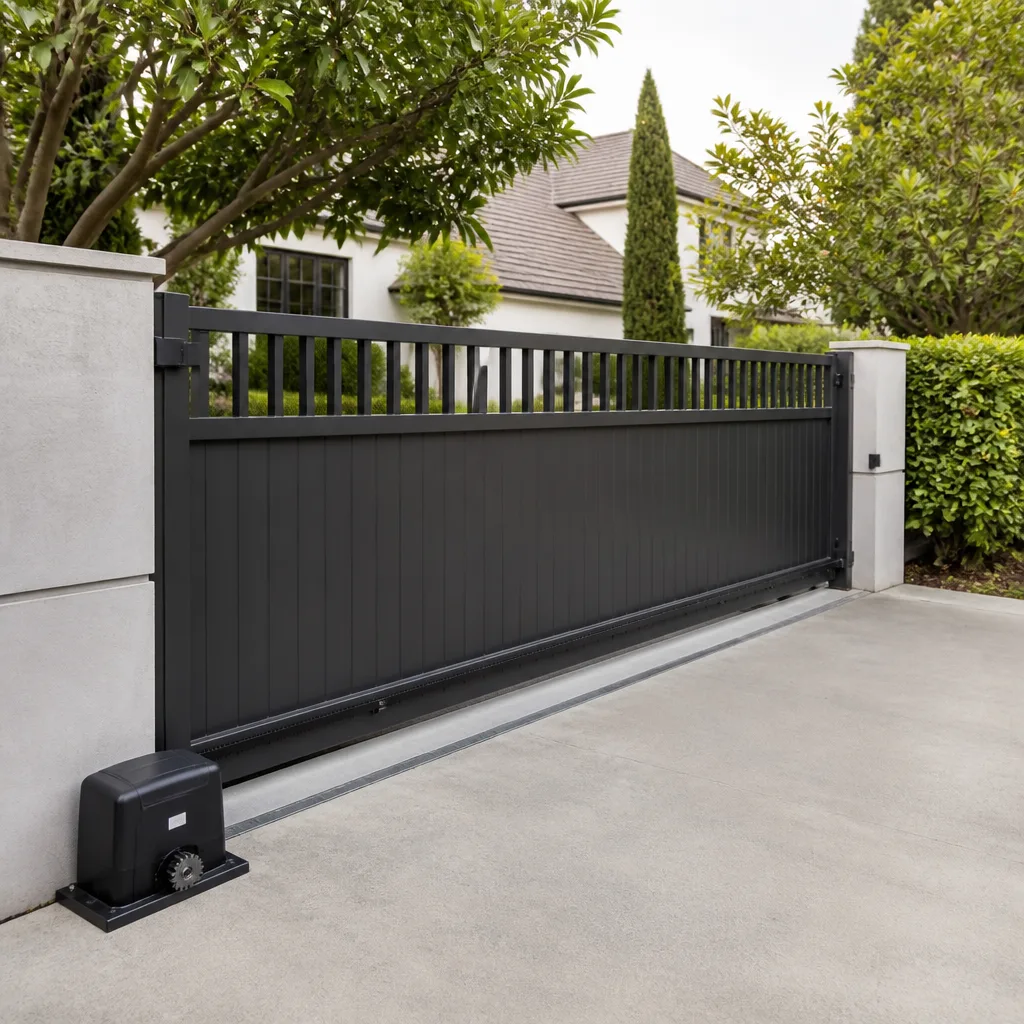
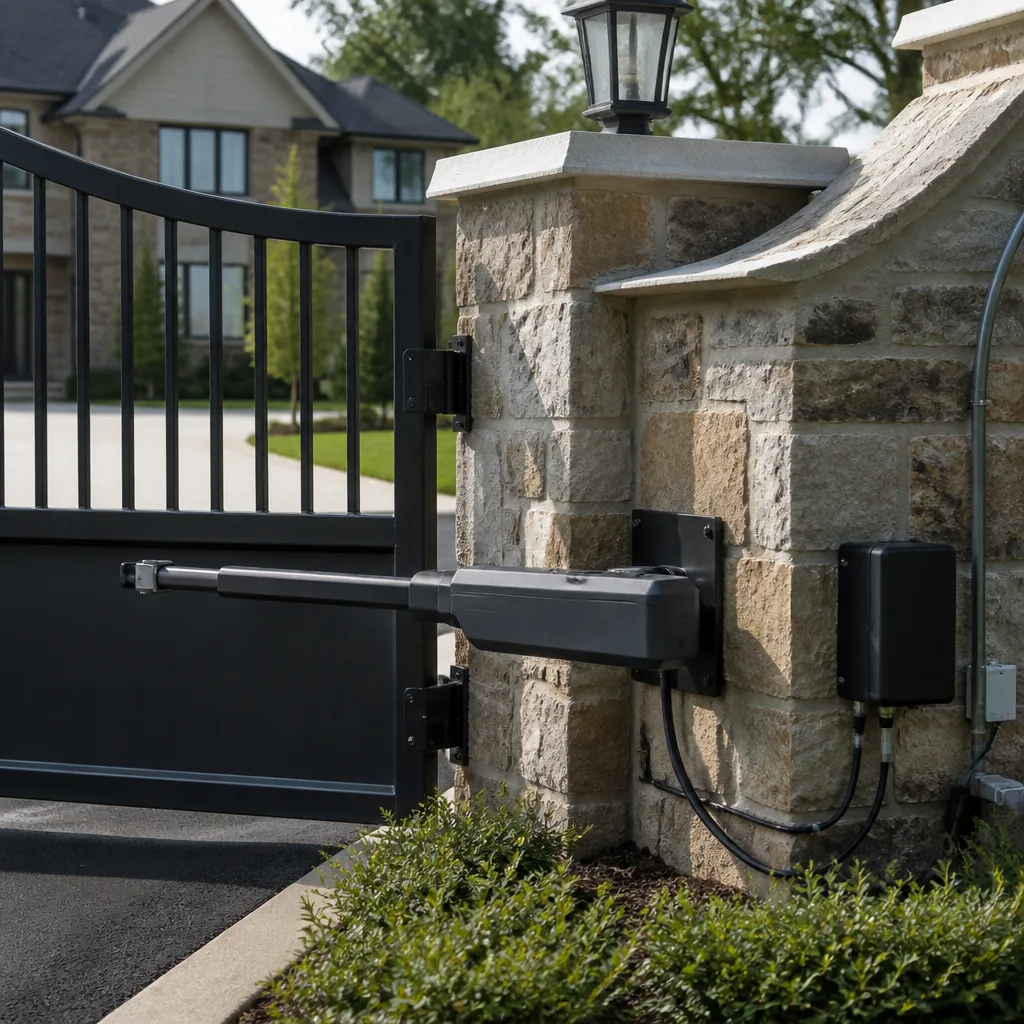
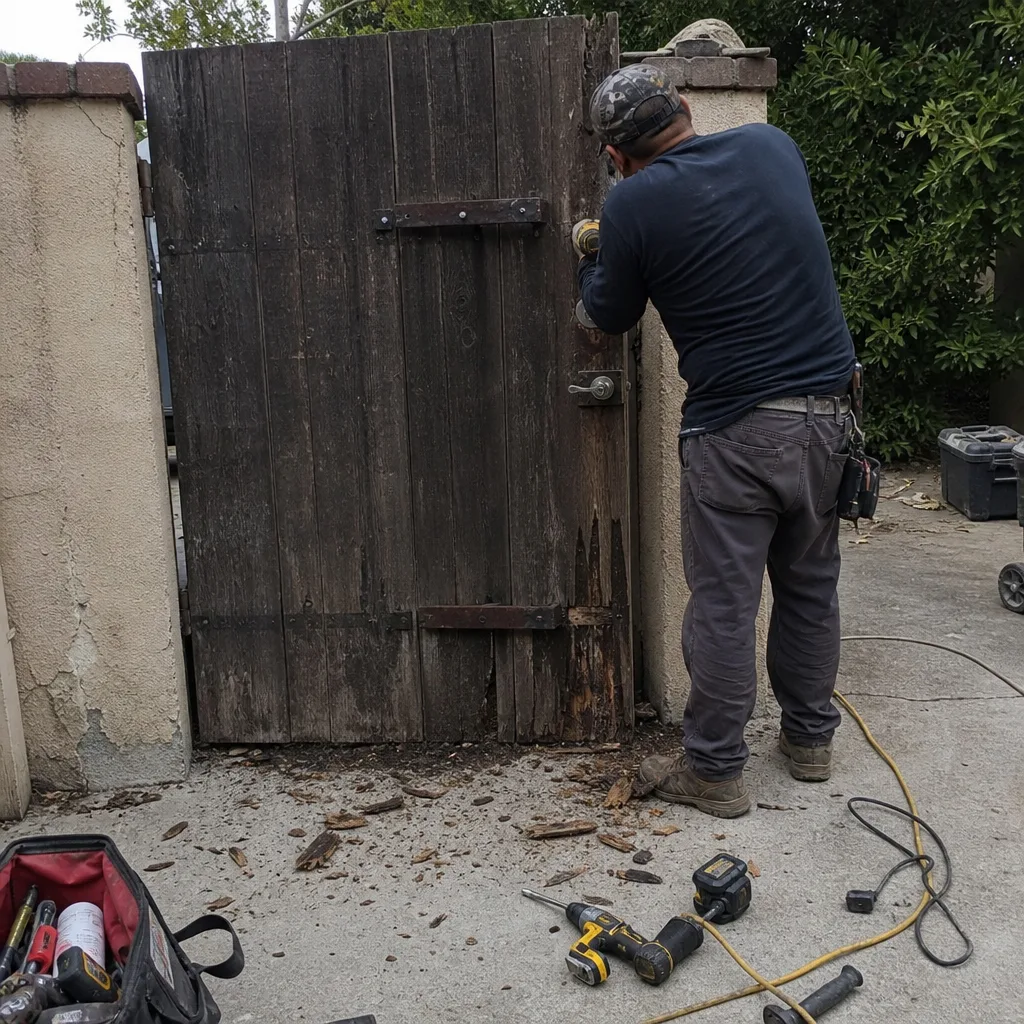 Before
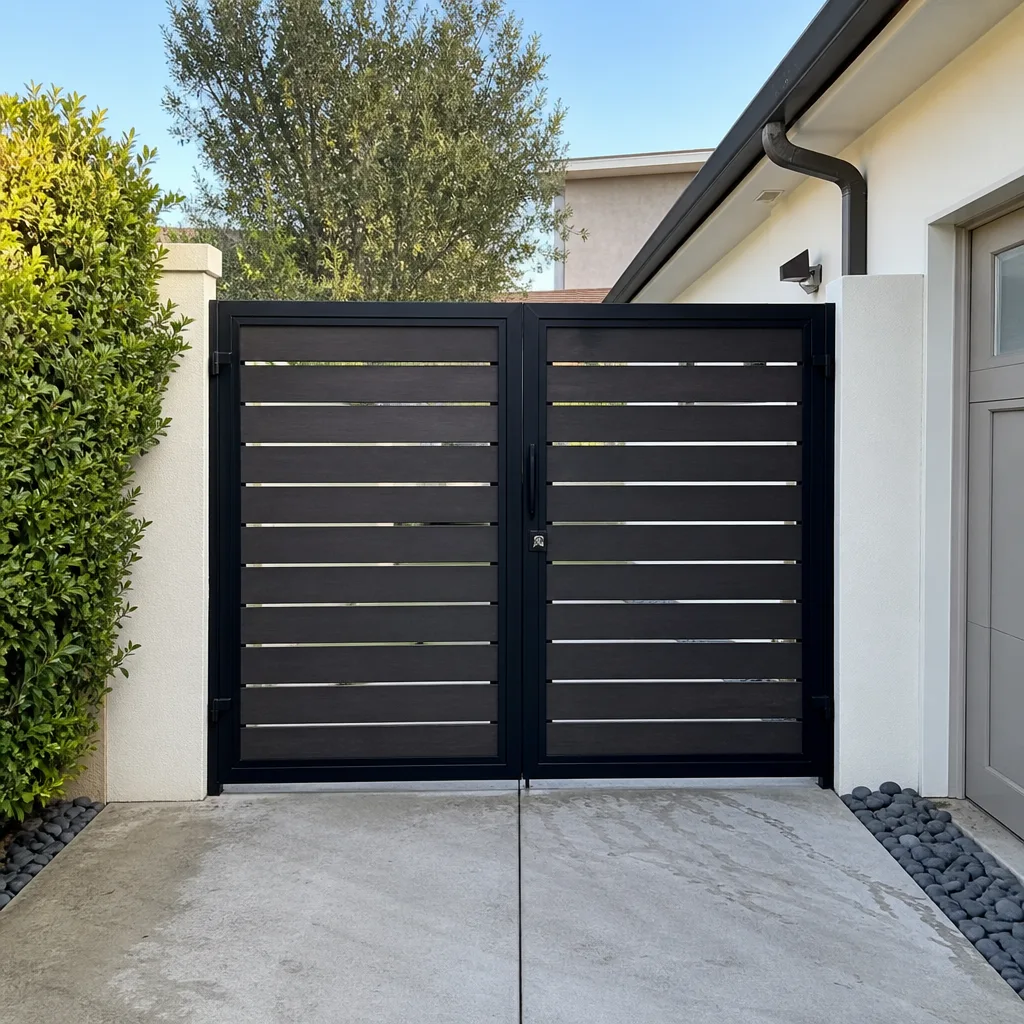 After
After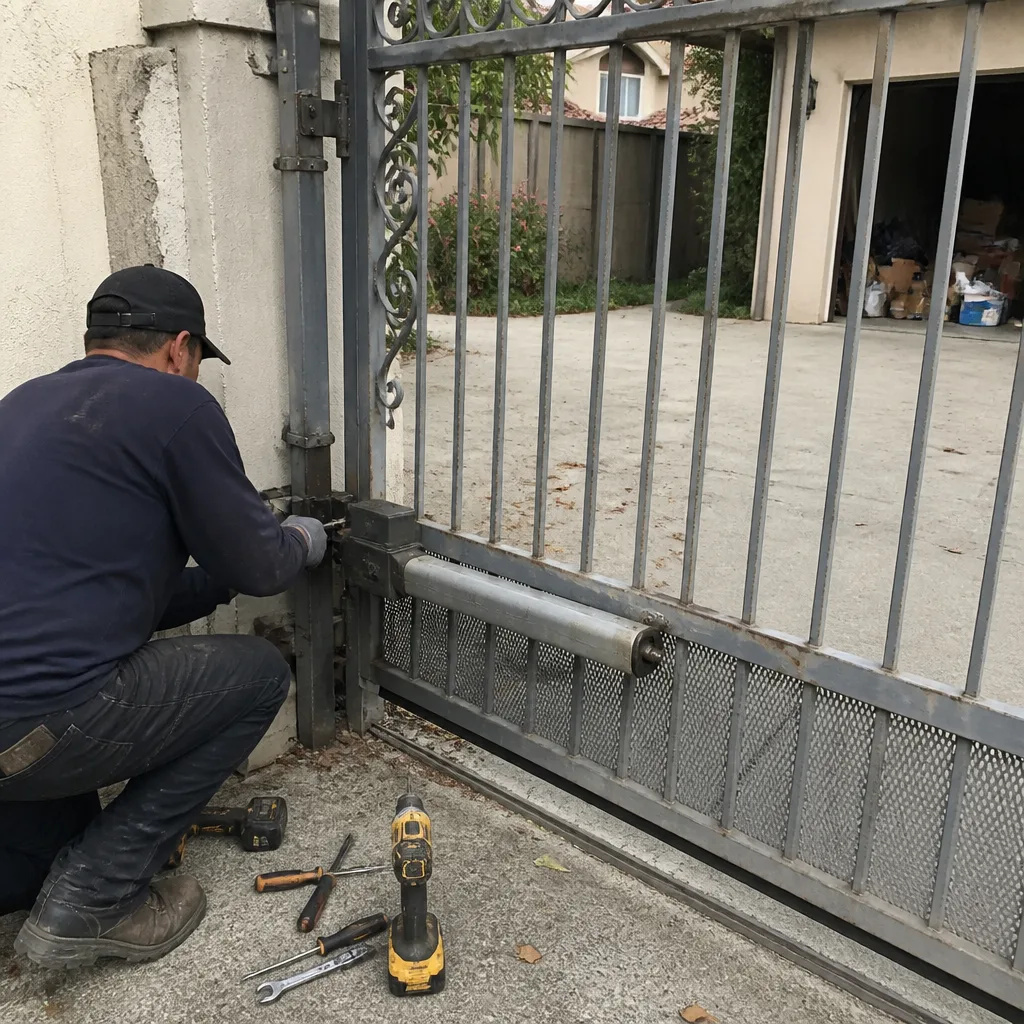 Before
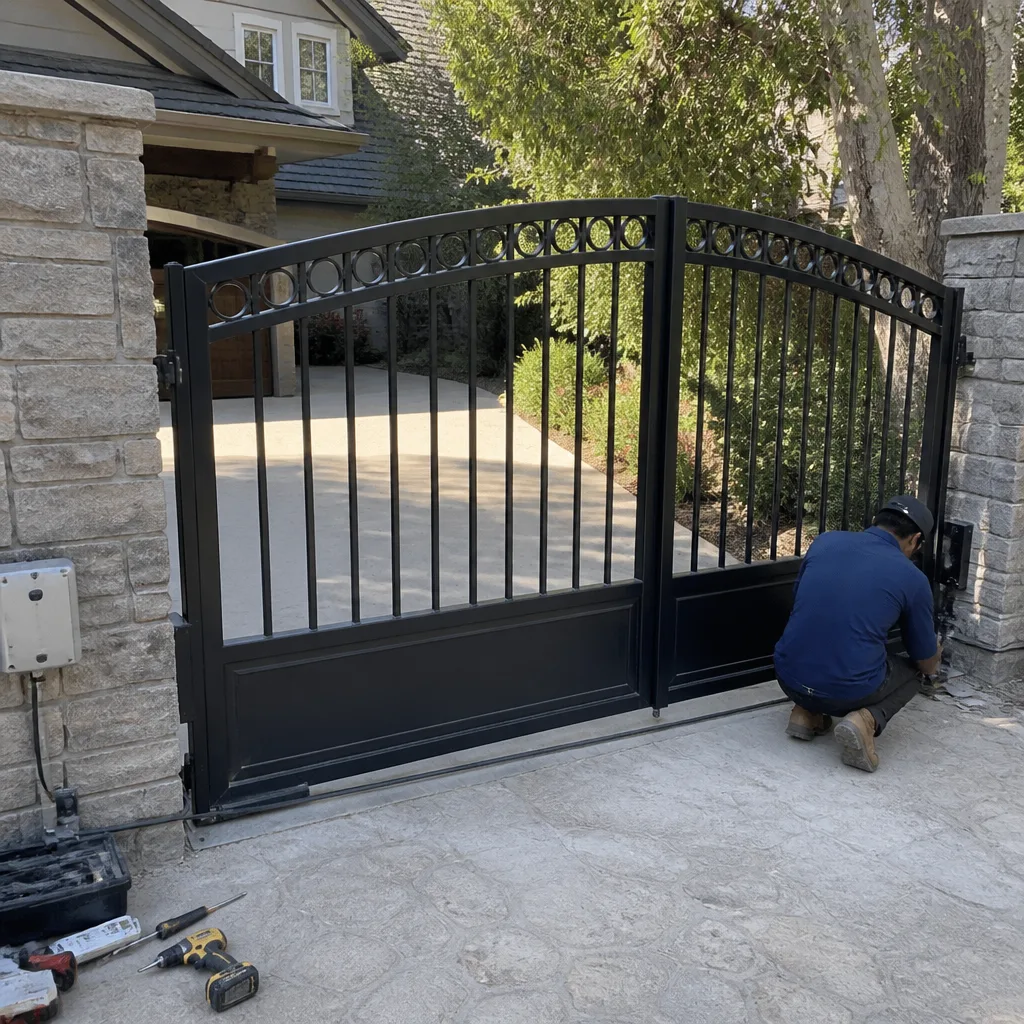 After
After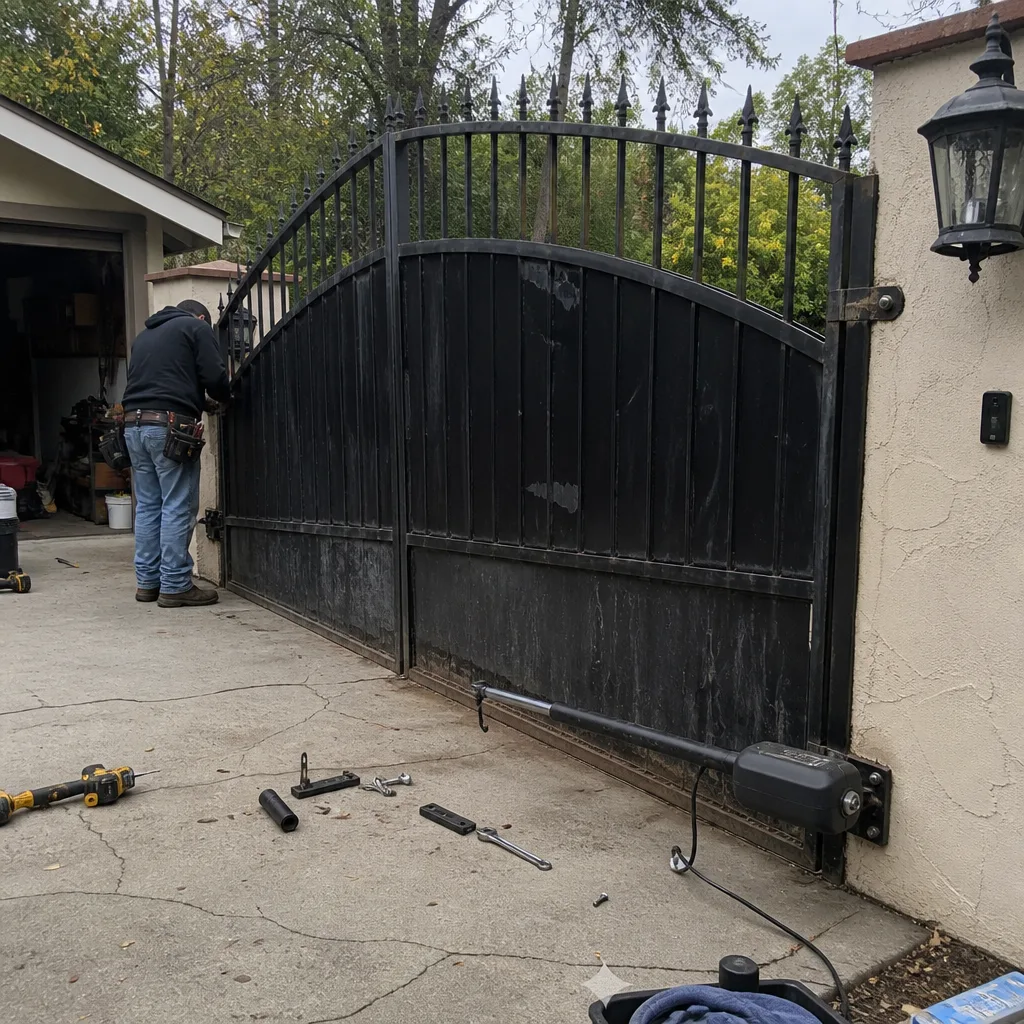 Before
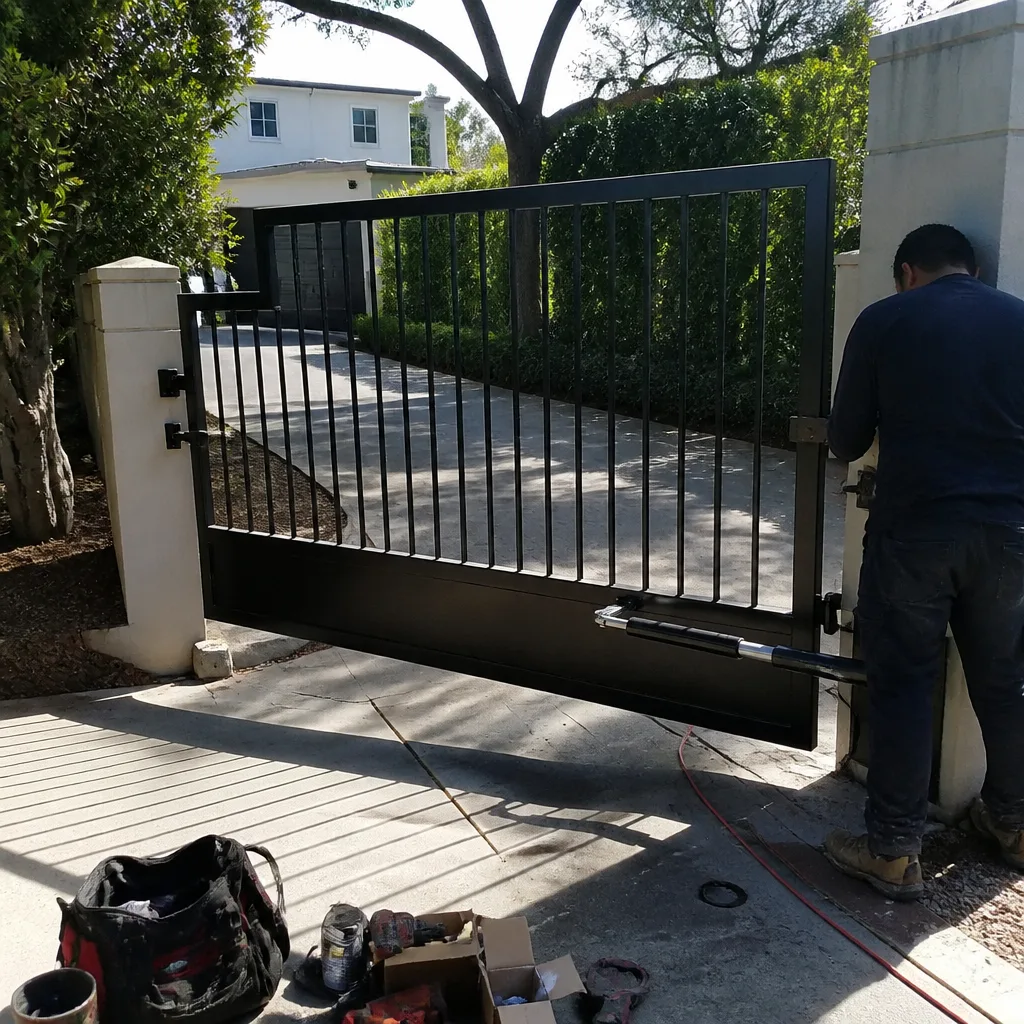 After
AfterGate Repair Warning Signs: A Encino Homeowner’s Reference Guide
Here’s the thing most Encino homeowners don’t realize until a gate has already failed: your gate has been telling you something is wrong for weeks, sometimes months. A grinding sound on open is not the motor working hard. It is the motor fighting metal-on-metal contact that is destroying both the gear and the track, and it gets roughly $400 more expensive for every week you wait. This guide translates what you’re seeing, hearing, and feeling from your gate into plain language with a severity rating for each sign. By the time you finish reading, you’ll know which problems need attention this week and which ones can wait until spring.
Quick Answer
The most common gate repair warning signs in Encino are a grinding or clicking sound during operation, a gate that moves slower than it did when new, a visible lean at the hinge post, rust at weld seams or hinge sockets, and an operator that hums without moving the gate. Any one of these deserves a phone call; two or more means the gate is actively damaging itself and the repair bill grows every week it’s ignored.
Table of Contents
- Sound-Based Diagnostics: What Your Gate Is Trying to Tell You
- Visual Post-Lean Measurement: Cosmetic or Structural?
- Three Electrical Warning Signs That Precede Motor Failure
- Slow Gate Travel Speed: The Stopwatch Test
- Rust Locations That Matter vs. Rust Locations That Don’t
- Seasonal Gate Issues Specific to Encino
- Common Mistakes to Avoid
- When to Call a Professional
Sound-Based Diagnostics: What Your Gate Is Trying to Tell You
Gates make four distinct problem sounds, and each one points to a different underlying issue. Unlike a check-engine light, your gate doesn’t hide the location of the problem. You just have to know what you’re listening for. In our experience across Encino, homeowners who can describe the sound accurately over the phone save themselves a full diagnostic visit because we already know where to look.
The Grinding Sound
A grinding sound on open or close means metal is rubbing against metal somewhere in the drive system. On a sliding gate, this is almost always the drive gear wearing against the rack, the wheels grinding on a track that’s out of alignment, or a wheel bearing that hasn’t seen lubrication in years. On a swing gate, grinding typically comes from the hinge itself or from an opener arm that has lost a bushing.
Severity: HIGH. This is the sound of parts destroying each other. Every cycle shaves a little more metal off. The repair goes from a $40 bushing replacement to a $340 gear and rack replacement within a matter of weeks. If your gate grinds, stop running it and call someone. You’re not saving money by using it “just a few more days.”
The Clicking Sound
A rapid clicking when you press the remote or keypad usually means the operator is receiving power but the start capacitor has failed or the limit switch is stuck. A slower, metallic click during travel often points to a cracked gear tooth catching on each revolution. Either way, clicking is the gate’s way of saying the electrical signal is reaching the motor but the mechanical side isn’t responding correctly.
Severity: MEDIUM. Clicking doesn’t usually damage the gate further on its own, but it means the gate is about to stop working entirely. And gates have a habit of failing in the open position or halfway across the driveway, which is a security issue for any Encino home.
The Humming Sound
A hum with no movement is the classic dead capacitor. The motor is receiving power and trying to start, but the capacitor that gives it the initial jolt has failed. You’ll hear a low electrical hum for five to ten seconds, then either nothing or a thermal overload click. This is the most misdiagnosed gate problem we see, because homeowners assume the motor itself is shot and start shopping for a full replacement.
Severity: MEDIUM. The capacitor is a $30 to $80 part. A new gate motor and opener is a $900 to $1,800 job. Before you authorize a replacement, make sure someone has actually tested the capacitor. We’ve seen national outfits quote full motor replacements for what turned out to be a capacitor we fixed on-site in 20 minutes.
The Stuttering or Jerking Sound
If your gate moves in fits and starts, hesitating mid-travel or jerking forward in bursts, you’re hearing an operator struggling against resistance it can’t overcome smoothly. On a sliding gate, this usually means the track has shifted, a wheel has flattened, or debris has built up in the track channel. On a swing gate, stuttering usually points to a failing hinge bearing or an opener arm that’s binding.
Severity: HIGH. The jerking motion puts shock loads through the operator gears, the mounting bolts, and the gate frame itself. A gate that stutters for a month will usually shear a gear or snap a weld. This is the gate equivalent of driving your car with a badly misfiring engine.
Visual Post-Lean Measurement: Cosmetic or Structural?
A leaning gate post is the most common structural problem we repair in Encino, and it’s also the one homeowners ignore the longest because it happens slowly. A post that was vertical in 2019 is now off by three or four degrees, and your eye has adjusted to it. Here’s how to measure whether the lean is a cosmetic issue or a structural emergency.
Step 1: Check the Post, Not the Gate
A gate sags in the hinge post, not in the middle. The panel itself is rigid steel or aluminum; it doesn’t bend unless something hit it. When a gate droops at the latch side, the problem is almost always the hinge post leaning outward under the weight of the gate. Put a level on the post above and below the hinge. If the bubble is off both top and bottom, the post is leaning.
Step 2: Check the Gap at the Latch
Measure the gap between the gate and the latch post at three points: top, middle, and bottom. On a properly hung gate, these three measurements are within a quarter inch of each other. If the top gap is noticeably wider than the bottom gap or vice versa, you’ve confirmed the sag and quantified it.
Step 3: Look at the Post Base
Examine where the post meets the concrete or ground. Is there a visible crack in the concrete around the post? Is there a gap between the post and the footing? Is the post itself rusting at ground level? Any of these means water has been working on the post foundation, and in Encino’s clay-heavy soil, seasonal swelling and shrinking makes the problem worse over time.
What the measurements mean: If the post is out of plumb by less than half an inch over four feet, you’re looking at normal settling and it can be corrected by re-shimming or replacing the hinge. If it’s out by more than an inch, the post needs to be dug out, re-set in concrete, and the gate re-hung. That’s not a repair you can do with a wrench.
One more note from two decades of fixing these: a leaning post never fixes itself, and the gate that hangs from it gets heavier on the hinge every month. The gate repair in Encino that starts as a $250 hinge replacement becomes a $1,200 post re-set if you wait a year.
Three Electrical Warning Signs That Precede Motor Failure
Here’s what most homeowners in Encino get wrong about gate electrical problems: they blame the remote battery. The remote is rarely the problem when the gate starts acting electrically strange. Here are the three signs your operator is failing electrically, long before the motor gives out completely.
1. The Gate Operates Only When You’re Standing Close
If your remote only works from 15 feet away or you have to point it directly at the receiver, the remote battery might actually be the culprit this once. But if you’ve changed the batteries and the range is still short, the receiver antenna in the operator has likely failed or the receiver board is losing sensitivity. That’s a component-level repair, not a battery issue.
2. The Gate Reverses Direction Mid-Cycle
A gate that starts closing and then reverses itself, or opens and immediately starts closing, is showing a failing limit switch or a safety sensor that’s sending false signals. Most people assume something is blocking the gate. When the sensors are clean and aligned and the gate still reverses, the switches inside the operator are wearing out. This matters because a gate that reverses unpredictably is a safety hazard, especially with kids or pets in the driveway.
3. The Operator Runs, The Gate Doesn’t Move
You press the button, you hear the motor spinning, but the gate stays parked. That’s the sound of a stripped gear inside the operator or a drive chain that has jumped its sprocket. The motor is fine. The connection between the motor and the gate has failed. This one confuses people because the operator “sounds normal.” But a spinning motor with no gate movement means internal mechanical failure, and it won’t fix itself. This is common on operators from Viking and Ghost Controls that have seen five-plus years of daily cycles without a gear inspection.
All three of these signs share one trait: they’re intermittent at first. The gate works fine on Tuesday, acts up on Wednesday, works again on Thursday. Intermittent is not the same as fixed. Intermittent means a component is in the process of failing completely, and it usually picks the worst possible moment to finish the job.
Slow Gate Travel Speed: The Stopwatch Test
A gate that operates slowly is a gate that’s working harder than it should, and “slower than it used to be” is a measurable fact, not a feeling. Here’s how to check your gate’s travel speed against a reasonable baseline with nothing but a stopwatch.
How to Time Your Gate
- Open the stopwatch app on your phone.
- Press the remote and start the timer at the exact same moment.
- Time from the moment the gate starts moving to the moment it reaches its full open or fully closed position.
- Do this three times and average the results.
- Compare against the manufacturer spec. Most residential swing gate operators from DoorKing and Elite are set to open or close a 12 to 14 foot gate in 15 to 20 seconds. Sliding gates from Viking or Ghost Controls typically travel at 10 to 14 seconds for a similar width.
If your gate was set to close in 15 seconds when it was installed and now takes 25 or 30 seconds, the operator is laboring against resistance. That resistance is usually one of three things: a binding hinge or wheel, a failing capacitor that can’t deliver full starting torque, or a motor that’s losing efficiency as its windings degrade. All three get worse with time.
This is also a useful data point when you call for service. Instead of saying “my gate is slow,” you can say “my gate takes 28 seconds to close and it was 15 seconds when installed.” That tells us exactly how much resistance has built up in the system.
Rust Locations That Matter vs. Rust Locations That Don’t
Not all rust is created equal. Here’s the unglamorous truth from welding gates for two-plus decades: surface rust on a flat panel is cosmetic. Rust at a weld seam, a hinge socket, or a bolt hole is structural. The difference determines whether you need a wire brush and some paint, or a welding repair before the gate fails under its own weight.
Rust That Doesn’t Matter (Yet)
Flat panel rust is what you see on the face of the gate where the powder coating has been scratched or worn thin by weather. You’ll notice it on the bottom rails where irrigation water splashes up, and on the top rail where sprinklers hit the same spot every morning. This rust is ugly, but it’s not dangerous. The panel is supported by its frame, and the frame is where the strength lives. Scrub it, prime it, paint it when the weather is dry, and the gate will keep doing its job.
Rust That Matters Immediately
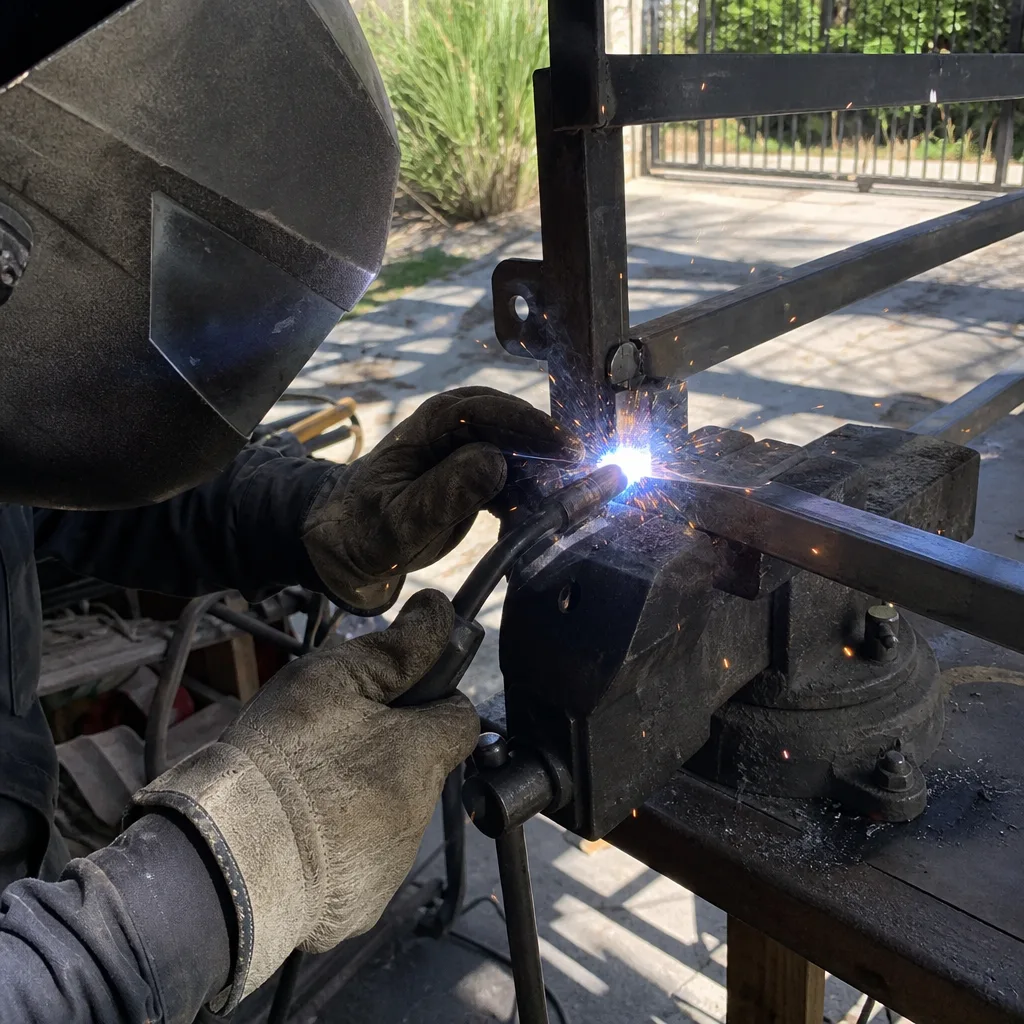
Weld seams: Rust at a weld seam means the weld itself is oxidizing. The weld is the joint where two pieces of steel became one. When that joint rusts, the connection is weakening invisibly from the inside. A gate that’s been welded at the corners and shows rust at those corners is a gate that will eventually snap at the corner. This is where on-site welding matters: the repair happens in your driveway, at the exact failure point, without removing the gate.
Hinge sockets: Rust around the hinge socket or hinge post means water has been sitting inside the hinge assembly. The hinge carries the entire weight of the gate, and it’s under constant stress. When the hinge socket rusts, the hinge develops play, the gate starts to sag, and the stress transfers to the operator. A gate that sags in the hinge post, not in the middle, is a hinge failure in progress.
Bolt holes: Rust at bolt holes means moisture is wicking into the bolt threads. The bolt is surrendering its grip. On a gate opener mount, this shows up as the operator shifting slightly when it runs. That slight shift multiplies the load on every part of the drive system.
In Encino, the rust we see is less about heavy rain and more about irrigation overspray. Sprinkler heads aimed at the gate post, or lawn fertilizer that gets misted onto the gate during the summer, will eat through a powder coat faster than weather alone. Aim the sprinklers away from the gate and the rust problem usually slows down dramatically.
Seasonal Gate Issues Specific to Encino
Encino’s climate creates gate problems on a schedule. Knowing the schedule helps you catch issues early. For seasonal gate repair care in Encino, here’s what we see every year.
Summer heat and motor strain: Encino regularly hits triple-digit temperatures in July and August. Operator motors run hotter, capacitors lose efficiency faster in sustained heat, and thermal overload switches trip more often. If your gate stops working on a hot afternoon but works again in the evening, it’s likely a thermal overload, not a dead motor. But repeated thermal trips damage the motor windings over time. A gate that thermally trips more than once in a summer needs attention before the next heat wave.
Winter rain and track washing: When the winter rains come, sliding gate tracks in Encino fill with silt and debris washed down from the hillsides. A track that was fine in October binds up by January. The gate motor works harder to push through the debris, and the extra strain shows up as slow travel speed or a humming operator. Clearing the track and checking the wheels after the first heavy rain should be on every Encino homeowner’s list.
Clay soil and post movement: The soil in much of the San Fernando Valley is expansive clay. It swells when wet and shrinks when dry. Over a few years of wet winters and dry summers, this cycle works gate posts loose in their concrete footings. A post that’s solid in August might be noticeably loose by February. The fix is often a post re-set with a deeper footing, which is a job we do regularly across Encino.
How Hal Approaches Gate Repair
Hal Gatewood has been fixing gates since 2001, and the way he works is simple: repair first, replace only when it’s truly dead. If you’re wondering how to choose the right professional, see our guide on how to hire a gate repair contractor in Encino. A gate motor that another company says is junk usually has a $40 capacitor or a $90 gear that can be replaced on-site. A sagging gate usually needs a post re-set or a hinge rebuild, not a whole new gate panel. The on-site welding capability means the repair happens in your driveway, not at a shop across town, and you can watch it happen and ask questions while it’s being done.
Every job, whether it’s a hinge replacement or a full gate installation in Encino, carries the 90-Day Done Right Promise in writing. If something isn’t right, one call brings Hal back. That’s not a marketing phrase. It’s stamped on the invoice. The name is on the shop, the address is published, the license number is there for anyone to look up. Hal answers his own phone. You’ll get a live person at 24/7, not a voicemail and not a queue.
Common Mistakes to Avoid
- Ignoring the grinding sound because “it still works.” The gate still works right up until it doesn’t, and every grinding cycle is doing measurable damage to the gear and track. A $40 fix becomes a $400 fix in weeks, not months.
- Assuming the remote battery is dead every time the gate acts up. If you’ve changed the battery and the problem persists, the problem is in the operator. Stop burning through batteries and get the receiver or board tested.
- Tightening the hinge bolts on a leaning gate. Tightening bolts on a post that’s sinking or leaning doesn’t correct the lean; it just transfers the stress to the bolt threads. The post is the problem, not the bolts.
- Painting over rust without addressing the cause. If the rust is at a weld seam or hinge socket, paint just hides the problem for a few months. The structural rust continues underneath, and by the time it’s visible again, it’s worse.
- Lubricating everything with WD-40. WD-40 is a penetrant, not a lubricant. On gate hinges and wheels it actually strips away the grease that was doing the job. Use a proper lithium or silicone grease on moving parts.
- Calling the company with the cheapest ad first. The cheapest gate repair quote in Encino often becomes the most expensive when the truck shows up and the price “unexpectedly” changes. One that quotes a price on the phone and honors it at the door is the one you want.
When to Call a Professional
Call a professional if your gate grinds, stutters, hums without moving, reverses unpredictably, or leans visibly at the post. Call if the travel speed has dropped by more than 25% from spec. Call if you see rust at a weld seam or hinge socket. And call if the gate has simply stopped working, whether it’s stuck open or stuck closed. Gate springs, cables, and operator internals hold tension and stored energy. A trained professional knows how to release that tension safely. Gatewood Fence & Gate offers free estimates to homeowners in Encino. For more guides & resources, visit our blog. Call (350) 247-4763 and Hal will answer the phone himself.
Frequently Asked Questions
Most gate repairs to Encino homeowners run between $180 and $600. A capacitor replacement is $120 to $180. A hinge or wheel replacement runs $200 to $450. A post re-set runs $600 to $1,200 depending on the footing. Operator replacement runs $900 to $1,800 installed. Gatewood Fence & Gate gives you a firm quote before any work starts, and the price is the price. Call (350) 247-4763 for a free estimate.
Yes. A live person answers the phone 24/7, and for genuine emergencies like a gate stuck open with no way to secure the property, most Encino calls get same-day response. Call (350) 247-4763 and you’ll hear a voice, not a voicemail.
Hal services nine major gate brands: LiftMaster, FAAC, BFT, Linear, Viking, Ghost Controls, DoorKing, Elite, and Mighty Mule. If your operator isn’t on that list, call anyway. Two decades of experience means most residential operators are familiar territory, and if the brand is truly unserviceable, Hal will tell you honestly instead of selling you something you don’t need.
Intermittent operation usually points to a failing limit switch, a thermally overloaded motor, or a receiver board that’s losing sensitivity. The intermittent phase is the early warning. The permanent failure is coming. Have it diagnosed while it’s still acting up occasionally rather than waiting for the day it stops altogether.
Yes. Gate installation in Encino through Gatewood Fence & Gate includes the gate panel, posts and footings, operator, safety sensors, and the electrical run from the house to the operator. Everything is quoted before work starts. No surprises at the door.
A grinding gate is not an immediate safety hazard in most cases, but it is actively damaging itself. The grind is metal on metal, and the metal is being worn away with every cycle. The longer it runs, the more extensive and expensive the repair. Stop using it and get it looked at.
The Bottom Line
Your gate talks. The grinding, clicking, humming, and stuttering sounds each point to a specific problem. The lean you can measure with a level and a tape measure tells you whether the post needs attention now or can wait. The rust you can see at a weld or hinge defines whether you’re fixing cosmetics or structure. And the slow travel speed you can time with a stopwatch measures the exact resistance building in the system. Listen to the gate, measure what you can, and call Gatewood Fence & Gate at (350) 247-4763 when you find something. Hal will tell you straight whether it’s urgent or whether it can wait, and the estimate is free either way.
Written by Hal Gatewood, Owner at Gatewood Fence & Gate, serving Encino since 2001.