
Last updated August 26, 2026
Free on-site gate assessment - hinges, posts, and your LiftMaster or Nice gate operator checked before anything is quoted
The assessment is free and the quote is the invoice.
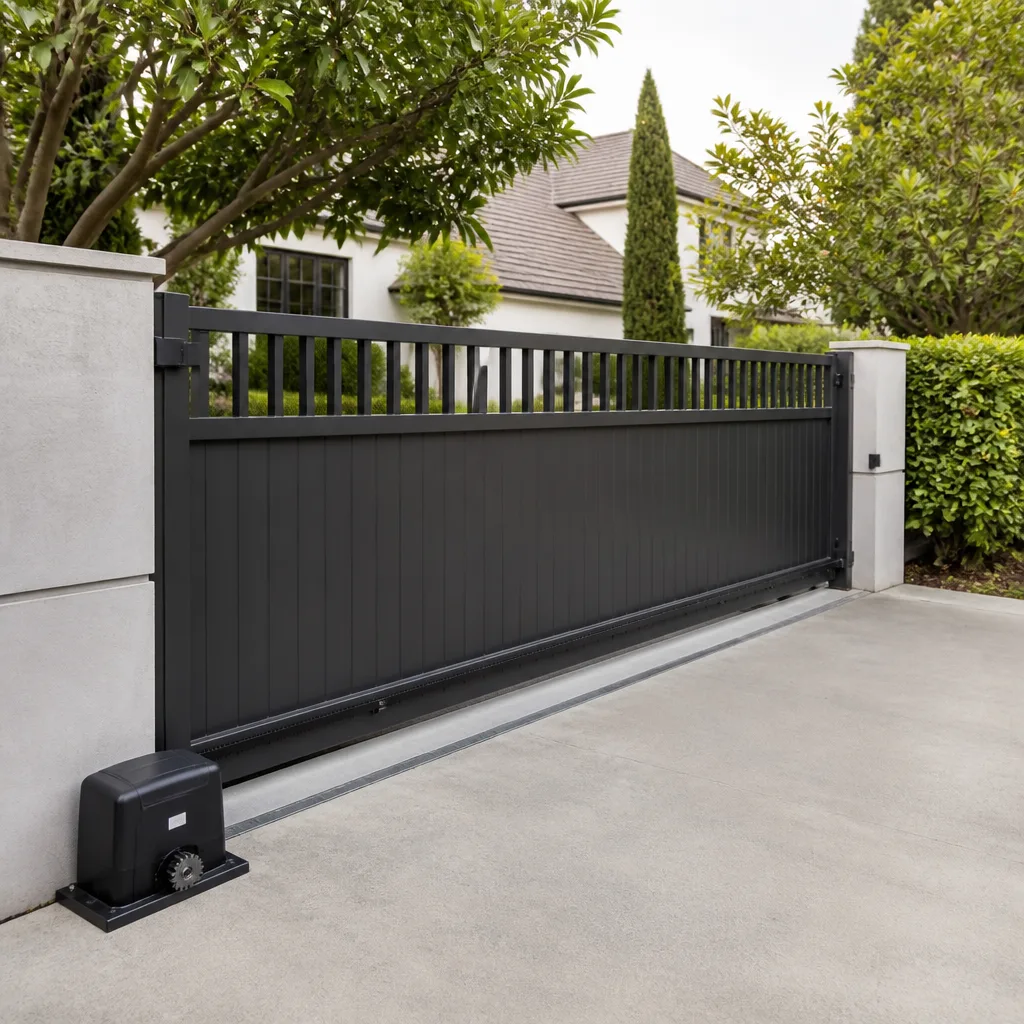
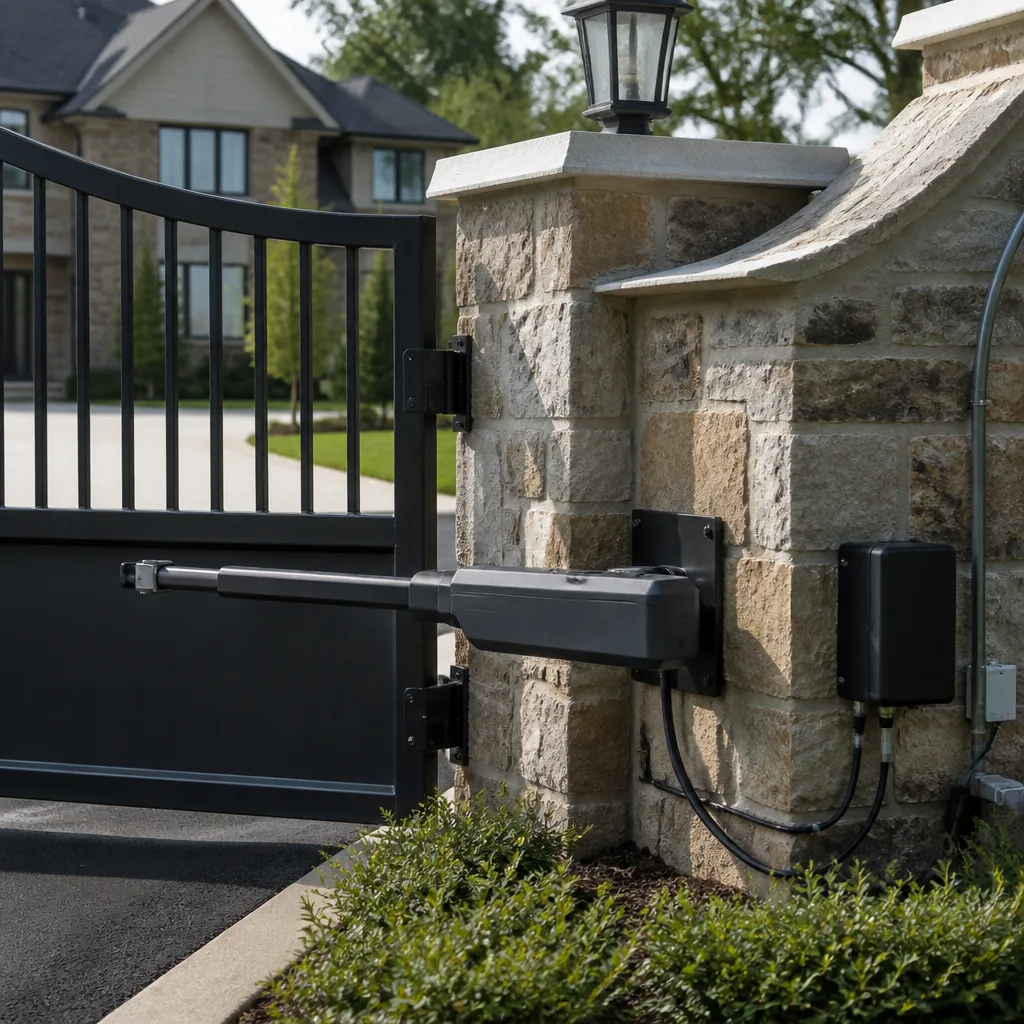
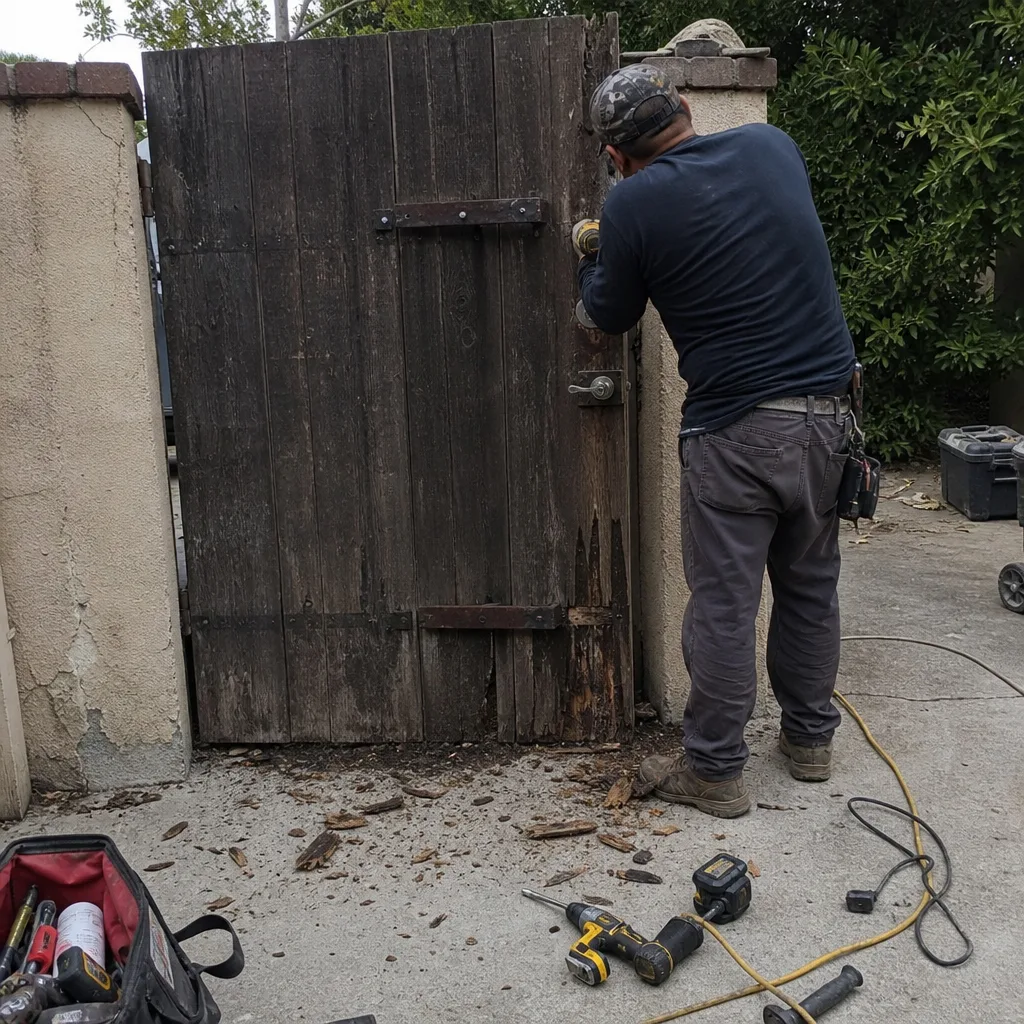 Before
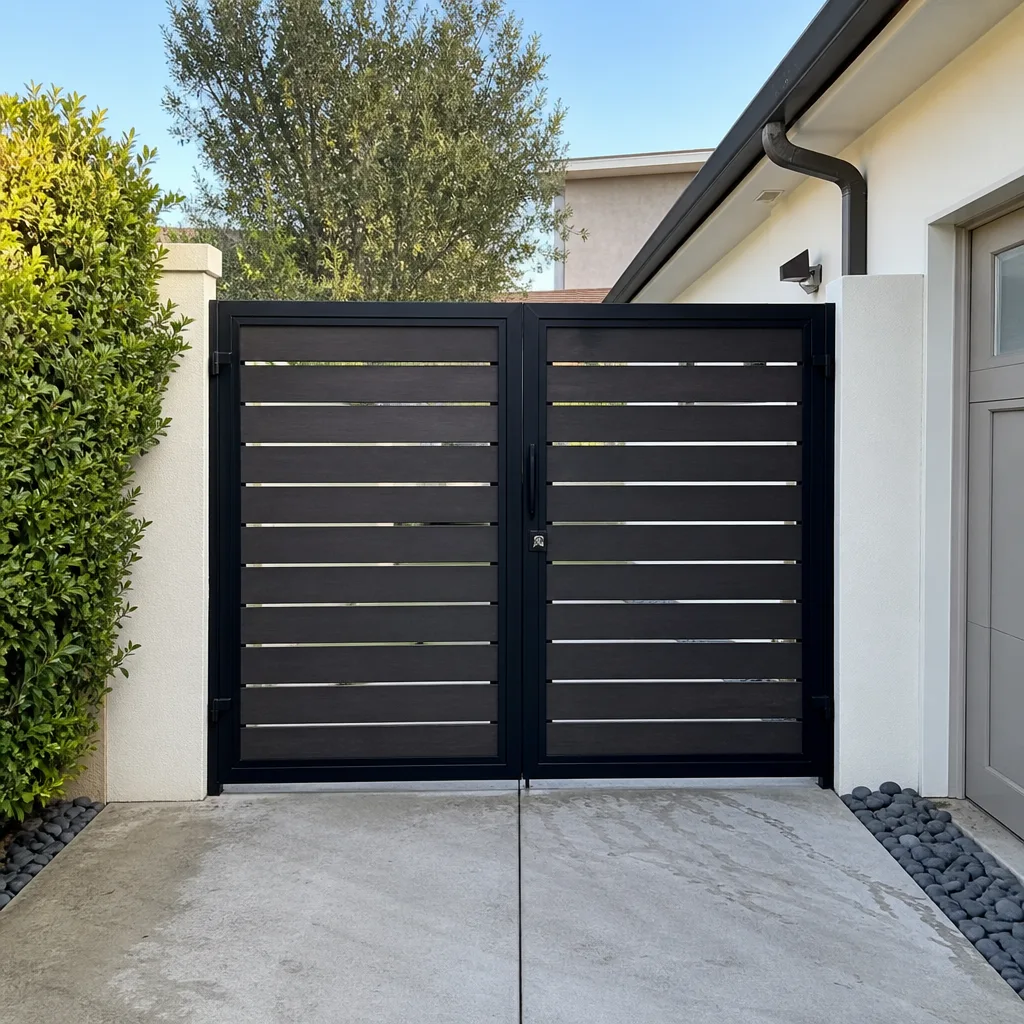 After
After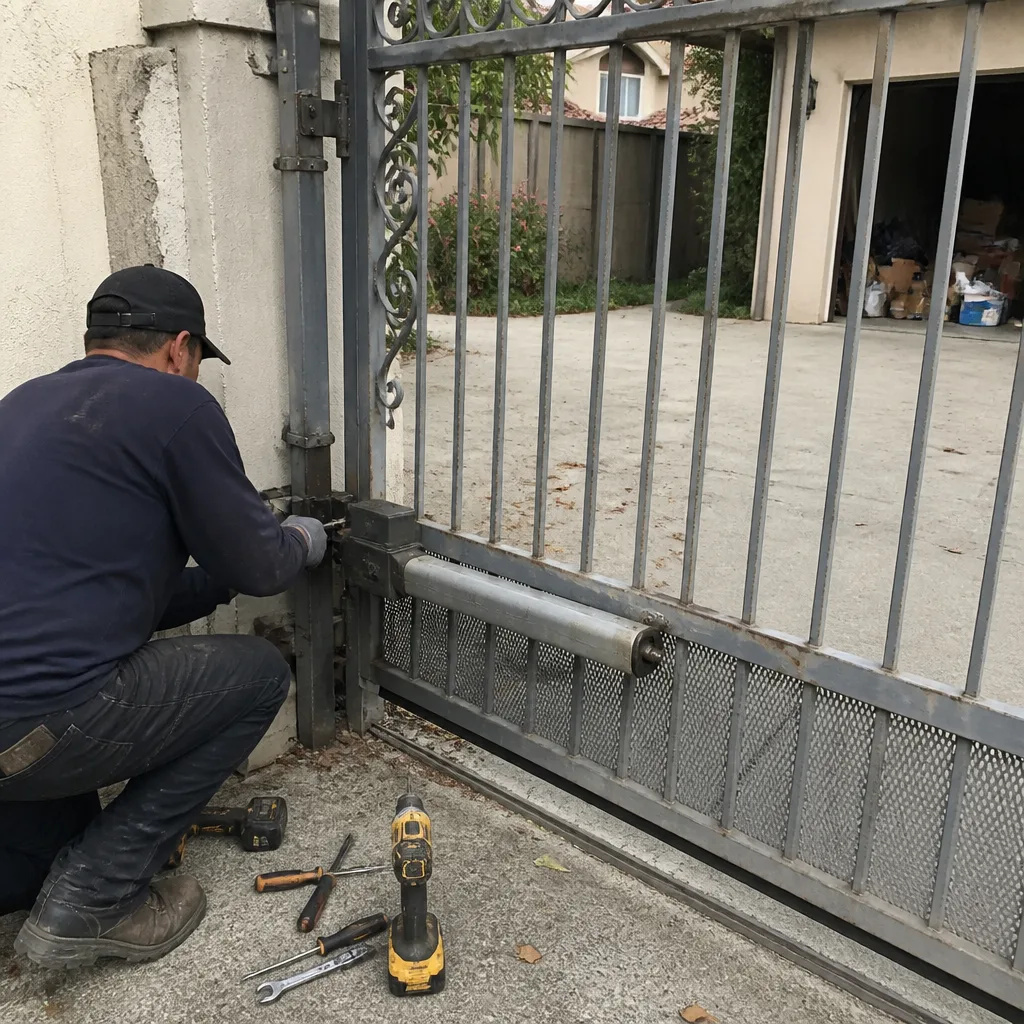 Before
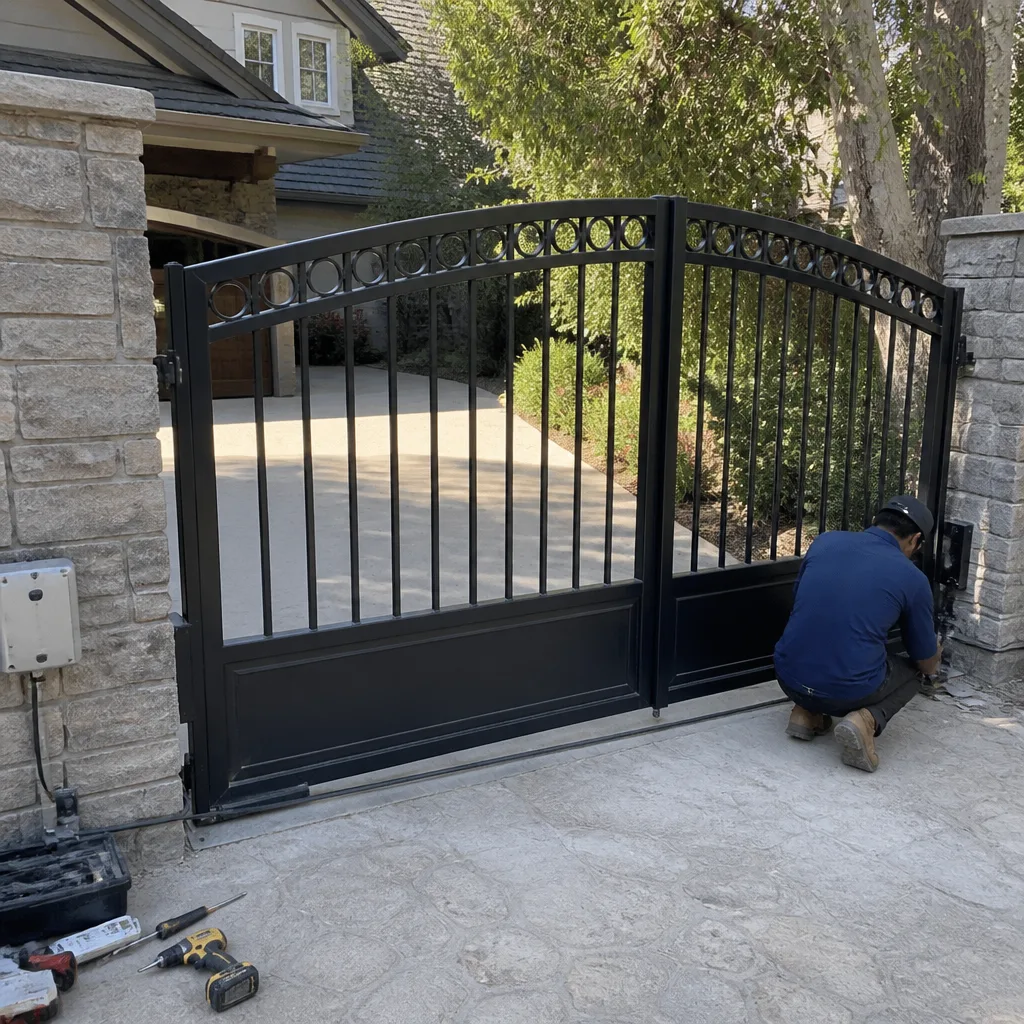 After
After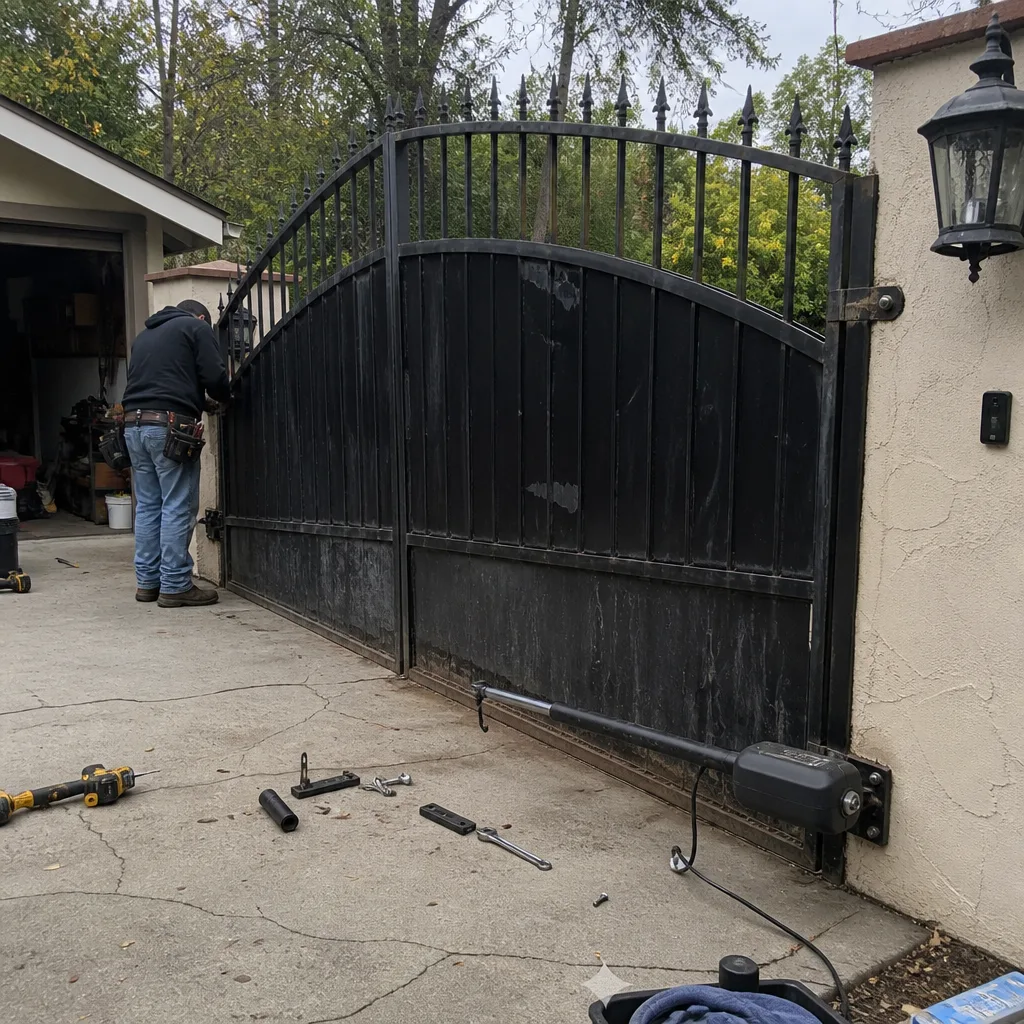 Before
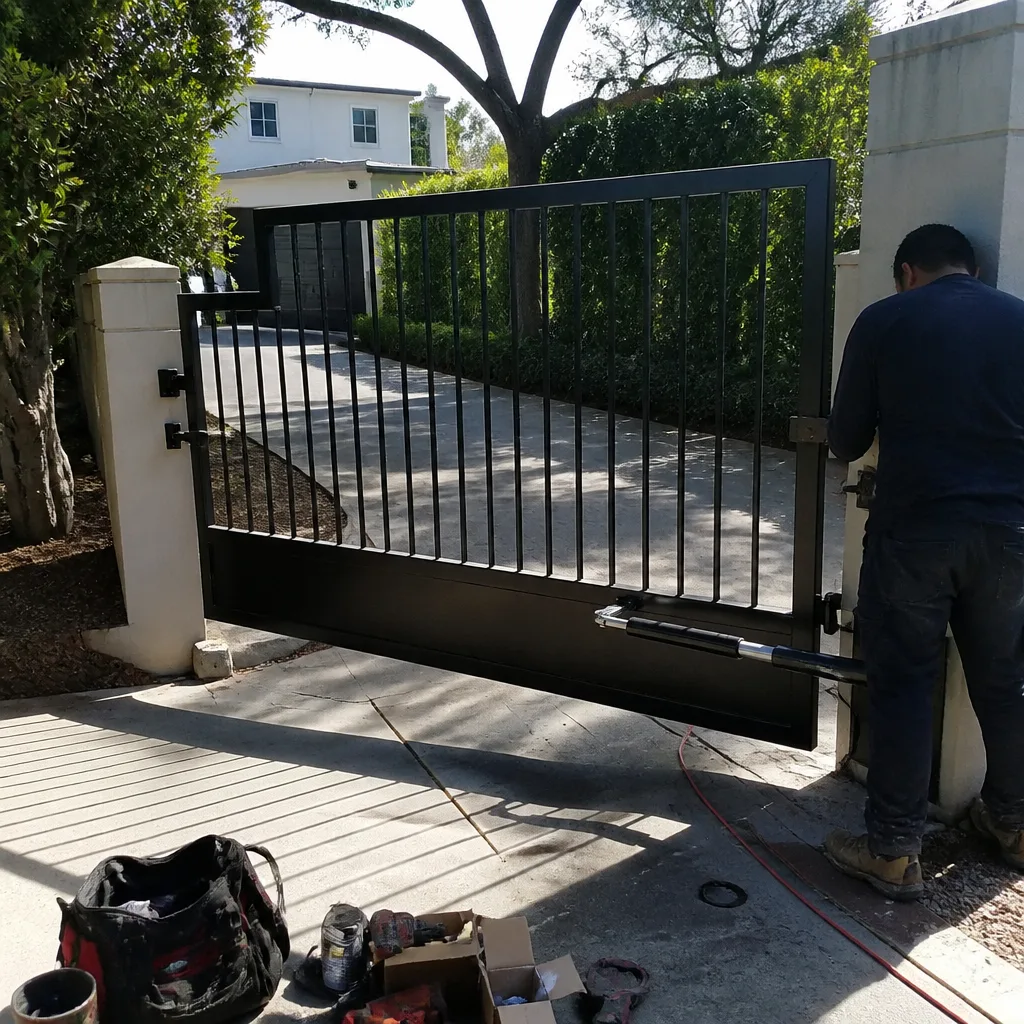 After
AfterSeasonal Gate Repair Care for Encino: Year-Round Homeowner’s Guide
September and October are the months our phone rings most in Encino. Not because gates break in the fall. Because the summer heat already broke them, and nobody noticed until the first cool morning when the gate started groaning on its track. The San Fernando Valley heat doesn’t announce itself the way a winter storm does. It works quietly from June through September, cooking circuit boards, baking lubricant until it turns to varnish, and softening the ground around post footings until the gate’s geometry starts to drift. This guide maps the four real stress periods Encino gates live through each year, which components fail during each one, and what you can do about it before a gate stops opening entirely. For more guides & resources, see our blog.
Quick Answer
The best seasonal gate care in Encino means checking four things at four specific times of year: operator electronics and battery health in late summer, gate alignment after the Santa Ana wind season (October through December), post footings and drainage after winter rain, and surface rust in spring before it eats through the metal. A homeowner can handle basic inspections in about 20 minutes per season, but realignment, circuit board replacement, and any welding should always go to a pro with Gate Repair services.
Table of Contents
- The Summer Heat Cycle: Why June Through September Kills Gate Electronics
- Santa Ana Wind Season: What October Through December Does to Gate Alignment
- Winter Rain and Post Footings: Why a Few Inches Hit Harder Than They Should
- Spring Rust Inspection: Catching Surface Oxidation Before It Becomes Structural Loss
- The Four-Note Calendar System: Making Seasonal Checks Actually Happen
- Component-by-Component Seasonal Care Checklist for Encino Gates
- Common Mistakes to Avoid
- When to Call a Professional
- Frequently Asked Questions
- The Bottom Line
The Summer Heat Cycle: Why June Through September Kills Gate Electronics
Encino summers run hot. Not “warm afternoon” hot. The kind of hot where a metal gate panel in direct sun can reach 150 degrees on the surface, and the operator box mounted to it soaks up heat all day long. Most homeowner-installed gate operators use circuit boards rated for standard operating temperatures, and when temperatures inside the control box climb past 130 degrees for hours at a stretch, solder joints expand and contract. Do that 90 days in a row and hairline cracks form. The gate works fine in July. It fails in October when the cracked joint finally separates.
We see this pattern every year in Encino. A homeowner calls us in early fall, certain the gate “just broke.” What actually happened is the gate operator’s main control board spent the summer cooking. Some newer operators, including models from Linear and Viking, have thermal protection circuitry that shuts the board down rather than letting it overheat, but even those have limits when the operator is mounted on a west-facing gate with no shade. The heat also kills sealed lead-acid backup batteries. A battery that should last three to four years might last two if the operator enclosure sits in full afternoon sun. Heat accelerates the chemical breakdown inside the battery, and by the time the first power outage hits, the battery is already dead.
What to Check in August and September
- Open the operator enclosure. If it feels hot to the touch on the inside at 10 a.m., it’s already overheating. Look for discolored wire insulation or a plastic smell. Both mean the board is running too hot.
- Test the backup battery. Unplug the operator from power (flip the breaker) and run the gate. If the gate barely moves or won’t move, the battery is dead. A healthy battery should run the gate at least a few cycles.
- Check for shade. If your operator gets full western exposure from 2 p.m. to 6 p.m., install a simple shade structure or reposition the enclosure. The operator still needs airflow, so don’t wrap it.
If you have an operator from DoorKing or Ghost Controls, the same rules apply. The electronics don’t care whose name is on the box; they care how hot the box gets. And heat damage isn’t covered under most warranties. The best move is a seasonal inspection before the first cool weather makes you think everything is fine.
Santa Ana Wind Season: What October Through December Does to Gate Alignment
The Santa Ana winds start in Encino right around the time the temperatures finally drop. Those winds are dry, sustained, and they push a gate hard. A gate that swings freely on a calm day becomes a sail in 40-mile-per-hour gusts. Even a well-hung gate can start dragging or binding after a bad wind event, because the wind doesn’t just push the gate panel; it torques the hinges and flexes the post. Over a season of repeated wind events, the gate’s geometry shifts. It sags a quarter inch. Then it catches on the latch. Then the operator starts pulling harder than it should, and strain works its way back into the motor and the board.
We tell Encino homeowners to walk their gate line after any wind event over 30 miles per hour. Look at the gap between the gate and the latch post. If the gap is wider at the top than the bottom, the gate has settled out of alignment. Look at the hinges. If the top hinge has vertical play, the post itself may have moved. A gate sags in the hinge post, not in the middle, and that is where we start when we realign one.
What to Check After a Santa Ana Event
- Latch gap consistency. Measure the gap at the top, middle, and bottom of the gate where it meets the latch post. All three should be within a quarter inch of each other.
- Operator strain. If the operator sounds different on a windy week than it did the week before, it’s working harder. That extra load shortens the motor’s life in a measurable way.
- Surface scraping. Look for fresh scrape marks on the gate’s bottom edge or along a slide track. New marks after a windstorm mean the gate has moved and is now dragging where it didn’t before.
Some wind-related movement is normal. An inch of drift over ten years is one thing. A quarter inch of drift in a single wind season is something else, and it’s worth having a professional look at the posts themselves. The fix is often straightforward: re-set the post footing, shim the hinge, or weld a small adjustment plate. Fix the panel without the post and you’ll fix it twice. We’ve been doing gate repair in Encino long enough to know the difference between a hinge problem and a footing problem by looking at the scrape pattern.
Winter Rain and Post Footings: Why a Few Inches Hit Harder Than They Should
Encino gets maybe 15 to 20 inches of rain in a wet year. That doesn’t sound like much compared to the Pacific Northwest or the Gulf Coast. But Encino also sits on soil that swings between two extremes: bone dry for eight months, then suddenly saturated. That cycle is harder on post footings than a place with consistent moisture, because the soil literally changes volume during the transition. Clay-heavy soil expands when it gets wet. A gate post set in a three-foot concrete footing can still shift if the surrounding soil swells unevenly, especially if the footing wasn’t poured below the frost line or wasn’t wide enough in the first place.
Here’s the part most homeowners miss: you can’t always see post movement from the top. A post can move at the base and the visible top might only shift a fraction of an inch. The gate still operates, but the strain on the hinges and the operator increases. Then a few months later, a hinge weld cracks or the operator burns out, and the homeowner thinks it’s a random failure. It’s not. It’s the post that moved in January, finally collecting its debt in July.
The annual inspection that catches movement early is simple. After the first significant rain, run the gate manually and watch the post where it enters the ground. Look for any visible gap that opens between the concrete and the post, or any cracking in the concrete itself. Use a level on the post in two directions. If the bubble is off by more than a small fraction, note it and check again in a month. If the movement is progressive, that’s the warning sign. A post that has shifted and stabilized might be fine. A post that’s still moving is a problem that gets more expensive every week it’s ignored.
Winter Drainage Check
- Clear debris around the post base. Leaves and mulch hold moisture against the concrete, which accelerates the wet-dry cycle.
- Check for pooling. If water puddles within two feet of a post after rain, the drainage needs attention. A simple swale or gravel trench can move water away from the footing.
- Inspect the weep holes. If your gate is a metal box or panel style, make sure any drain holes at the bottom are clear. Water trapped inside a gate panel rusts it from the inside out, and you won’t see the damage until it’s too late.
If you’re considering a new gate, the winter months are also a good time to evaluate whether your current setup has adequate footings. We handle gate installation in Encino, and the difference between a gate that lasts 20 years and one that shifts in five comes down to what’s buried underground, which nobody sees and too many installers skip.
Spring Rust Inspection: Catching Surface Oxidation Before It Becomes Structural Loss
Spring in Encino is the right time to address cosmetic rust before it becomes structural rust. The distinction matters more than most people realize. Surface oxidation is a film of rust that forms on the surface of the metal. It looks bad, but it hasn’t compromised the strength of the material. Structural rust is different: the metal has actually lost thickness, and the component can no longer carry the load it was designed for. A gate hinge with surface rust keeps working. A gate hinge with structural rust can shear off without warning.
The transition happens faster in Encino than in some other climates because of the summer heat and the winter moisture combination. The heat accelerates the rust chemical reaction, and the winter rain provides the moisture. What starts as a light orange film in March can become significant pitting by September if it’s not addressed. The good news is that spring is also the easiest time to fix it. The temperatures are mild, the metal is dry, and a proper sand, prime, and paint job has months of dry weather to cure before the next rain cycle.
How to Tell Surface Rust from Structural Rust
- Look at the edges. Rust on the flat surface of a panel is usually surface rust. Rust at the edges of a hinge or bracket, where the metal was cut or welded, is often deeper.
- Tap the area with a screwdriver. If it makes a solid metallic sound, the metal is intact. If it sounds dull or flaky, a piece of the metal has rusted away.
- Measure the depth. If the rust has pitted more than about 1/16 inch into a load-bearing component like a hinge or post, that component needs replacement, not just paint.
- Inspect weld points. Rust at welds is structural more often than not, because weld material is more reactive than the surrounding metal.
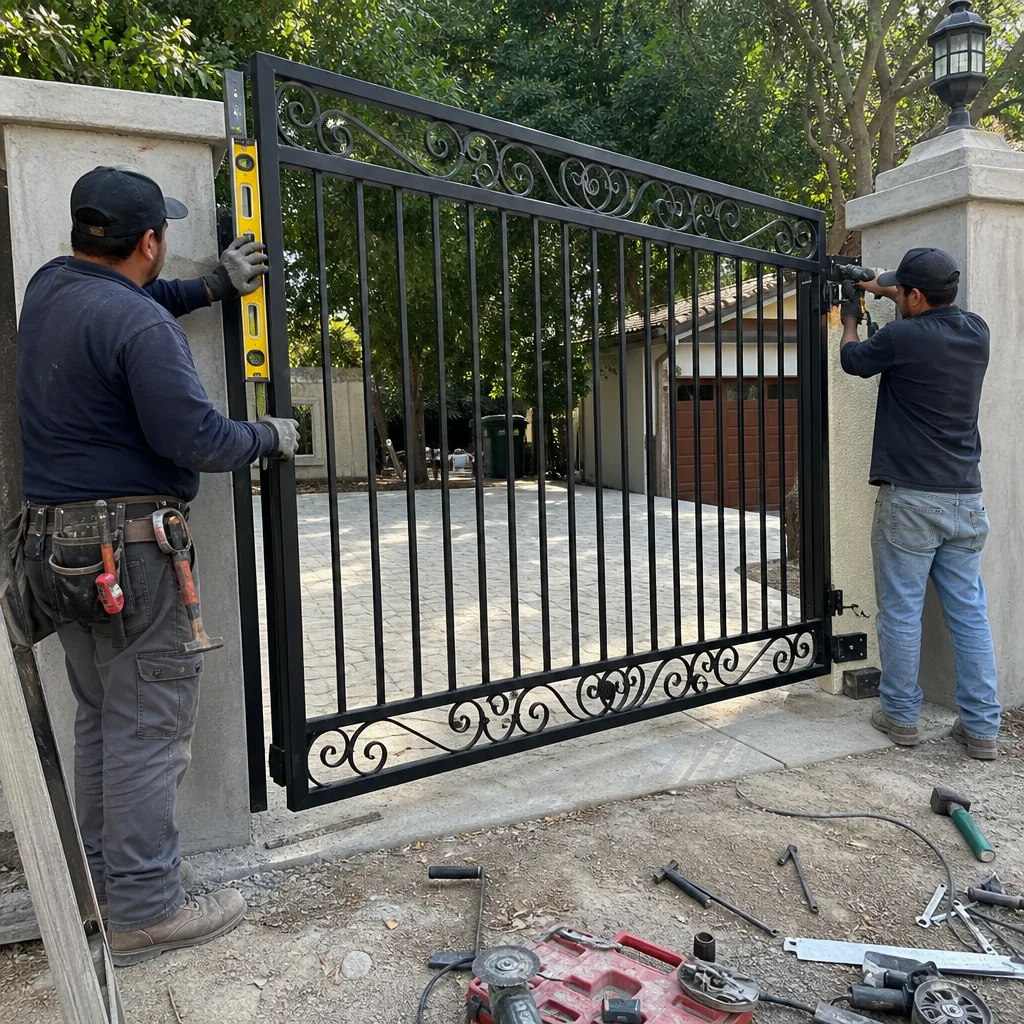
We weld on site. If a bracket is rusted through, we don’t haul the gate away and replace the whole thing. We cut out the damaged section and weld in new metal, right in your driveway. That’s the repair-first philosophy, and it’s why a lot of the gate repair calls we take in Encino end up costing less than the quote the homeowners got from a national outfit that wanted to sell them a whole new gate. The name is on the shop, and the shop is down the road.
If you’re checking rust on an automatic gate, remember the operator itself matters too. A rusty gate is harder to move, and the operator compensates by working harder. We service operators from Viking, Linear, Ghost Controls, and DoorKing, and a common secondary problem is a motor that failed because it spent two years fighting a gate that was rusting into place.
The Four-Note Calendar System: Making Seasonal Checks Actually Happen
Every homeowner in Encino who has ever read a gate-maintenance article has the same problem: they read it, they agree with it, and then they never do it. That is not a lack of discipline. It’s a lack of a system. The fix is not another list of tasks. The fix is a reminder that fires when the problem actually appears. Here is the system we recommend to every homeowner who asks about seasonal gate care in Encino: four calendar notes, one per season, each one tied to a specific observable condition rather than just a date.
- March 1: “Touch the gate operator.” Walk outside and put your hand on the operator enclosure at mid-morning. If it’s warm but not hot, fine. If it’s already hot, take a picture and start thinking about shade. This one check before the heat builds tells you whether your operator is headed for a rough summer.
- June 1: “Run the gate manually.” Disengage the operator and open and close the gate by hand. It should move smoothly with steady effort. If it catches, scrapes, or feels heavier on one end, something is off. This is the moment to catch small alignment problems before the summer heat makes them worse.
- October 15: “Look at the gap.” Measure the gap between the gate and the latch post at three points. If the wind season has moved anything, you’ll see it here first. This is also the time to test the backup battery: flip the circuit breaker and run the gate.
- December 15: “Walk the post bases.” After the first good rain, inspect the concrete around each post. Look for gaps, cracks, or soil washout. If anything looks different from last year, call someone.
That’s four reminders a year, each one taking less than a half hour. The beauty of tying each check to a real condition rather than just a date is that it makes physical sense. March is when the heat starts building. October is when the winds start blowing. December is when the rain starts soaking. The gate tells you when it needs attention; you just need to be listening at the right times.
Component-by-Component Seasonal Care Checklist for Encino Gates
Different components fail in different seasons. Here’s the complete map of what to check, when to check it, and what failure actually looks like. If you only do one thing from this guide, make it this section.
| Component | Season to Check | What Failure Looks Like | What to Do |
|---|---|---|---|
| Circuit board | Late summer (Aug-Sep) | Gate works intermittently, then stops. Board may be discolored. | Replace the board. Don’t wait for complete failure. |
| Backup battery | Late summer (Aug-Sep) | Gate won’t run during a power outage, or battery swells. | Replace every 2-3 years regardless of appearance. |
| Hinges and brackets | After Santa Ana winds (Oct-Dec) | Visible sag, uneven latch gap, scraping. | Realign, tighten, or weld as needed. |
| Post footings | Winter (Dec-Feb) | Gaps between concrete and post, new concrete cracks, post leaning. | Professional inspection; footing reset if movement is progressive. |
| Gate panel metal | Spring (Mar-Apr) | Surface rust film or pitting at edges and welds. | Sand, prime, and paint for surface rust. Replace or weld for structural rust. |
| Track and rollers (slide gates) | Spring and autumn | Gritty sound, jerky movement, visible wear on roller wheels. | Clean, lubricate, and replace worn rollers. |
| Safety edges and photo eyes | Every season | Gate fails to reverse when obstructed. | Test monthly. Replace immediately if not functioning. |
Notice that the safety edges and photo eyes deserve year-round attention. These aren’t seasonal; they’re constant. If your gate has a motor, it has a safety edge or photo eye, and if that component fails, the gate can close on a person or a car. Test it monthly by blocking the gate’s path while it’s closing. If it doesn’t reverse, the gate is unsafe and needs service immediately. We carry replacement edges for every major brand, including Linear and Viking units, and we stock them on the truck.
If your opener is having problems beyond a broken edge, check out our page on gate motor and opener repair in Encino. It explains the difference between a motor that needs replacing and an opener that just needs a board.
Common Mistakes to Avoid
- Lubricating the gate track with WD-40. WD-40 is a solvent, not a lubricant. It strips away what’s left of the old lubricant and leaves a film that attracts dust. Use a proper lubricant made for gate tracks and rollers, and apply it sparingly. A dirt-cheap can of silicone spray does more good than a fancy penetrating oil that collects grime.
- Ignoring the operator noise change. A gate that groans a little louder than it did last month is sending a signal. The longer you ignore it, the more parts you’ll be replacing. We have replaced motors in Encino that would have only needed a simple hinge adjustment if the homeowner had called the first time the sound changed.
- Letting the gate sit in the same position for months. Automatic gates need to cycle. A gate that never moves develops flat spots on rollers, stiff hinge points, and weak battery performance. Run your gate at least once a week even in the off-season, which in Encino means the rare week you’re not using it.
- Painting over active rust without preparing the surface. A quick spray of paint over rust traps moisture and oxygen against the metal and actually accelerates the oxidation. You have to sand to bare metal first. It takes longer, but it’s the difference between fixing the problem and hiding it for six months.
- Adjusting the hinge bolts without checking the post first. If the post has moved, tightening the hinges just transfers the load to the next weakest point. You might fix the sag and cause a weld crack. Make sure the foundation is solid before you start tuning the hardware.
- Skipping the backup battery replacement because “it probably still works.” Backup batteries have a lifespan whether or not they get used. A battery that sat in an Encino summer enclosure for three years is likely dead, even if the gate works fine. Do not wait for a blackout to find out.
- Waiting to fix rust until it’s a visible hole. By the time you see daylight through a gate panel, the structural integrity is already compromised. Early rust is a quick fix. Late rust is a replacement.
When to Call a Professional
There’s a line between what a homeowner can check and what a professional should handle. You can run the gate, listen for changes, measure gaps, and inspect for rust. You should not replace a circuit board, weld a cracked hinge, reset a post footing, or realign a gate that’s moved more than a quarter inch. Those jobs require tools, training, and experience. A mistake fixing a gate alignment can send a 300-pound panel into a car or a person.
If anything in this guide triggers a red flag on your gate, call someone who does this work every day. Gatewood Fence & Gate offers free estimates in Encino. Call (350) 247-4763 and talk to a live person, any time, day or night. We’ll tell you if it’s a simple adjustment you can make yourself or a repair that needs our crew. Our Gatewood Fence & Gate home page has more on what we do, and the phone number is right there. Hal Gatewood will be there himself, or you can drive to the shop and look him in the eye.
Frequently Asked Questions
Most basic seasonal inspections and tune-ups in Encino run between $150 and $300, depending on the gate type and whether parts like rollers or adjustment brackets need replacing. If a circuit board or backup battery needs replacement, expect $200 to $600 for parts and labor, depending on the brand and model. We quote every price before any work starts, and we knock $40 off any repair over $200. Call (350) 247-4763 for an exact quote. Estimates are free.
You can and should handle the inspection steps: run the gate manually, check for rust, measure the latch gap, and look at the post bases after rain. What you should not do is attempt repairs involving electrical work, welding, or moving a gate that weighs hundreds of pounds. A gate panel under tension can kill. If you find a problem during inspection, call a professional before trying to fix it yourself.
Test the backup battery twice a year: once in early summer before the heat peaks, and again in December after the first Santa Ana wind event. To test, flip the breaker that powers the operator and run the gate a few cycles. If the gate moves slowly or not at all, replace the battery. In Encino’s climate, most backup batteries need replacement every two to three years, and heat exposure shortens that lifespan significantly.
Yes, and it’s not just the wind itself. Santa Ana winds are dry and sustained, and they hit gates with a repeated, rhythmic load that loosens hardware and shifts posts. A gate that’s seen several wind seasons in Encino without a realignment is often working harder than it should, which means the operator is working harder too. That’s the root cause of a lot of the operator failures we see in October and November.
Heat-damaged circuit boards are the most common seasonal failure we find in Encino. The San Fernando Valley’s summer heat pushes operator enclosures past their rated temperature limits, especially on west-facing gates. The board develops stress fractures over several months and then fails suddenly, usually in the fall. The gate appears to have “just broken,” but the damage was done in July. Call (350) 247-4763 to schedule a seasonal check before the damage becomes a full failure.
Use a level on the post in two directions and inspect the concrete where the post meets the ground. A visible gap between the concrete and the post, fresh cracks in the concrete, or a bubble that’s more than slightly off-level all indicate movement. If the movement is progressive, meaning it’s gotten worse since the last check, the post needs professional attention before it causes hinge or operator damage.
The Bottom Line
Encino gates live through a recognizable yearly cycle: the summer heat attacks electronics, the Santa Ana winds attack alignment, the winter rain attacks footings, and spring is the window for catching rust before it becomes a structural problem. See The Complete Guide to Gate Repair in Encino for a deeper dive. Each failure has a warning sign that appears before the failure itself, and each warning sign is visible to a homeowner who knows what to look for. You don’t need 20 hours of annual maintenance. You need four short inspections a year, a willingness to listen when the gate sounds different, and a repair shop that actually answers the phone. When something is wrong, you will know. When you know, call someone who welds on site and won’t talk you into replacing something that can be fixed.
Written by Hal Gatewood, Owner at Gatewood Fence & Gate, serving Encino since 2001.