
Last updated August 26, 2026
Free on-site gate assessment - hinges, posts, and your LiftMaster or Nice gate operator checked before anything is quoted
The assessment is free and the quote is the invoice.
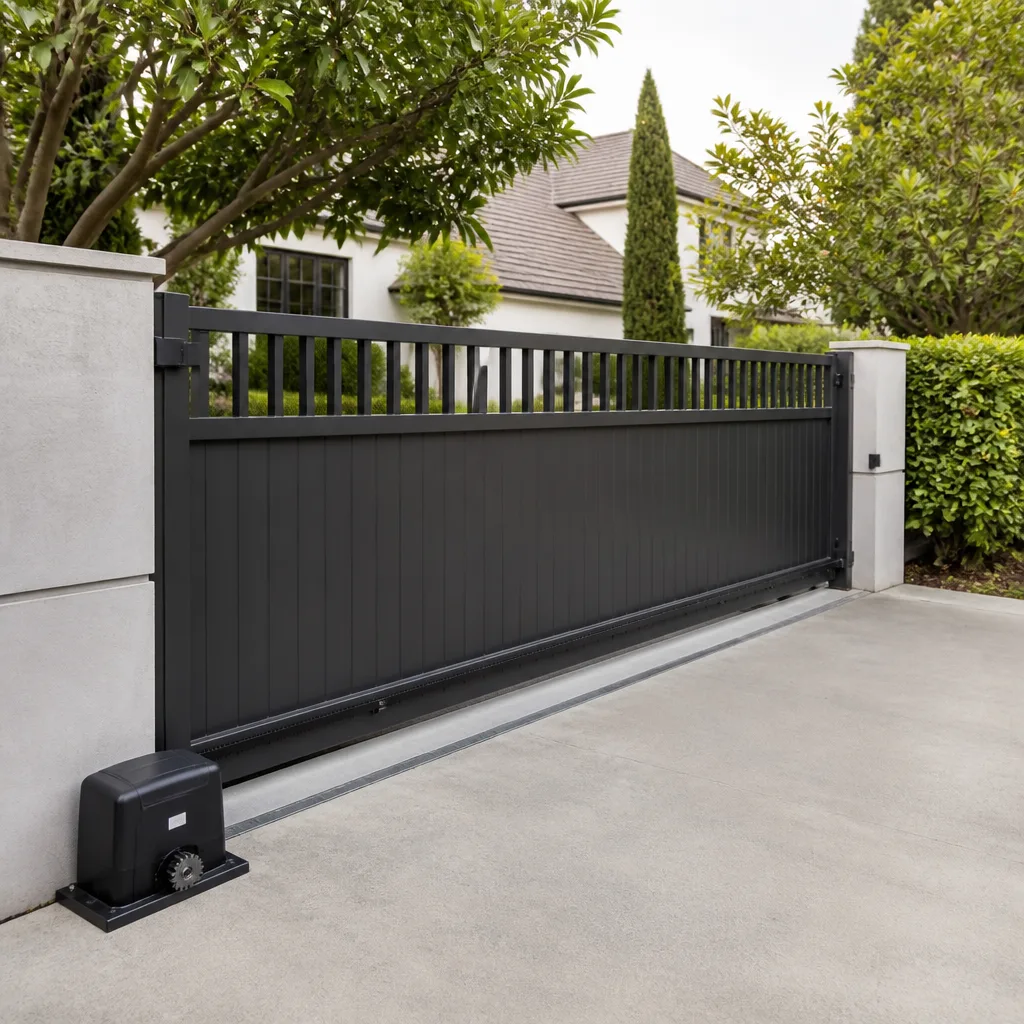
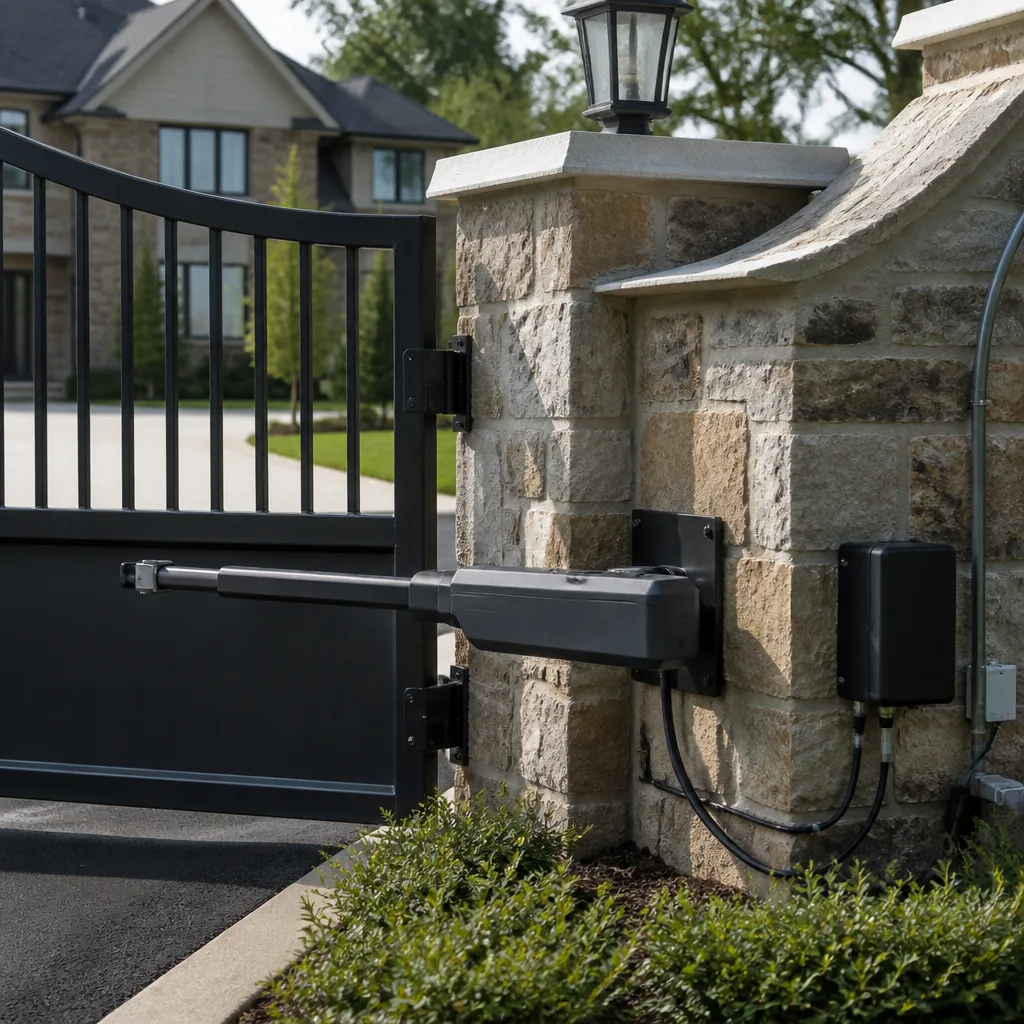
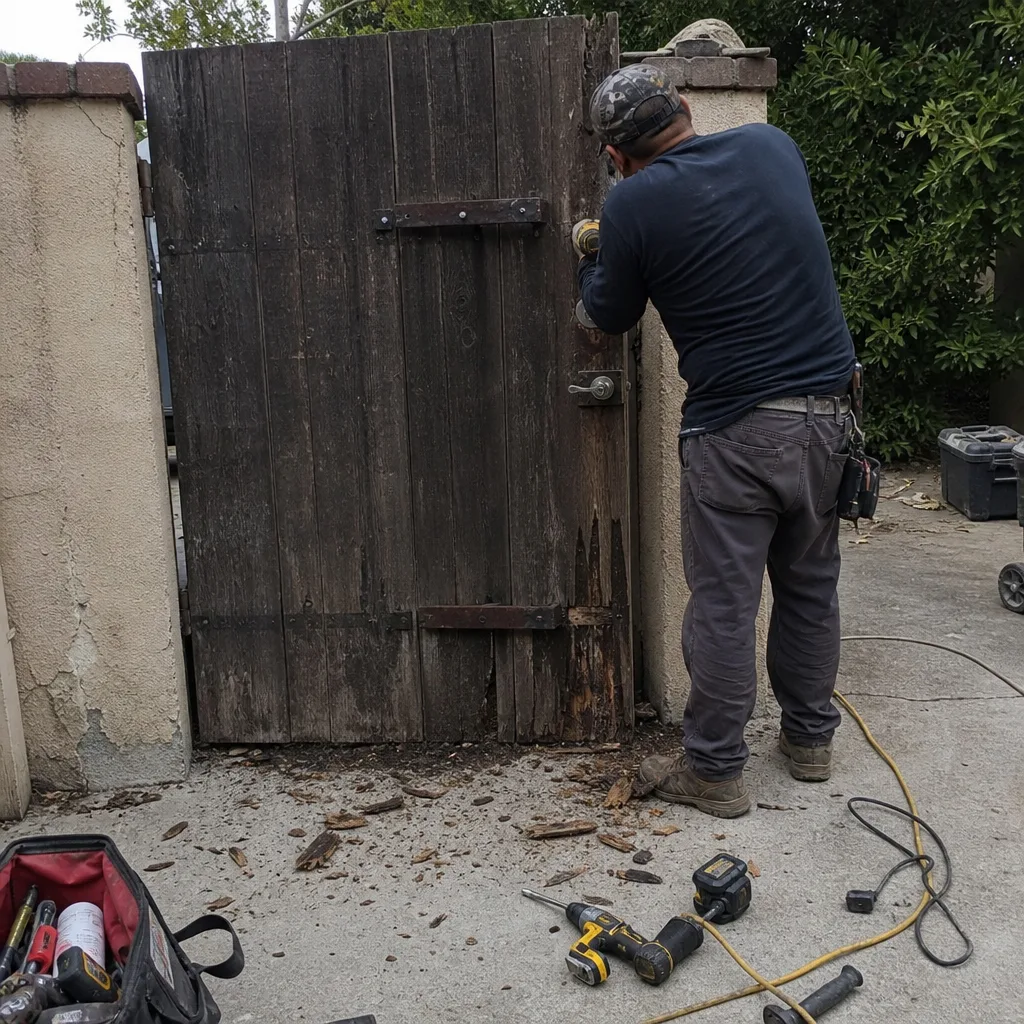 Before
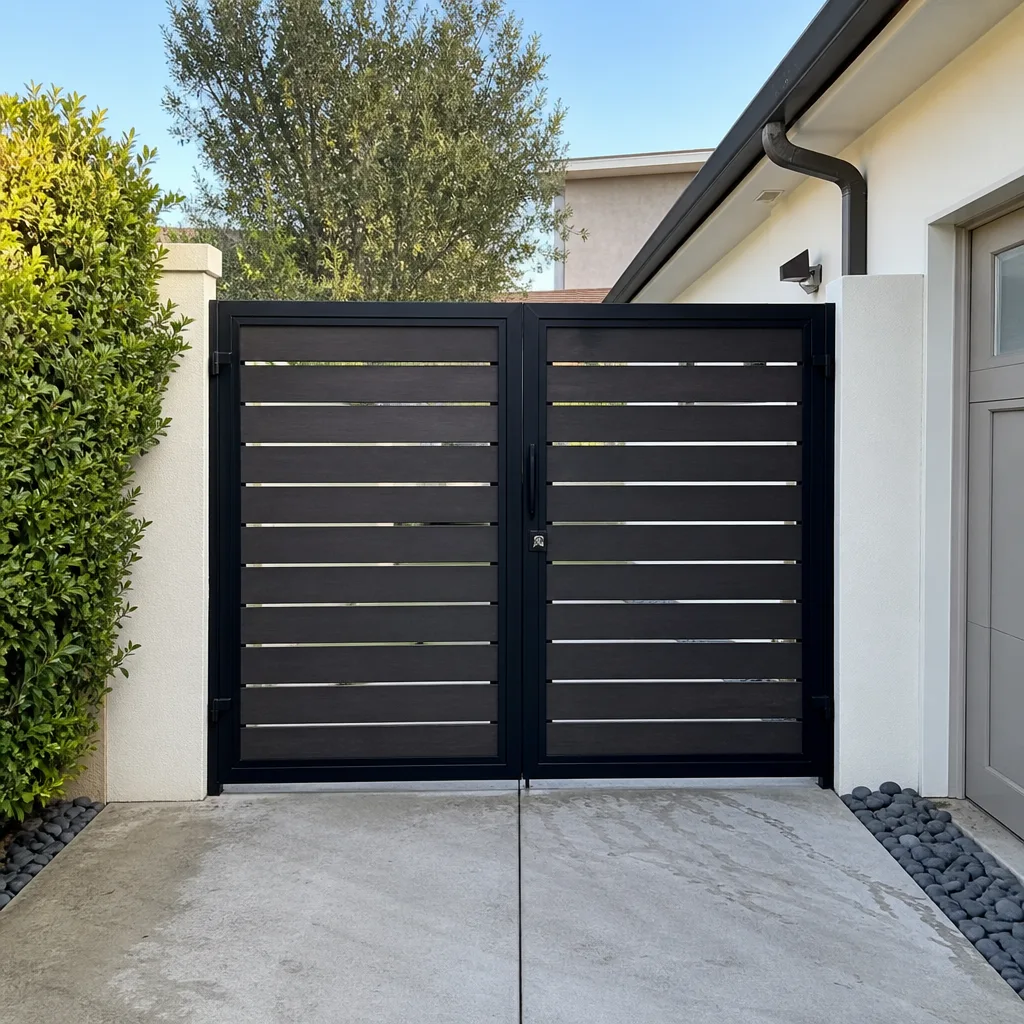 After
After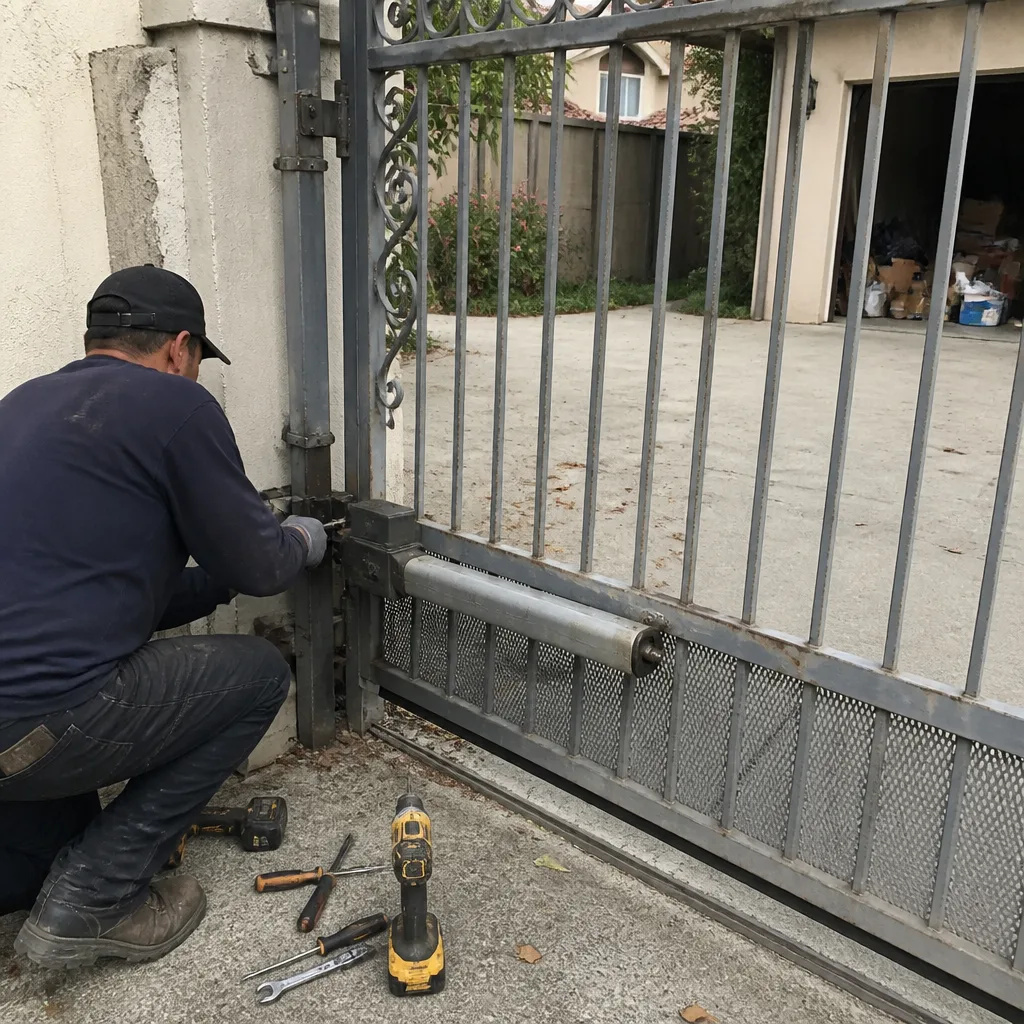 Before
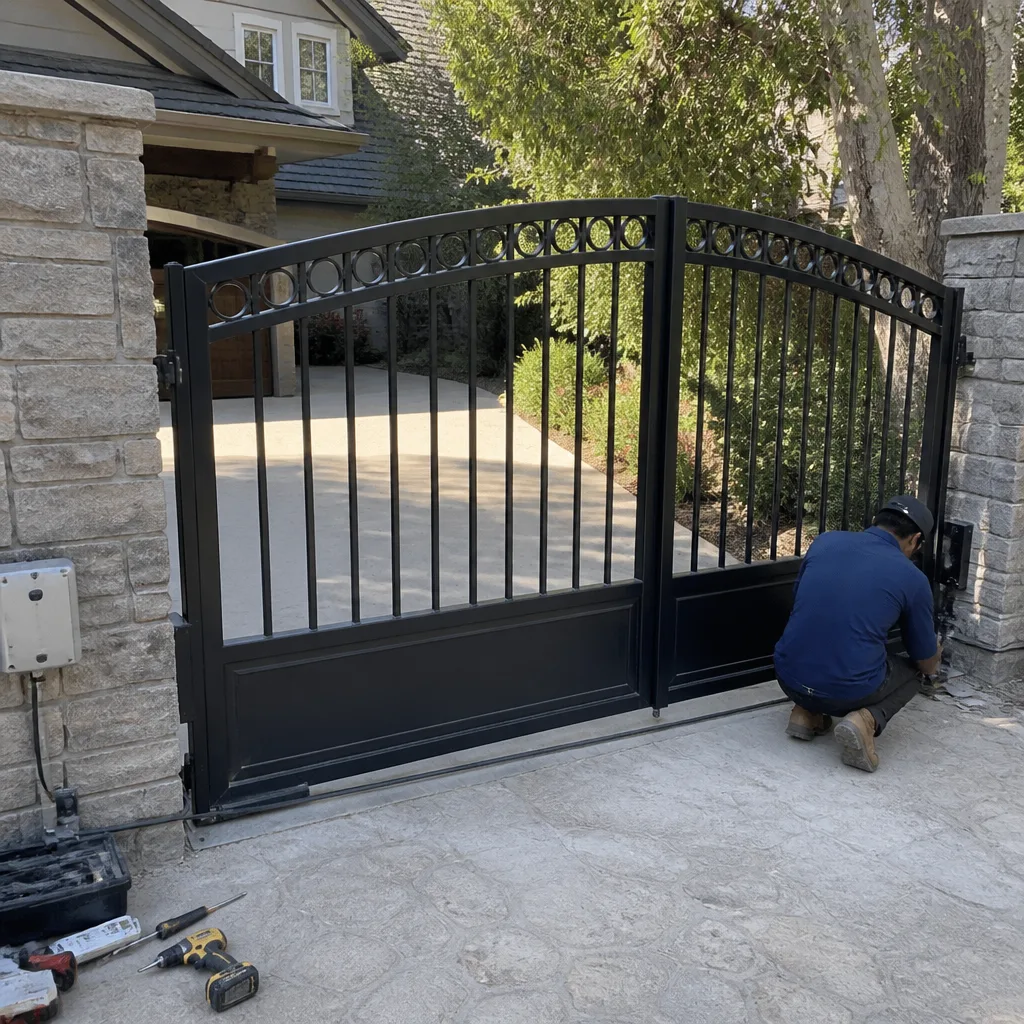 After
After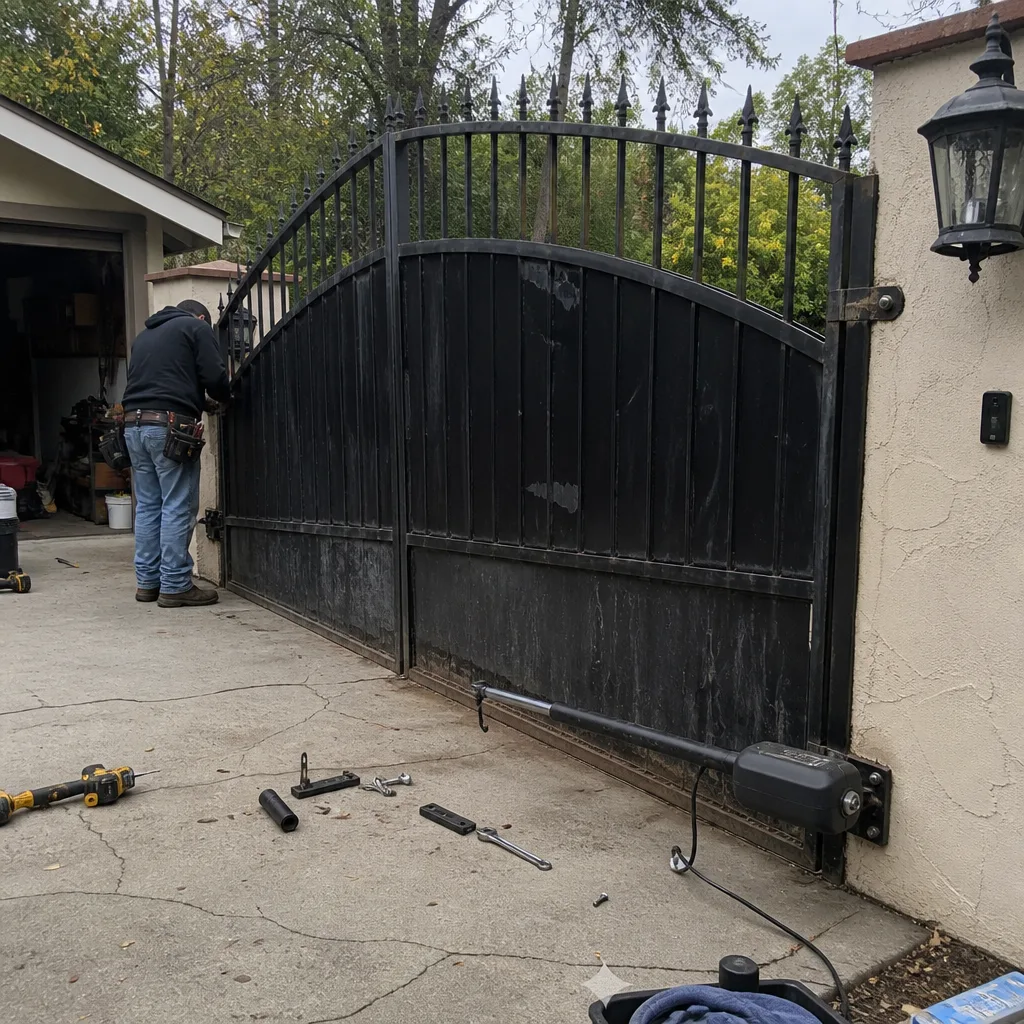 Before
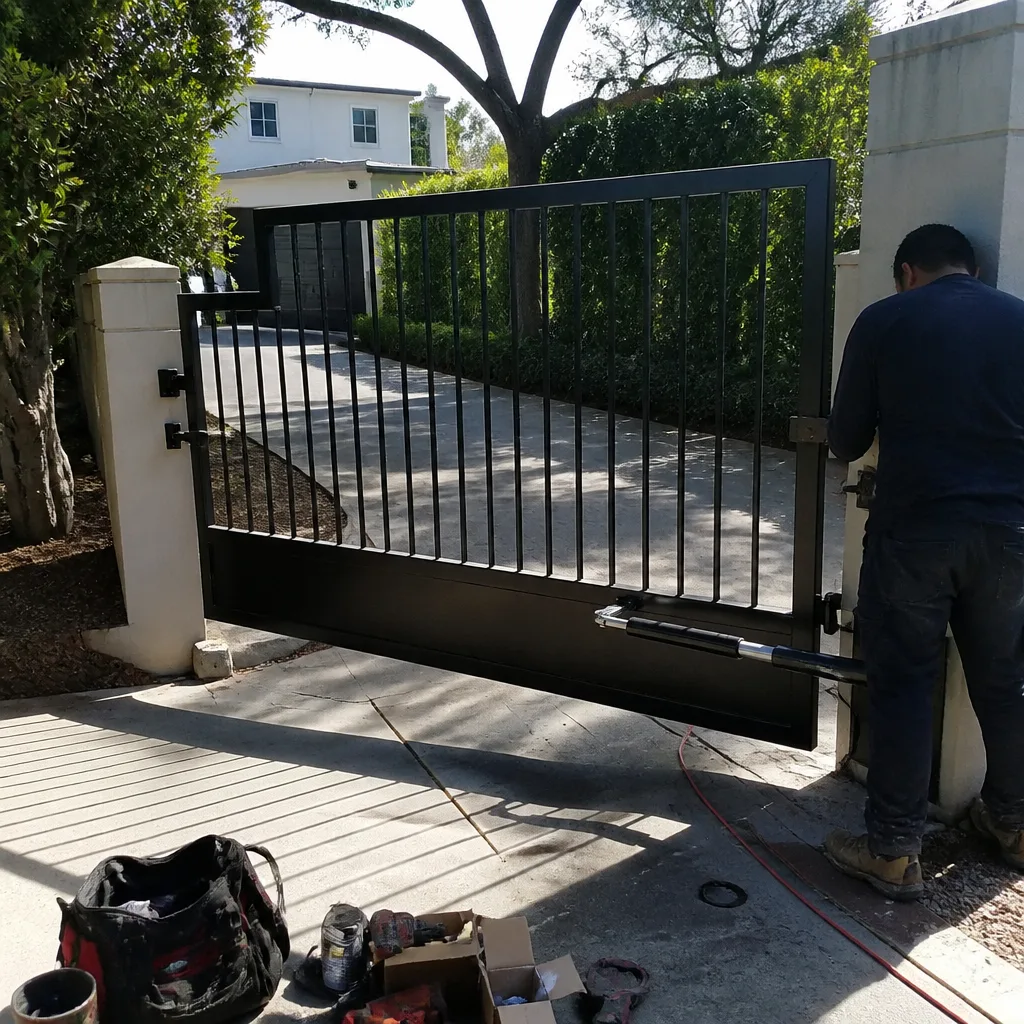 After
AfterGate Repair Permits, Codes & Inspections in CA: What You Need to Know
Most gate repairs in California never cross a permit desk, and that’s the truth. But the handful that do are the ones that cost people real money at the worst possible moment. We know a homeowner in Encino who found out at escrow that the automated driveway gate installed three years earlier never pulled an electrical permit. The sale stalled for 19 days and cost $3,400 in concessions before anyone signed anything. This guide draws the line between what’s a repair, what’s an alteration, and what the state and Los Angeles County actually require, so you’re not guessing when it matters.
Quick Answer
Most gate repairs in California, including welding, hinge replacement, and panel fixes, do not require a permit because they’re classified as ordinary maintenance. A permit is generally required when you install a new automated gate system with new electrical wiring, replace a gate in a way that changes its height, location, or structural loading, or modify an existing gate’s automation in a way that alters its electrical feed. Working in Encino means Los Angeles County building codes and any applicable HOA rules layer on top of state requirements, and UL 325 safety compliance applies to every automated gate regardless of permit status.
Table of Contents
- The Permit Line: Repair vs. Alteration Under California Building Code
- How Los Angeles County Rules Layer on Top of State Code
- UL 325 Safety Standards: What They Require and How to Check Your Gate
- HOA Approval vs. Building Permit: Two Separate Gates to Your Project
- Pulling Your Gate’s Permit History in About Four Minutes
- Inspections: What Gets Checked and What Fails
- Permit and Inspection Costs in Encino and Los Angeles County
The Permit Line: Repair vs. Alteration Under California Building Code
California Building Code draws a line between maintenance and alteration, and that line is not always where you’d think. The governing text is CBC Chapter 1, Section 105, which exempts “ordinary repairs” from permit requirements. Ordinary repairs are defined as work that replaces or restores existing parts with like materials and does not change the structure, size, or use of what’s already there. That means replacing a bent hinge, re-welding a broken weld on a steel gate frame, swapping a failed gate opener board on a DoorKing or Elite unit, or straightening a sagging gate panel all sit firmly on the no-permit side of the line.
The line gets crossed when the character of the work changes from restoring what exists to creating something new. You’re in alteration territory when any of these conditions apply:
- New electrical feed: Running a new circuit from your panel to a gate operator, or trenching new conduit for the operator’s power supply, is electrical work that requires a permit. Replacing an operator that plugs into an existing, permitted outlet generally doesn’t.
- Structural change: If you’re increasing gate height, changing from a swing gate to a slide gate (which changes how the structure loads the posts and rollers), or pouring new footings for larger posts, you’ve got a structural alteration.
- Location change: Moving the gate to a different position on the property triggers setbacks, easement reviews, and stormwater considerations that need a plan check.
- New pedestrian access: Adding a new pedestrian gate adjacent to a vehicle gate changes egress patterns and can trigger accessibility and hardware requirements.
Here’s what matters for the homeowner in practical terms: the permit requirement for gate repair work almost never triggers, but the permit requirement for gate electrical work does, and that’s the one most people miss. When a homeowner in Encino calls us about an opener that won’t run, the most common culprit is a builder or previous owner who tapped into a garage circuit without a permit back when the gate was first automated. If you’re unsure whether your gate needs professional attention, review our Gate Repair Warning Signs: A Encino Homeowner’s Reference Guide. The repair to fix it still doesn’t need a permit, but getting it inspected and corrected before selling the house is a different conversation, and we’ll cover that below.
Our position at Gatewood Fence & Gate home is simple: if the work needs a permit, pull the permit. We’ve been doing this since 2001, and we’ve never once seen a permitted job go worse than an unpermitted one when it comes time to sell.
How Los Angeles County Rules Layer on Top of State Code
California sets the floor. Los Angeles County adds the ceiling, and Encino sits squarely inside the county’s jurisdiction for building permits. The county’s Department of Building and Safety adopts the California Building Code with local amendments that add requirements the state doesn’t impose. For gates, the practical differences are these:
First, Los Angeles County has its own electrical code amendments. Any new electrical run to a gate operator in Encino must be permitted through LA County Building and Safety, not just through a private inspector, and the county’s inspectors are known for checking raceway depth, conduit material, and wire gauge on gate circuits more closely than some neighboring municipalities. They want to see rigid metal conduit where the run is exposed, and they want GFCI protection on any exterior receptacle you may be feeding off.
Second, the county enforces specific driveway gate setback requirements. A vehicle gate that opens across the sidewalk line, even partially, can run afoul of county right-of-way rules. In Encino neighborhoods built in the 1960s and 1970s, we regularly see front-entry gates that swing out over the sidewalk, and that’s a county-level violation that can stick to the property title if it ever gets flagged. The fix is usually to reverse the swing so the gate opens inward, which is a repair-class adjustment we handle without a permit, but if the posts have to move to make that happen, the permit conversation starts.
Third, LA County requires that gate operators installed in new construction or major remodels meet the current California Electrical Code cycle, which since 2020 has included requirements for surge protection on all motor-driven equipment. This is the kind of thing that gets flagged at inspection and surprises people who bought an operator online and wired it themselves.
For Encino specifically, the city is a district of Los Angeles, and its planning and permit processes run directly through the county. That means you don’t have a separate municipal code layer to navigate, which is nice, but it also means the county’s stricter inspectors and broader amendment package apply to every gate project in the area. If you’re planning work on a gate at an installation project in Encino, assume the county inspection will be thorough rather than perfunctory.
UL 325 Safety Standards: What They Require and How to Check Your Gate
UL 325 is the safety standard for automated gate operators, and it’s the one piece of gate regulation that applies whether or not a permit was ever pulled. The standard governs entrapment protection, and it’s not optional in any jurisdiction that adopts the national electrical code, which California does wholesale. Every automated gate that runs on a LiftMaster, FAAC, BFT, Linear, Viking, Ghost Controls, DoorKing, Elite, or Mighty Mule operator is subject to it. Period.
What UL 325 requires for a residential vehicular gate breaks down into these measurable things:
- Two independent entrapment protection devices for each direction of travel. This typically means a primary device, like an inherent reversing mechanism in the operator (the motor senses resistance and reverses), paired with a secondary device, like a photo eye across the opening or a contact edge on the gate itself.
- Photo eyes positioned correctly. For a swing gate, the photo eye is normally placed on the gate’s leading edge path. For a slide gate, it’s placed across the opening. If the eye is knocked out of alignment by a weed whacker or a car bumper, the gate’s safety system is compromised even if the operator still works.
- Warning signage. UL 325 mandates specific warning placards on both sides of an automated gate. Most inspectors check for these first because their absence tells them the installer either didn’t know the standard or didn’t care.
- Force settings calibrated to the specific gate. An operator that’s been dialed up to “maximum force” to muscle a dragging gate along a bad track is an entrapment hazard. This is one of the most common out-of-compliance issues we find on gates installed by handymen rather than gate-specific contractors.
Checking whether your existing gate is out of compliance takes about ten minutes. Walk the gate’s path with the operator disengaged. Look for the photo eye and confirm it’s solidly mounted and its lens is clean. Check the gate’s leading edge for a rubber contact strip, or confirm the operator has a reversing sensor that responds when the gate meets resistance mid-travel. If you’re missing either, your gate is not compliant, and the fix is a repair, not a replacement, in most cases.
We have walked onto Encino properties where a Ghost Controls operator was installed correctly except the installer skipped the contact edge entirely, believing the inherent reversing feature was enough. It isn’t. The standard wants redundancy because a single point of failure in an entrapment system is how people get hurt. We correct these issues as repair work, and the operator stays in the driveway, which is how we’ve always done it.
HOA Approval vs. Building Permit: Two Separate Gates to Your Project
An HOA approval and a building permit are two different processes, and in Encino, they run through two entirely separate bureaucracies. The HOA (if your home has one) governs aesthetics and community standards. The county governs building safety and code compliance. Getting one does nothing for the other, and many a project has died at the gate, so to speak, because the homeowner assumed they were the same gate.
Here’s the sequence that actually works, based on two decades of watching these projects succeed and fail:
- Pull your HOA’s design guidelines first. If your community has a standards committee, they’ll have written rules about gate height, material, color, and style. In Encino’s gated communities and some of the older HOA-governed neighborhoods south of Ventura Boulevard, those guidelines can be remarkably specific, right down to allowed ironwork patterns.
- Submit your HOA application in writing before any work starts. Most HOAs have a 30-to-60-day review window. Start this clock early, because it runs independently of the county’s permit timeline.
- Pull the county permit after HOA approval is in hand, not before. The county won’t ask about HOA approval, and the HOA won’t ask about county permits. Running both tracks in parallel means you might pay for a county permit on a project your HOA ultimately rejects.
- Keep both approvals with the house. When you sell, the buyer’s title company and their inspector may ask for both. Having them in a folder is worth real money at escrow.
The Encino homeowner caught at escrow in the opening of this guide was missing item four. The gate looked fine, worked fine, and had HOA sign-off. What it didn’t have was the county electrical permit for the new circuit that powered it. That single missing document was enough to freeze the sale for 19 days while the seller paid rush fees, retroactive permit penalties, and a $3,400 concession to make the deal whole.
If you’re looking at a new gate motor or opener in Encino, ask your contractor before signing anything whether the electrical work will be permitted. If the answer is a shrug, get a different contractor. The permit is not a formality, and the person who installs without one is not going to be around in three years to answer for it. Hal Gatewood will be, because the name on the shop is the name on the invoice, and the shop is down the road.
Pulling Your Gate’s Permit History in About Four Minutes
Before you hire anyone for gate work that might involve electrical or structural changes, read our How to Hire a Gate Repair Contractor in Encino: A Step-by-Step Guide, then pull the permit history on your property yourself. It costs nothing, takes about four minutes, and tells you what the county already knows about your house. In Los Angeles County, that process runs through the Department of Building and Safety’s online portal. Here’s the process:
- Go to the LA County Building and Safety website and find the “Permit Search” or “Property Activity Report” tool. You’ll need your address or your Assessor Identification Number, which is on your property tax bill.
- Run the search and look for electrical permits tied to your address. A permitted gate circuit will show up as an electrical permit, often with a description mentioning the gate, the panel, or exterior wiring.
- If you find a permit, confirm it shows a “finaled” status. A permit that was pulled but never finaled is almost as bad as no permit at all. It means the work happened, but the inspection never closed, and the open permit can cloud a title.
- If you find nothing and you have an automated gate, ask more questions. Not every older gate installation from the 1980s or 1990s will show in a digitized system. But a gate installed in the last decade should be there if the electrical was done legally.
This check matters before major work begins because the scope of your project changes if the existing electrical was never permitted. You may need to bring the existing circuit up to current code before the county will permit new work attached to it. We’ve seen that conversation add a day or two to projects in Encino, but it’s better to have the conversation before excavation than after the driveway’s been trenched.
Inspections: What Gets Checked and What Fails
When a gate project does go through the LA County permit process, the inspection is not a rubber stamp, and the failure rates are higher than most people expect. The county’s electrical inspectors, in particular, have seen every shortcut in the book and they check for specific things. Knowing what they look for saves rounds of corrections.
The inspection checklist for a typical automated gate installation includes:
- Conduit depth and material. Exterior runs need rigid metal conduit buried at the code-prescribed depth (typically 18 inches for residential), and the inspector will want to see the trench before it’s backfilled.
- GFCI protection on the feed. If the operator circuit runs off an exterior receptacle, that receptacle must be GFCI-protected. This single item is the top failure we see corrected on follow-up inspections.
- Surge protection. Current California Electrical Code requires surge protective devices on motor-driven appliances, including gate operators. Older installs predate this rule, but new permits mean new compliance.
- UL 325 entrapment protection devices in place and functioning. The inspector will test the reversing feature and confirm the photo eyes or contact edges are properly installed.
- Proper grounding and bonding. Metal gate frames and metal posts in contact with the operator must be bonded to the equipment ground. This is another common miss on do-it-yourself installs.
- Warning signage per UL 325. Both sides of an automated gate need the standard warning placards. They cost a few dollars and their absence fails an inspection immediately.
For non-electrical work like a permitted structural gate replacement, the inspection focuses on footings and posts. The inspector wants to see the excavation before concrete goes in, check rebar size and placement, and verify post depth against the plan. In Encino’s clay-heavy soil, which expands and contracts through the wet and dry seasons, properly sized footings are the difference between a gate that holds adjustment for a decade and one that binds every August.
Permit and Inspection Costs in Encino and Los Angeles County
Permit costs in Los Angeles County are based on a valuation formula, which means the bigger the project, the bigger the fee. For the typical gate work that actually requires a permit, here’s what we’ve seen in Encino over recent years:
- Electrical permit for a new gate operator circuit: $150 to $450 depending on the circuit length and whether plan check is required. Most residential gate circuits fall into the lower half of that range.
- Building permit for a structural gate replacement: $400 to $1,200 depending on gate value, post work, and whether a plan check is needed. A simple like-for-like post replacement trends toward the lower figure; a full redesign with new footings trends higher.
- Re-inspection fees: Roughly $100 per visit if the first inspection fails. The first inspection is included in the permit fee, but every follow-up visit costs money.
- Retroactive permit penalties: If you’re correcting unpermitted work, the county applies a penalty multiplier, often 2x the standard permit fee, plus a plan check fee. The Encino homeowner caught at escrow paid this on top of the negotiation concessions.
These are the county’s fees. They don’t include contractor labor for bringing work up to inspection standard if it wasn’t there to begin with, and they don’t include HOA fees, which many associations charge for design review. We tell every customer at gate repair estimates in Encino the same thing: the permit is cheap compared to the escrow fight. Pull it if the work crosses into alteration territory, and keep it in the folder with the house.
Common Mistakes to Avoid
- Assuming no permit means no inspection, and no inspection means no problem. Unpermitted electrical work follows the house into escrow, and the county doesn’t care that the previous owner didn’t know. You own it now.
- Treating HOA approval and building permits as interchangeable. They are separate processes with separate review timelines, separate fees, and separate consequences for skipping them. Both can kill your project, but they kill it in different ways.
- Skipping the permit history check before buying equipment. If the existing feed was never permitted, you may need to bring it up to current code before the county signs off on your new operator. That changes the scope and the price before you’ve spent a dime.
- Believing a new operator fixes a UL 325 violation on an old install. The operator may be new, but if the photo eyes or contact edges were never installed, the system is still out of compliance. You’re buying half a safety system.
- Accepting a contractor’s “we don’t need a permit for this” without understanding why. We say that phrase constantly, because most repairs genuinely don’t need one. But a good contractor can explain why the line falls where it does. A shrug and a subject change is not an explanation.
- Letting a gate swing over the sidewalk line in Encino. County right-of-way rules are clear on this, and it’s the kind of code issue that sits dormant for years and then surfaces when a neighbor complains or a title search goes deep.
When to Call a Professional
If your gate’s electrical feed was never permitted, call someone who has been through LA County permitting before and knows what brings an installation into compliance without starting over. If your automated gate lacks photo eyes, contact edges, or warning signage, call someone who installs UL 325-compliant systems as a matter of course, not as an upgrade. If you’re selling a house with an automated gate and you’re not sure about the permit history, call before escrow, not during. Gatewood Fence & Gate offers free estimates in Encino, and we’re happy to walk a property, look at the permit history, and tell you where you stand. Reach us at (350) 247-4763.
Frequently Asked Questions
No, not for repair work like replacing hinges, welding a cracked frame, swapping a broken operator board, or straightening a sagging panel. Those are ordinary repairs under California Building Code and don’t require a permit. You need a permit when the work adds new electrical wiring, changes the gate’s structure, height, or location, or involves new footings and posts.
An electrical permit for a new gate operator circuit typically runs $150 to $450 in Los Angeles County, and a structural gate permit runs $400 to $1,200. The exact fee depends on the project valuation and whether plan check is required. Call (350) 247-4763 and we’ll help you figure out whether your project needs a permit at all.
You can list it, but the seller’s disclosure requirement means you have to disclose known unpermitted work, and most buyers will make the permit an escrow condition. The cost to pull a retroactive permit and make corrections is usually less than the concession a motivated seller gives up at closing, but it’s still a four-figure problem.
UL 325 is the entrapment safety standard for automated gate operators, requiring two independent safety devices (reversing sensor plus photo eyes or contact edges), warning signage on both sides of the gate, and calibrated force settings. Compliance is required regardless of whether the gate was ever permitted, and most non-compliant gates we find are missing the secondary safety device.
No. An HOA approval covers aesthetics and community standards, and a building permit covers safety and code compliance. They are separate processes with separate applications, separate fees, and separate timelines. Encino homeowners should start the HOA review process first since it often takes longer than the county permit.
Run a property activity report through the LA County Building and Safety online portal using your address or Assessor ID number. Look for electrical permits with descriptions mentioning the gate or exterior wiring, and confirm the permit shows a finaled status. The whole check takes about four minutes and it costs nothing.
The Bottom Line
Gate repair in California lives on the maintenance side of the permit line almost every time, and that’s the good news. The bad news is that gate automation, new electrical feeds, structural changes, and anything touching the right-of-way can cross into permit territory faster than most homeowners expect. The escrow story from Encino is the cautionary tale: a $150 permit skipped in year one became a $3,400 concession in year three. Pull the permit history on your gate before you hire anyone for our Gate Repair services, separate your HOA application from your county permit in your planning, and when the work crosses the line, pull the permit. It’s cheaper than the alternative, every single time.
Written by Hal Gatewood, Owner at Gatewood Fence & Gate, serving Encino since 2001. For more guides & resources, visit our blog.